Barn Record Barkhamsted
RETURN TO ‘FIND BARNS’- Building Name (Common)
- Ransom Farm
- Building Name (Historic)
- Ransom Farm
- Address
- 10 Mountain Road, Barkhamsted
- Typology

- Overview
-
Designations
Historic Significance
Architectural description:
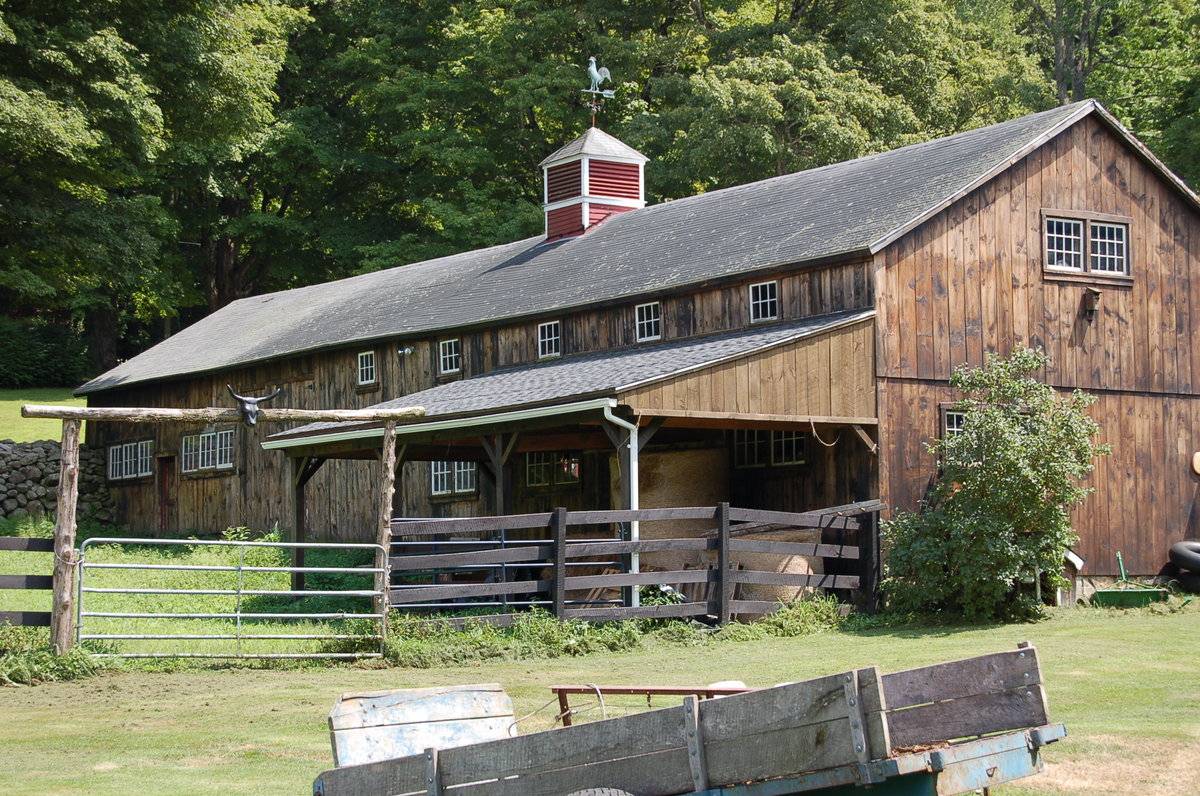
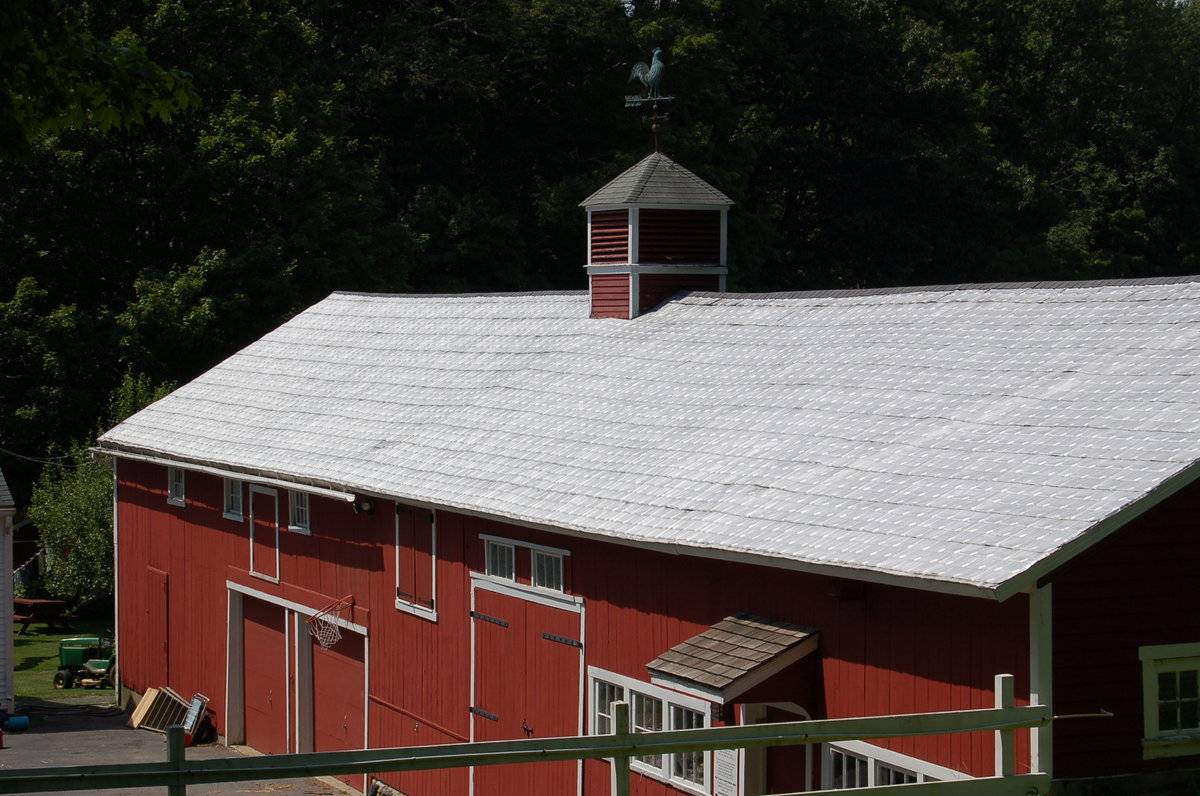
This is a 1 1/2 story, gable-roof, eave-entry barn. The main façade faces roughly south, and the ridge-line is diagonal to Mountain Road, which at this point runs northeast-southwest. The main entrance, located in the off-center to the east of the south eave-facade, is a pair of double-height, hinged exterior doors with wrought iron hardware. Above are two three-pane transom windows. To the west is a pair of hay doors with wrought iron hardware just beneath the eave. Further west are two overhead garage doors. Above the west garage door is a hay door flanked by six-pane windows just beneath the eave. A third six-pane window is towards the west corner of the main facade. There appears to be a pass-through door towards the east corner as well.
East of the main entrance are a set of three six-pane windows. Just east of the windows is a pass-through door under a shed hood. East of the door is another set of three six-pane windows. The grade inclines sharply at the east corner. A retaining wall extends to the south.
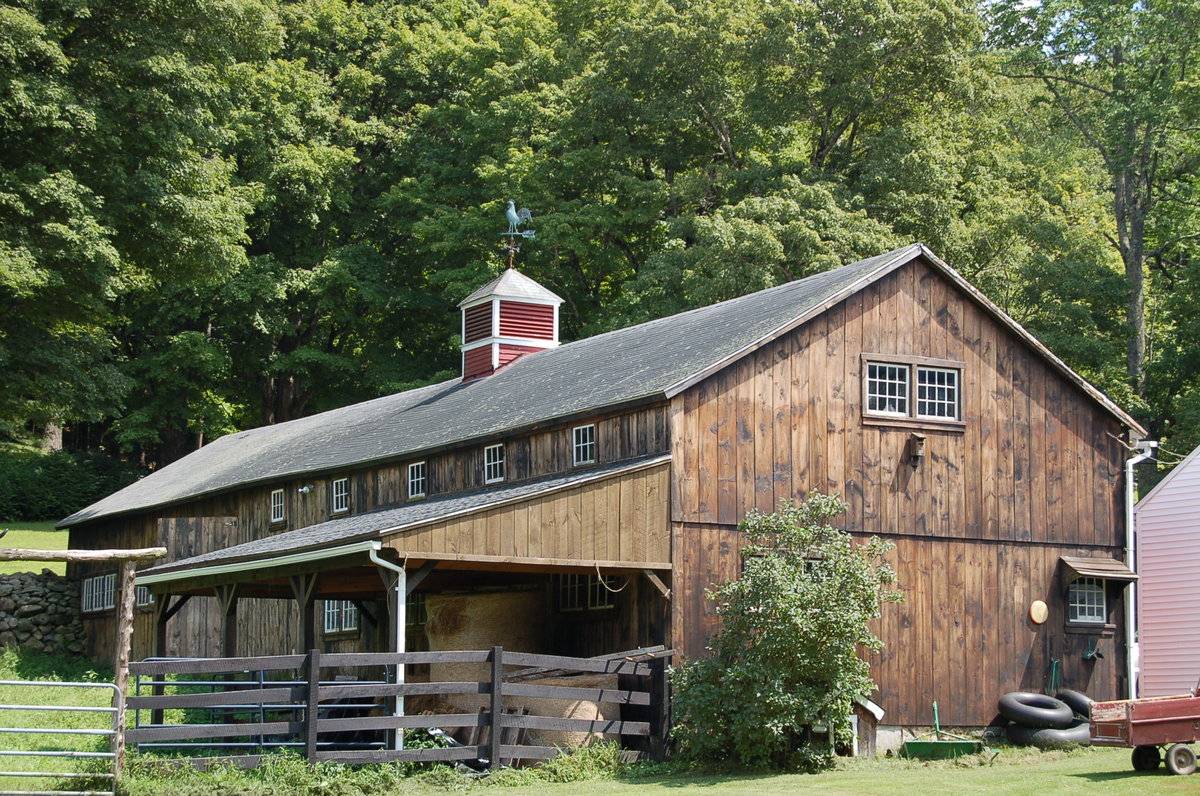
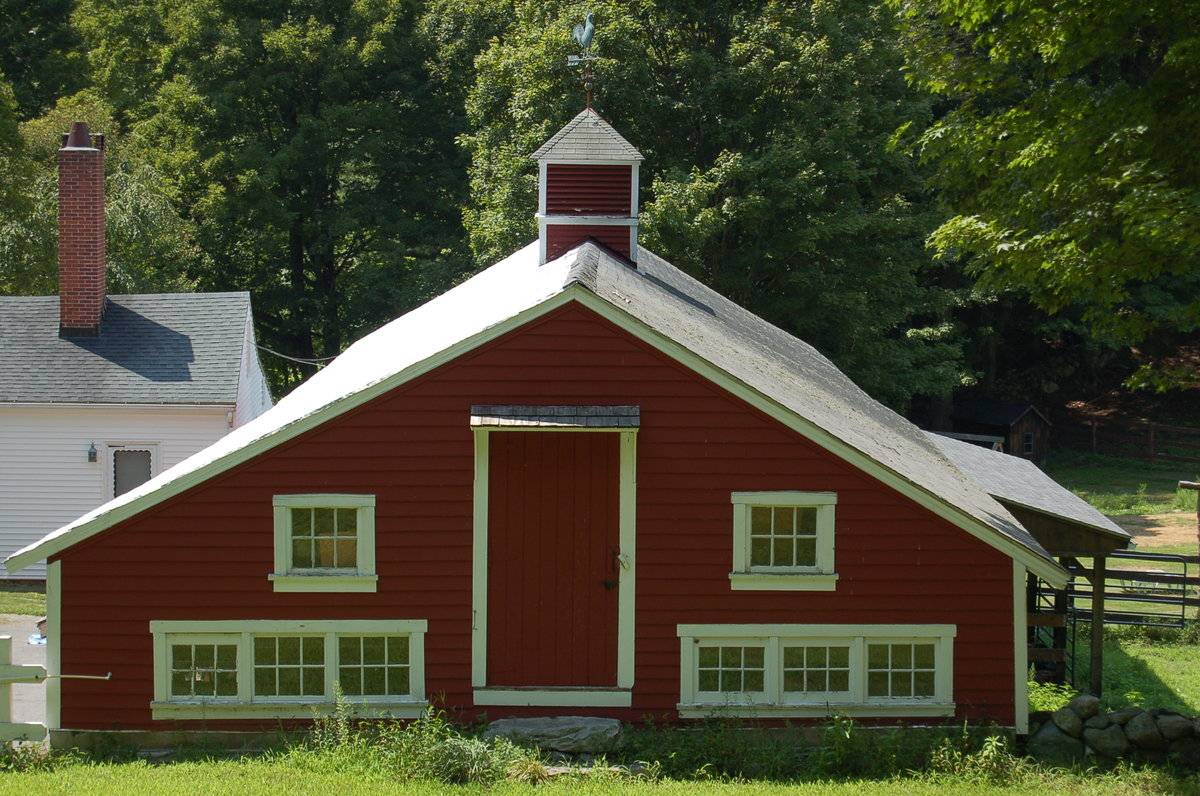
The east gable-end of the barn is built into the hillside; the gable attic is the only portion visible. In the center is a hinged pass-through door under a simple hood. Flanking the door near grade are sets of three, six-pane stable windows with trim. Above each set of windows is a single six-pane stable window with trim. A stone wall extends to the north and the grade declines sharply to the west of the wall. Two sets of three six-pane windows are in the east portion of the north eave-side of the barn. West of the windows is a pair of double-height swinging hinged doors. Further west is an open-sided porch with shed-roof supported by bracketed posts, encompassing the west half of the facade. Under the porch appears to be an over-sized exterior door west of center. Flanking the entry appear to be a set of two six-pane stable windows. Above the porch roof, just beneath the eave, are three six-pane windows. Two more six-pane windows continue to the east. A set of two six-pane windows is between the double doors and the porch.
The west gable-end of the barn has what appears to be a set of two twelve-pane windows with a common lintel near the north corner. Toward the south corner is a twelve-pane window under a shed hood. In the gable-attic is a set of two twelve-pane windows with a common lintel.
The barn has vertical, flush-board siding except for the southeast gable-end, which is clapboard. The southwest eave-side and southeast gable-end are painted red with white trim. The northeast eave-side and northwest gable-end are unpainted, weathered wood. The roof has asphalt shingles. In the center of the ridge-line is a cupola. It has a square shaft covered in wood shingles, and a pyramidal roof with asphalt shingles. The cupola is topped with a cockerel weathervane. The foundation of the barn appears to be concrete.
Historical significance:The oldest barns still found in the state are called the “English Barn,” “side-entry barn,” “eave entry,” or a 30 x 40. They are simple buildings with rectangular plan, pitched gable roof, and a door
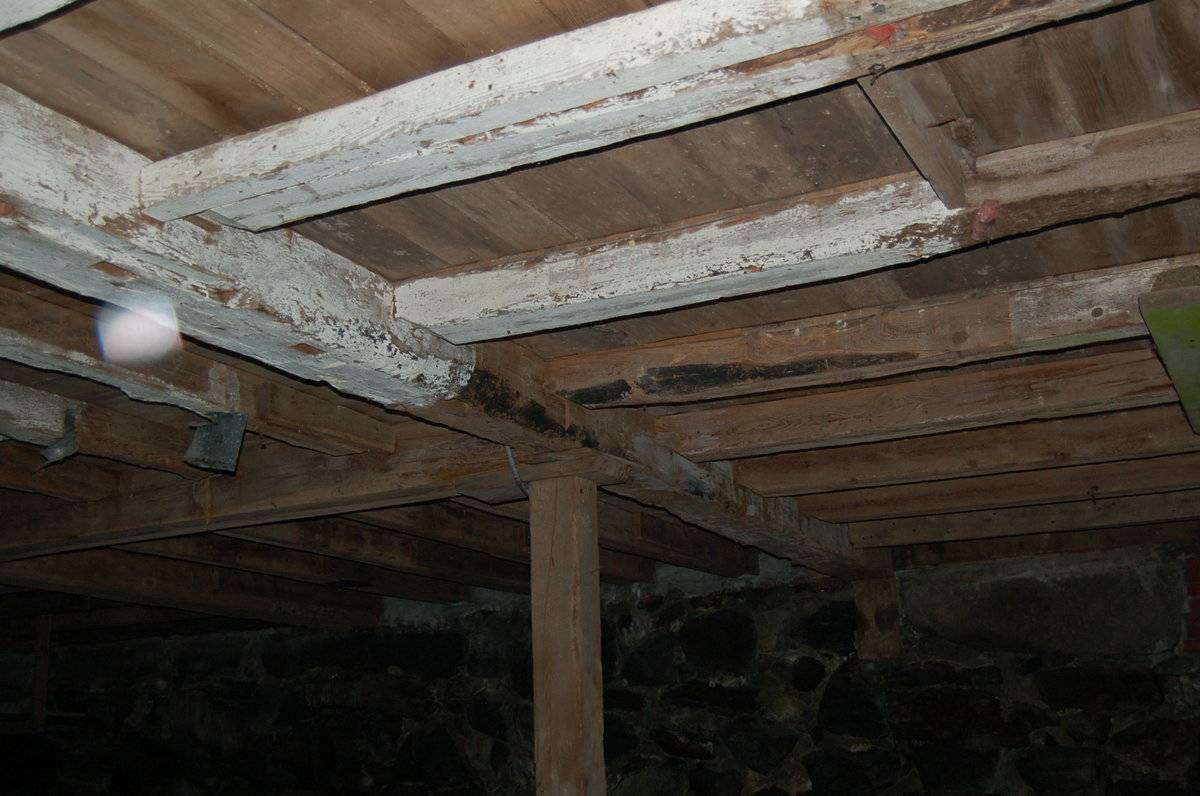
or doors located on one or both of the eave sides of the building based on the grain warehouses of the English colonists’ homeland. The name “30 by 40” originates from its size (in feet), which was large enough for 1 family and could service about 100 acres. The multi-purpose use of the English barn is reflected by the building’s construction in three distinct bays - one for each use. The middle bay was used for threshing, which is separating the seed from the stalk in wheat and oat by beating the stalks with a flail. The flanking bays would be for animals and hay storage.The 19th century saw the introduction of a basement under the barn to allow for the easy collection and storage of a winter’s worth of manure from the animals sheltered within the building. The bank barn is characterized by the location of its main floor above grade, either through building into a hillside or by raising the building on a foundation.
This innovation, aided by the introduction of windows for light and ventilation, would eventually be joined by the introduction of space to shelter more animals under the main floor of the barn.
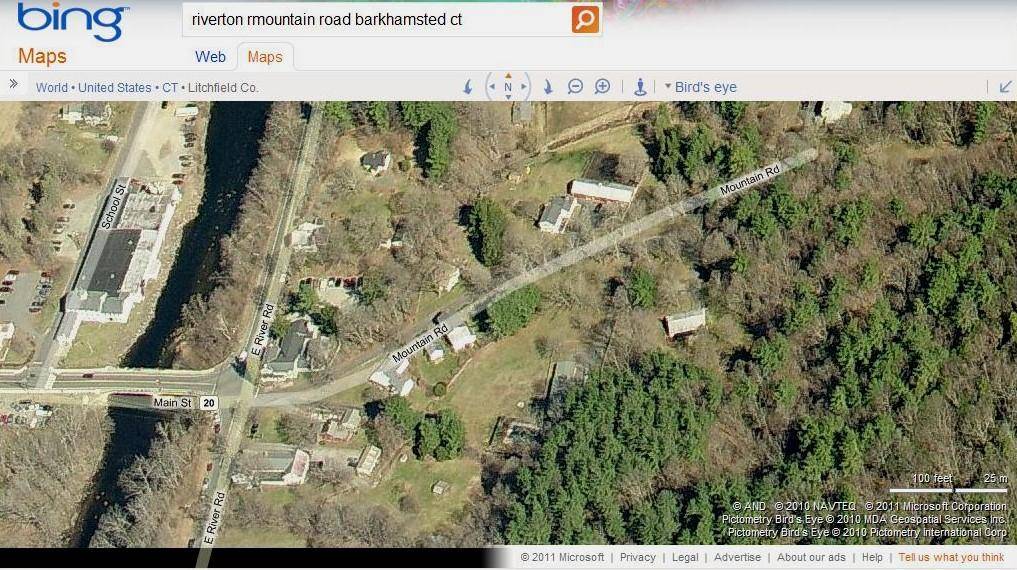
Historical background:The property at 10 Mountain Road is located within the boundaries of the Riverton Historic District, and includes buildings significant to the 19th century industrial village of Riverton. One of the first settlers in the village was Pelatiah Ransom, who built the house on the property in 1796. Just a few hundred feet west of the farm is the Old Riverton Inn, built in 1804, and the Phelps-Tiffany Tavern, built in 1813 by Pelatiah Ransom, Jr. as his residence. Both buildings face East River Road at the entrance to Mountain Road.
Field Notes
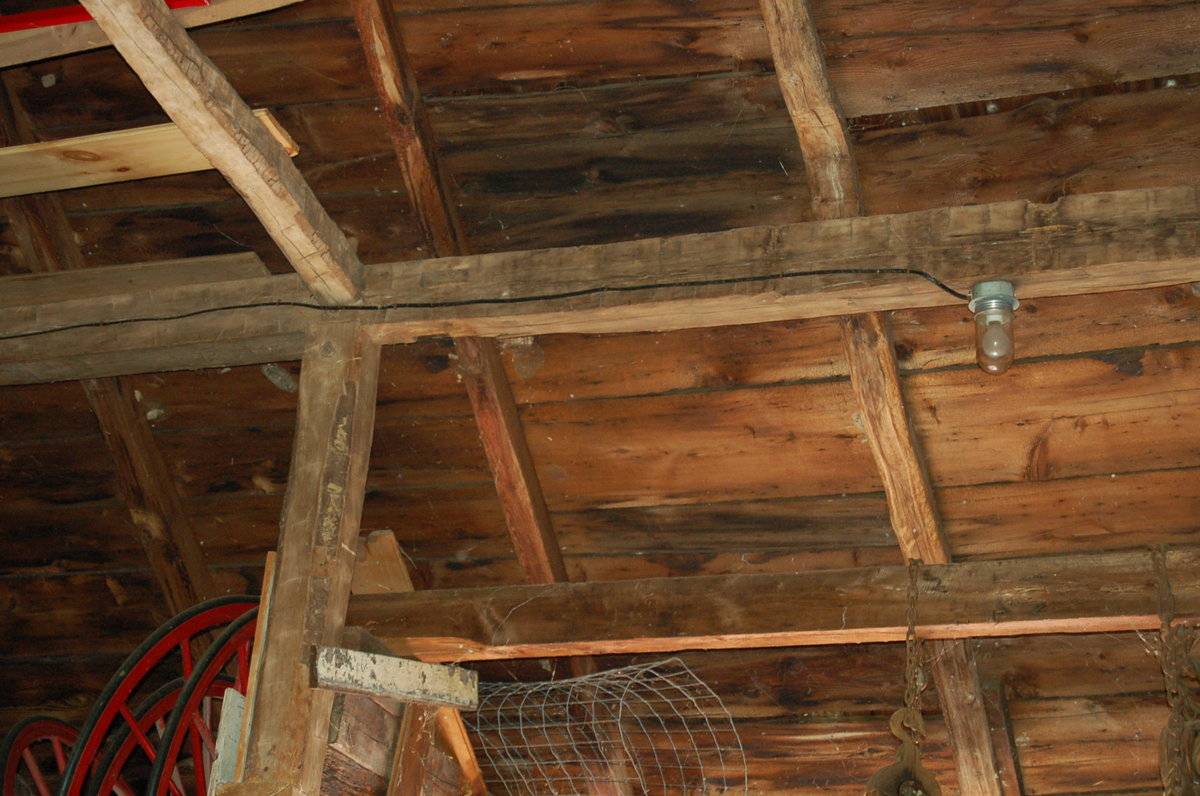
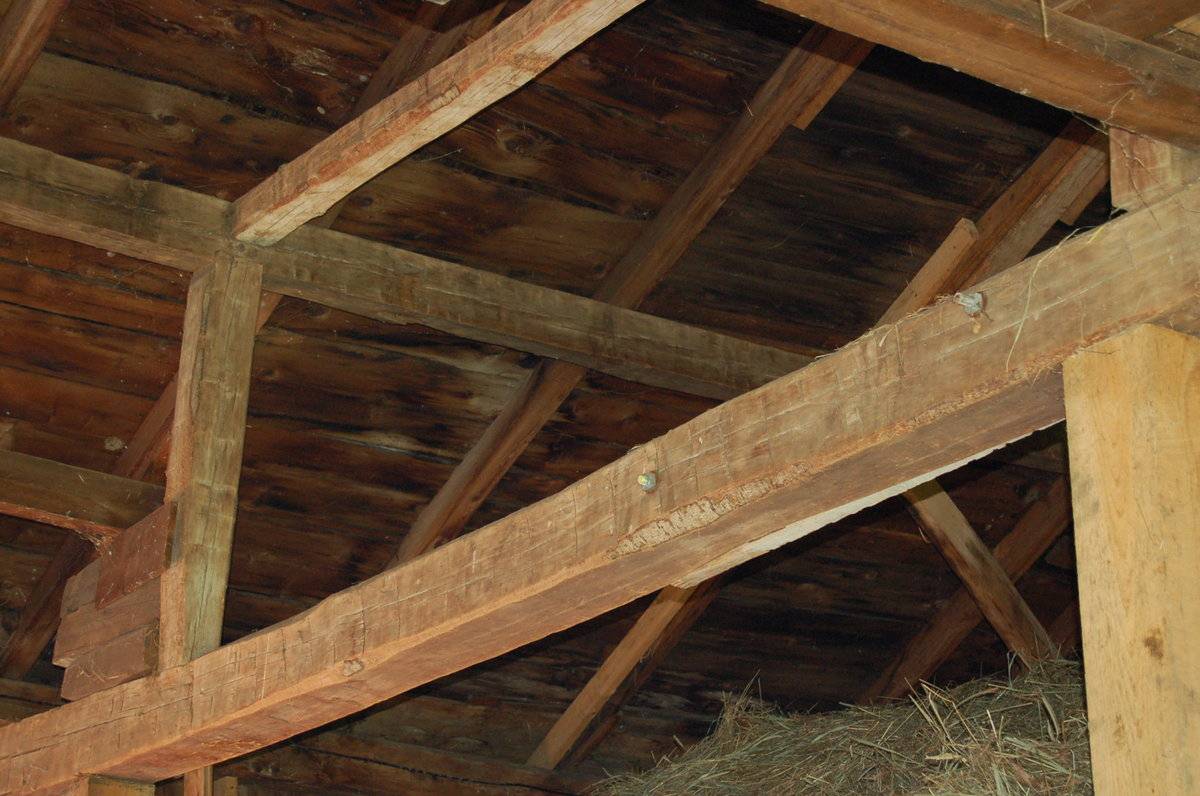
The central section of the Barn is original- circa 1800 At one time in the 19th cent. the Barn was connected to the house. Located in the Riverton Historic District.
- Use & Accessibility
Use (Historic)
Use (Present)
Exterior Visible from Public Road?
Yes
Demolished
n/a
Location Integrity
Unknown
- Environment
Related features
Environment features
Relationship to surroundings
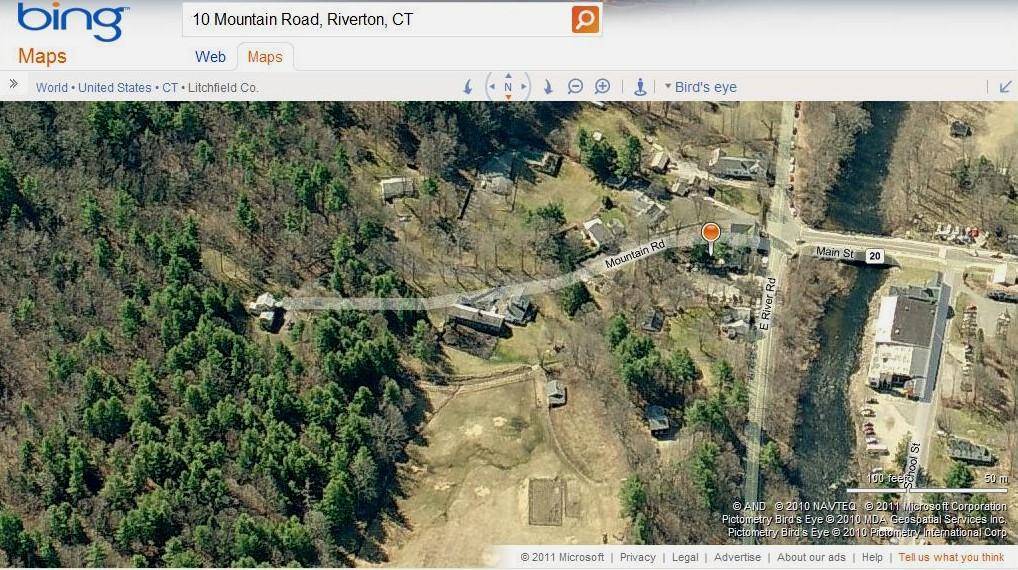
The barn sits on a 68.8-acre parcel of land on the north side of Mountain Road in the historic community of Riverton in Barkhamsted, Litchfield County. It is approximately five miles north of New Hartford Center. Also on the property is the house, located west of the barn, which appraisal records show was built in 1816, a smaller barn, built in 1940, a sugar house, and a shed. The property is a few hundred yards east of East River Road, and located in the valley between the Still River and the West Branch of the Farmington River. The grade inclines sharply to the east as it climbs out of the valley and is heavily wooded. Land in the valley is rural with a mixture of uses, including agricultural, residential, and business.
M/P 2517
- Typology & Materials
-
Building Typology
Materials
Structural System
Roof materials
Roof type
Approximate Dimensions
97' x 24'
- Source
-
Date Compiled
03/20/2011
Compiled By
C. Wilkinson & T. Levine, reviewed by CT Trust
Sources
Field notes and photographs by Paul Hart & John Greaser - 7/28/2010.
Town of Barkhamsted Assessor’s Record:
www.visionappraisal.com
Parcel ID: 2517Aerial Mapping:
http://maps.google.com accessed 3/20/2011
http://www.bing.com/maps accessed 3/20/2011.Ransom, David, Herzan, John, National Register District Nomination No. 92000906, National Park Service, 1992.
Cunningham, Jan, National Register District Nomination No. 07000419, National Park Service, 2006.
Sexton, James, PhD, Survey Narrative of the Connecticut Barn, Connecticut Trust for Historic Preservation, Hamden, CT, 2005, http://www.connecticutbarns.org/history.
Visser, Thomas D., Field Guide to New England Barns and Farm Buildings, University Press of New England, 1997.
- PhotosClick on image to view full file
-