Barn Record Farmington
RETURN TO ‘FIND BARNS’- Building Name (Common)
- Hill-Stead Museum Hay Barn (Part 1/3)
- Building Name (Historic)
- Hill-Stead (Pope-Riddle) Hay Barn
- Address
- 35 Mountain Road, Farmington
- Typology

- Overview
-
Designations
Historic Significance
Architectural Description:
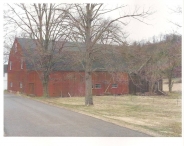
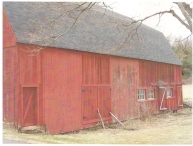
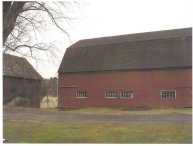
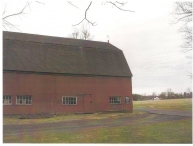
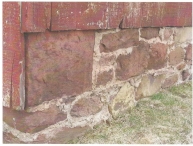
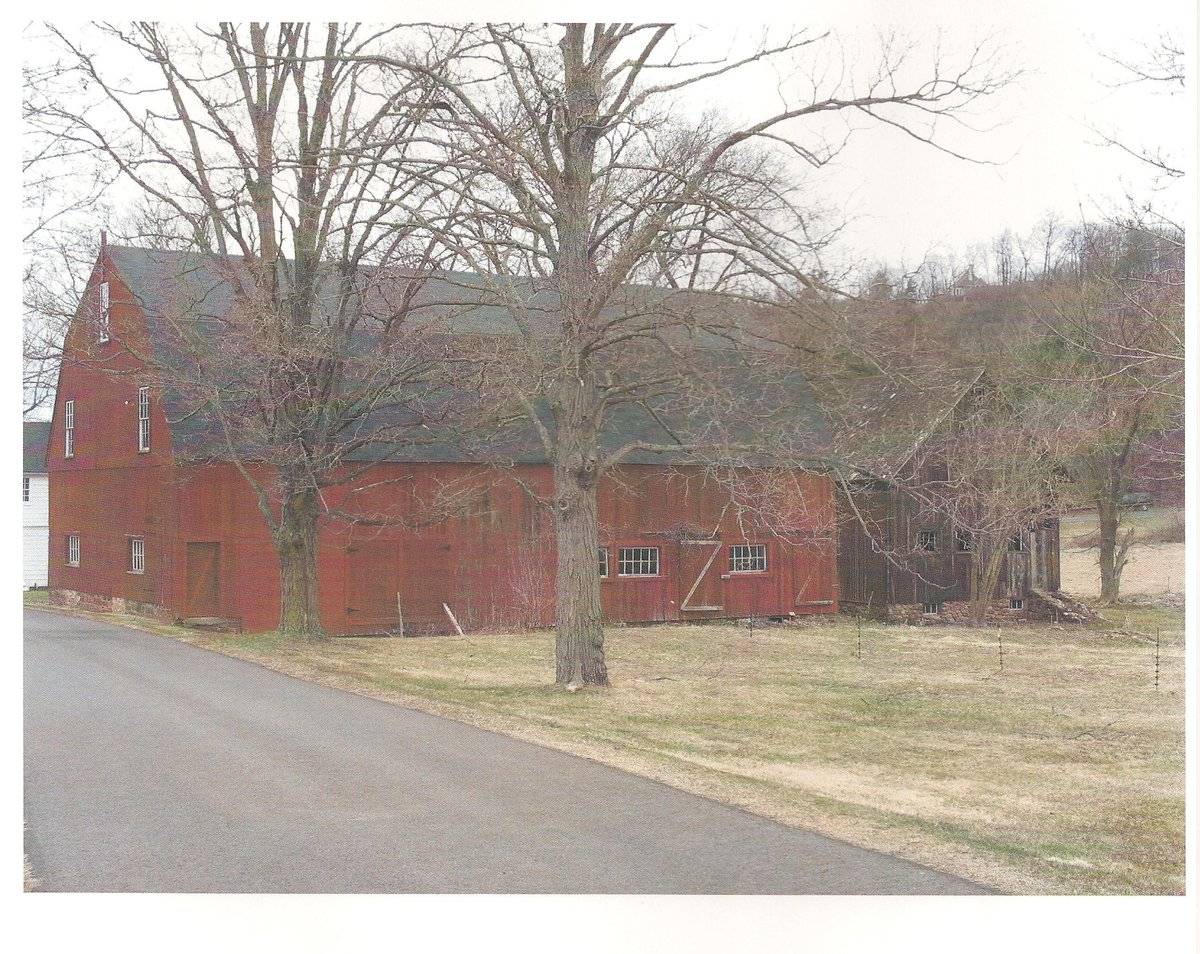
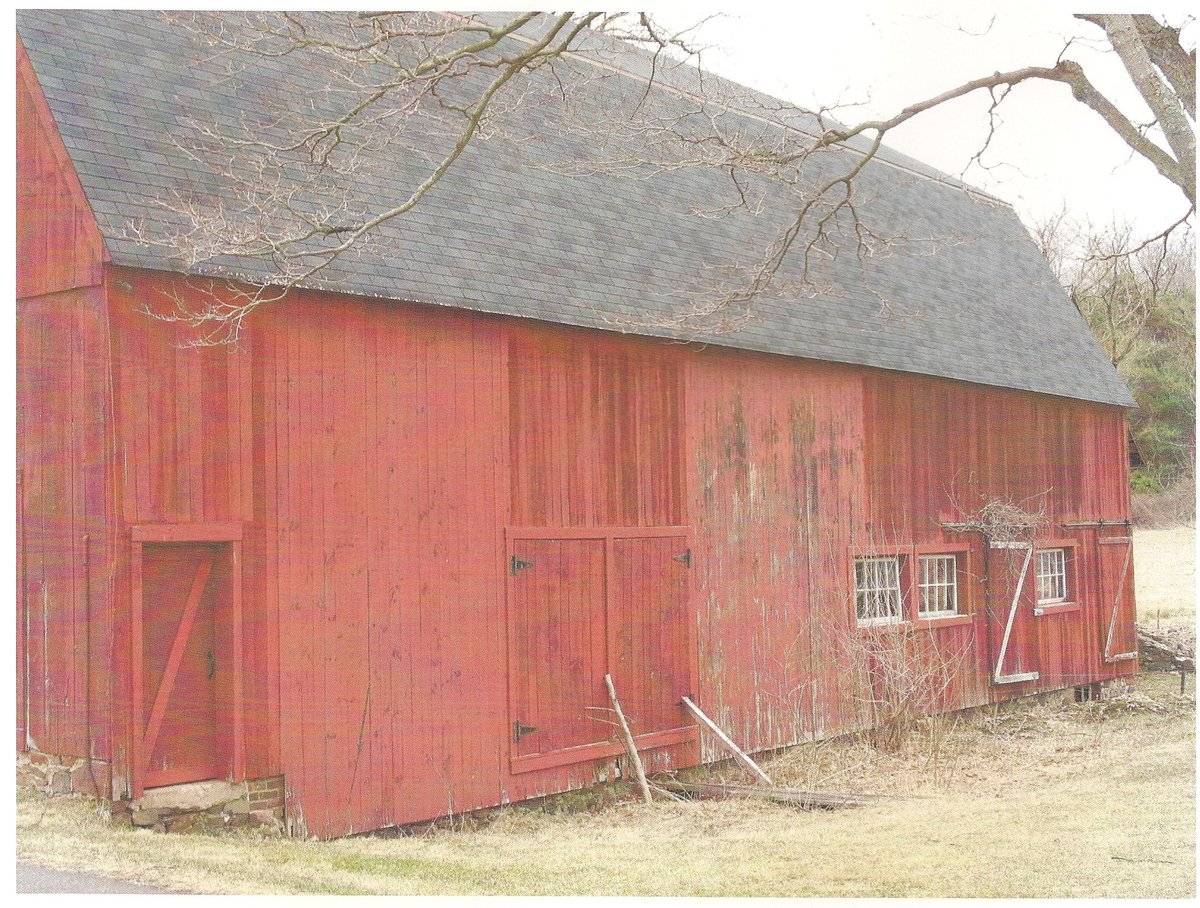
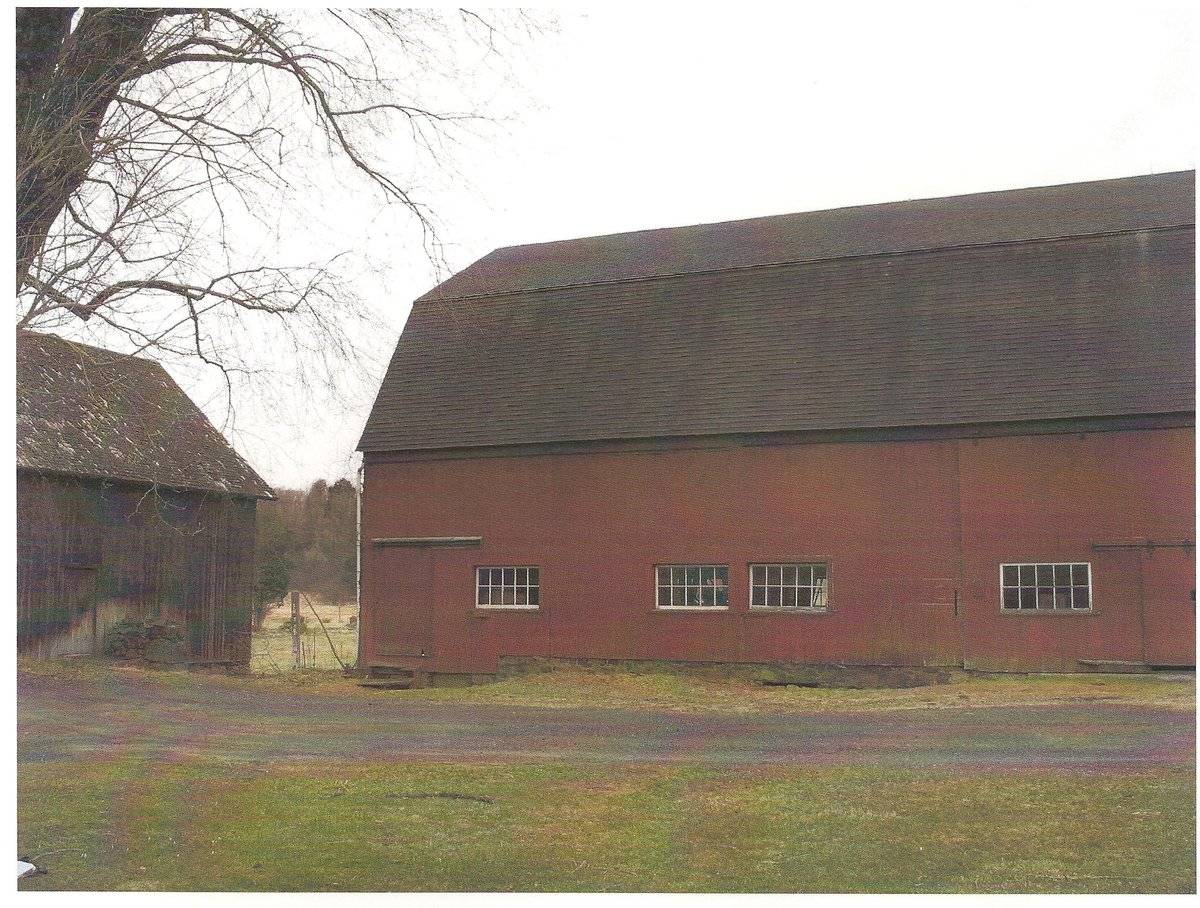
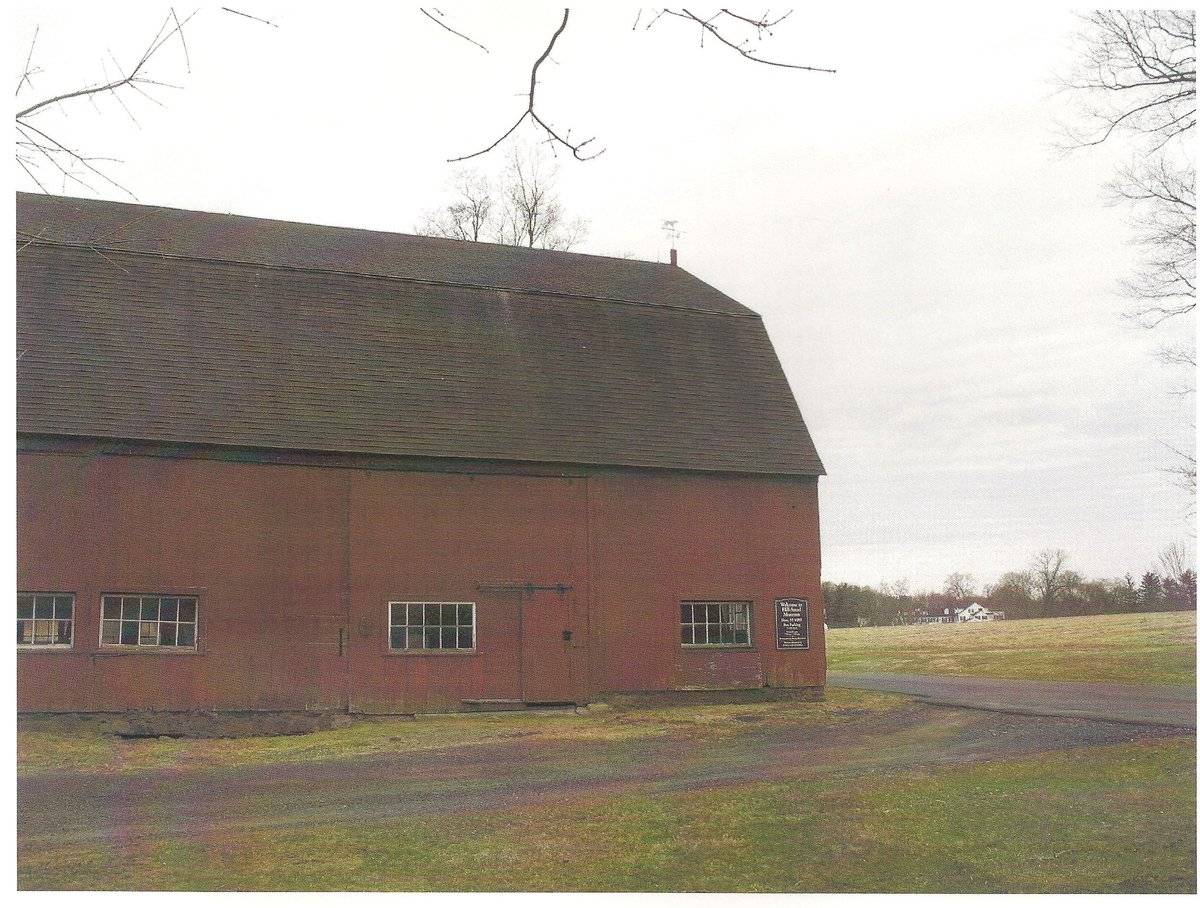
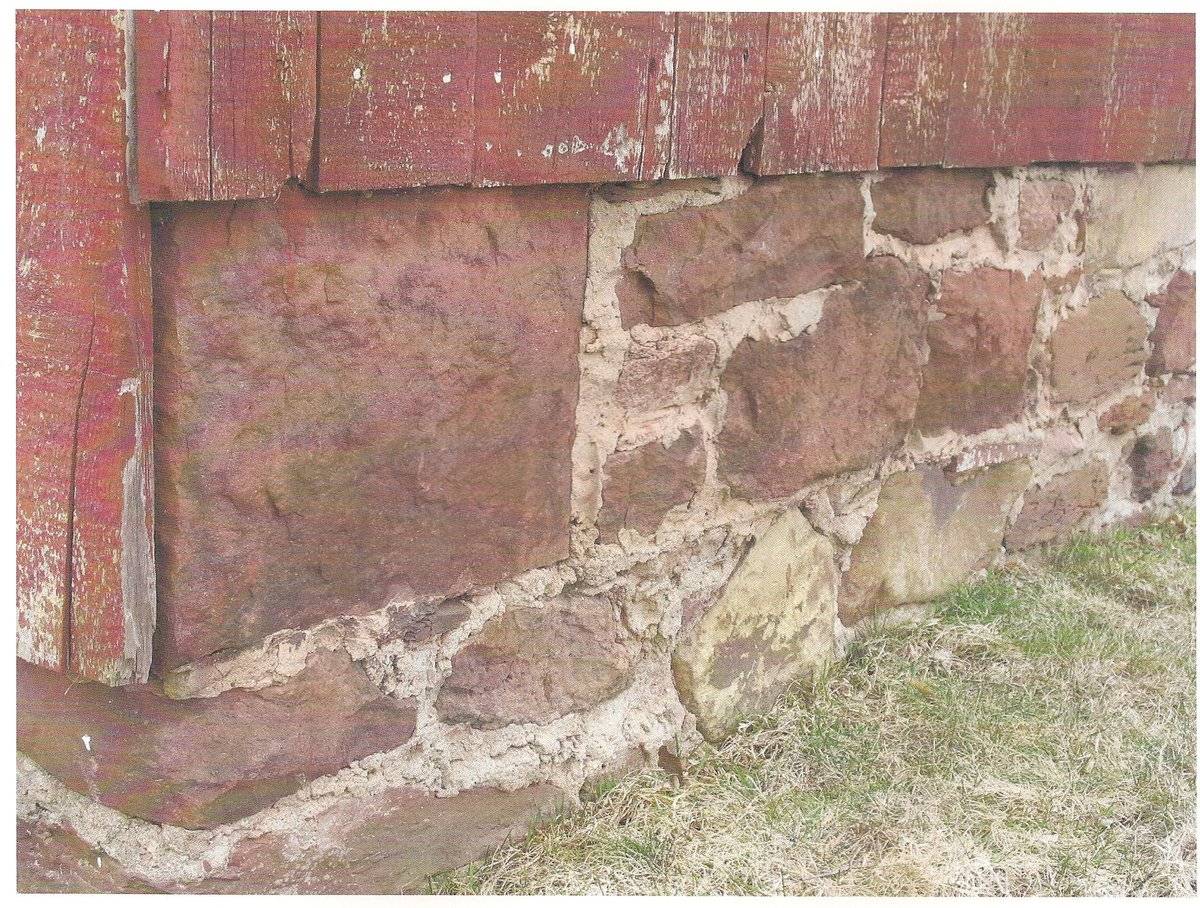
This is a 2 ½ story five-bay eave-entry barn with a gambrel roof and a basement below. The western gable-façade of the barn faces Hill-Stead Museum road with its ridgeline running perpendicular to the road along east-west. Another 1 ½ story eave-entry horse barn can be seen towards east of the main barn with its ridgeline running perpendicular along north-south. The main façade of the barn is the five-bay northern eave-façade which has the main entrance through a pair of double-height exterior-hung sliding wagon door on its second bay from the west. The sliding door of the main entrance has a sliding-weather door insert towards the west and a ten-pane stable window insert towards the east. The first bay from the west has a welcome sign to the museum followed by a similar ten-pane stable window. The third bay and the fourth bay from the west have similar ten-pane stable windows, placed adjacent to each other. The fifth bay on the façade from the west has a pass-through exterior-hung sliding door towards the eastern corner, preceded by a ten-pane stable window similar to the rest of the façade. The western gable-façade of the barn is almost symmetrical along the central axis through the apex of the roof. The façade is broken into three horizontal bands with distinct siding divide lines, one at the eaves level and the other near the changing slope of the gambrel roof. The lower band is punctuated by two ten-pane stable windows while the middle band has two pairs of six-over-six double-hung sash windows. A similar six-over-six double-hung sash window can be seen on the uppermost band, just below the apex of the roof. The façade has exposed fieldstone masonry foundation along the grade level and a single pass-through door on the lower band towards the southern edge. The southern five-bay eave-façade of the barn has multiple entries though a sunken pass-though braced door on the first bay from the west and a pair of hinged double-doors on the second bay from the west. Two pairs of single-leaf Z-braced exterior-hung sliding doors can be seen on the fourth and the fifth bay from the west. The façade is also punctuated by three ten-pane stable windows, one each on the third, fourth and fifth bays from the west. The eastern eave-façade of the barn is very similar to the western eave-façade, without the pass-through door at the lower band. The exposed fieldstone masonry foundation on the façade has three three-pane windows to light the basement below.
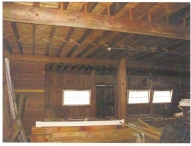
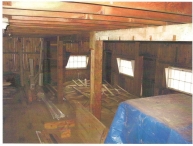
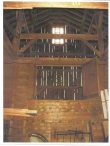
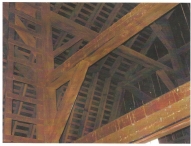
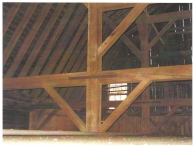
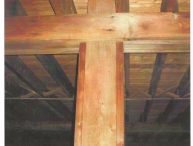
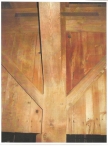
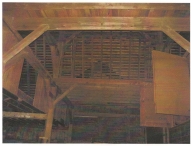
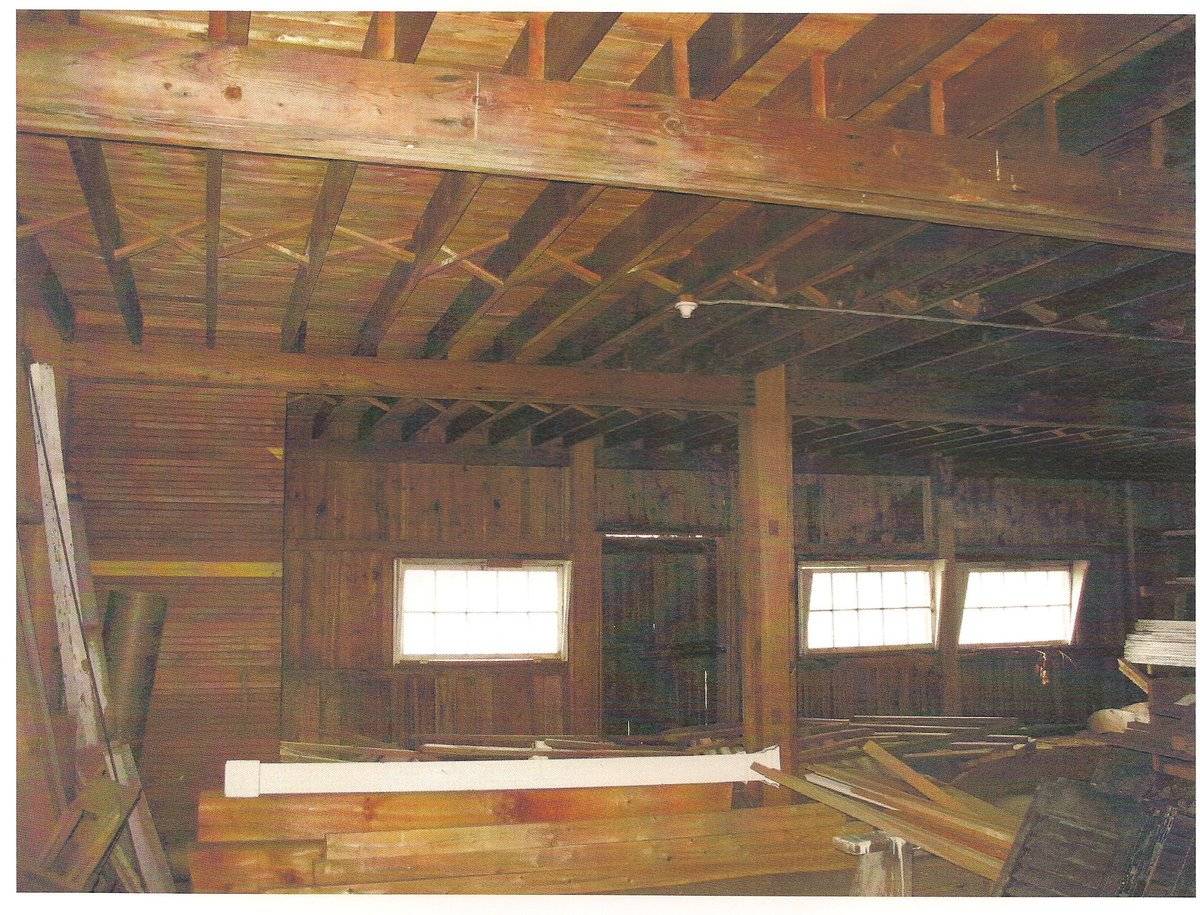
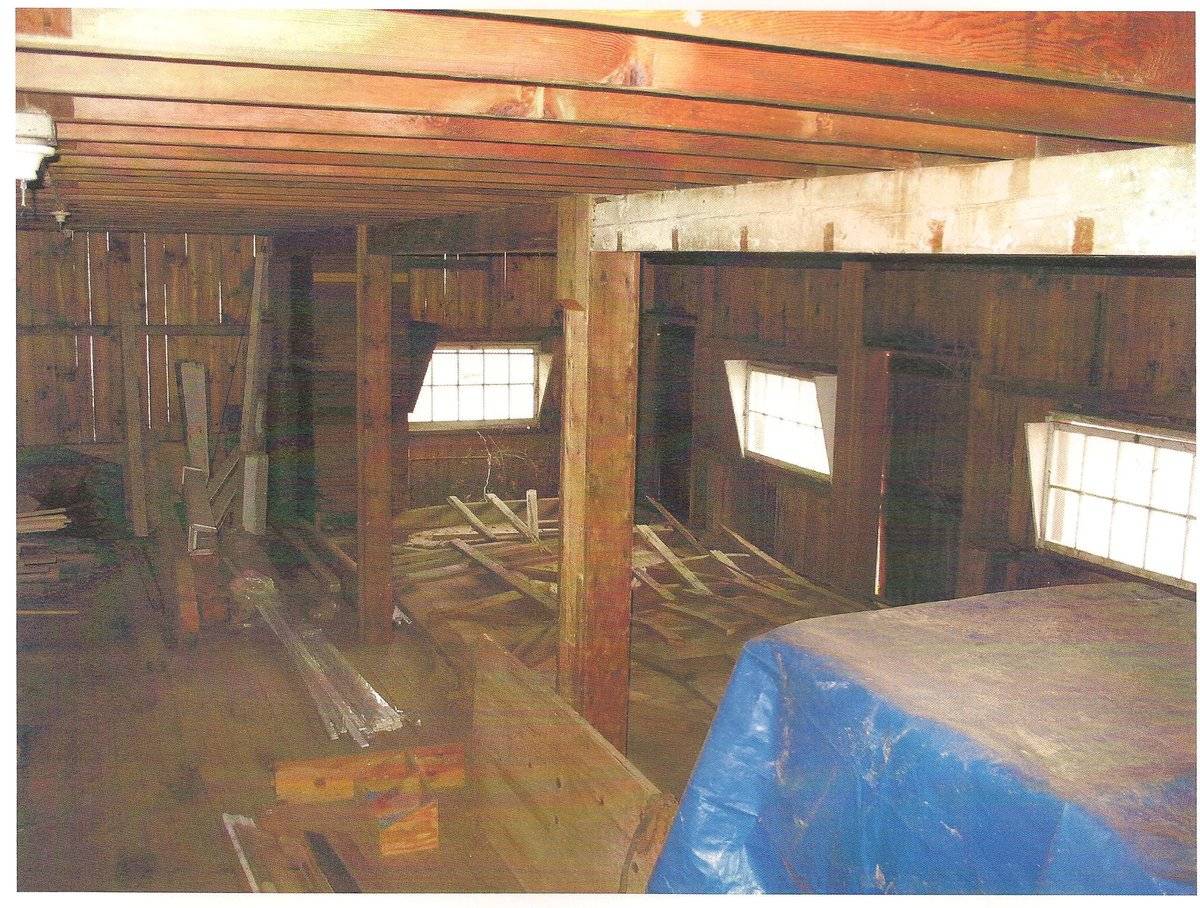
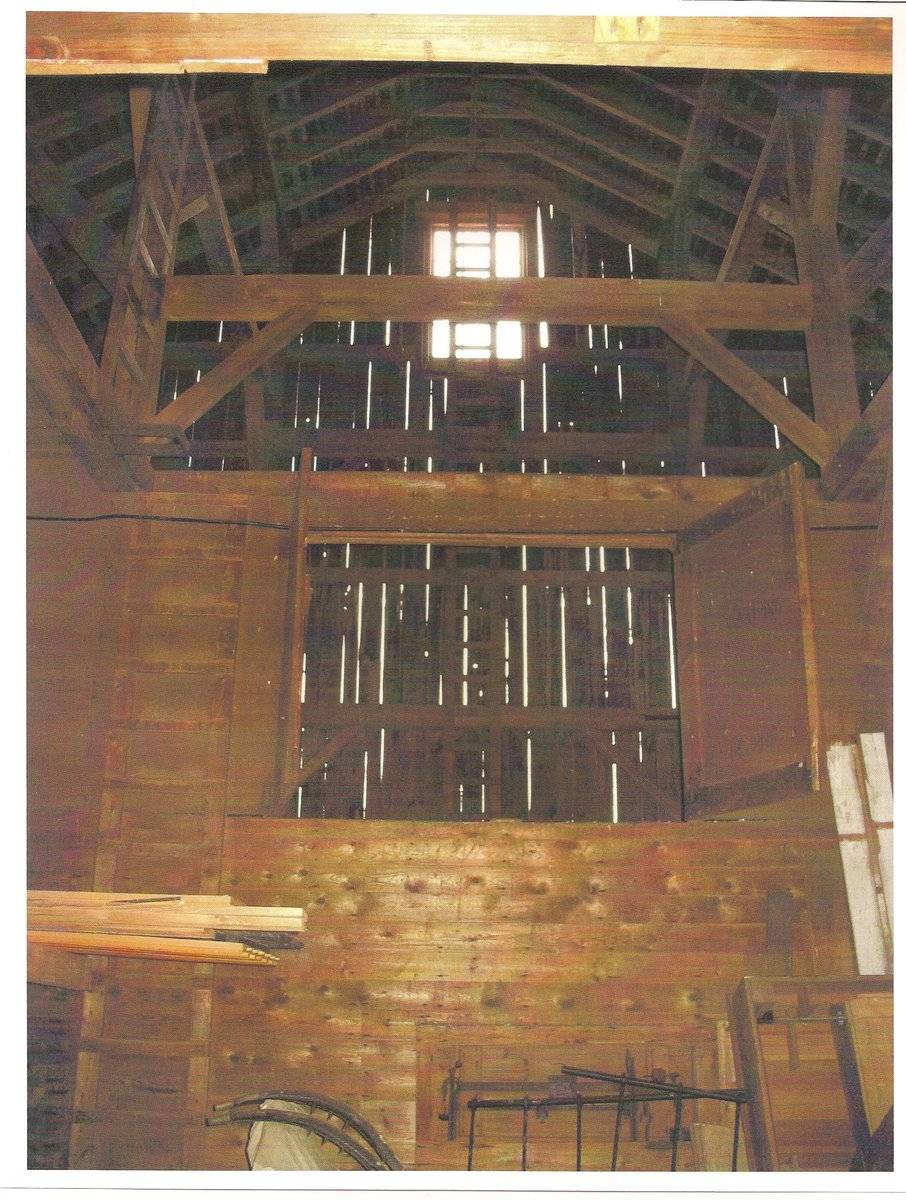
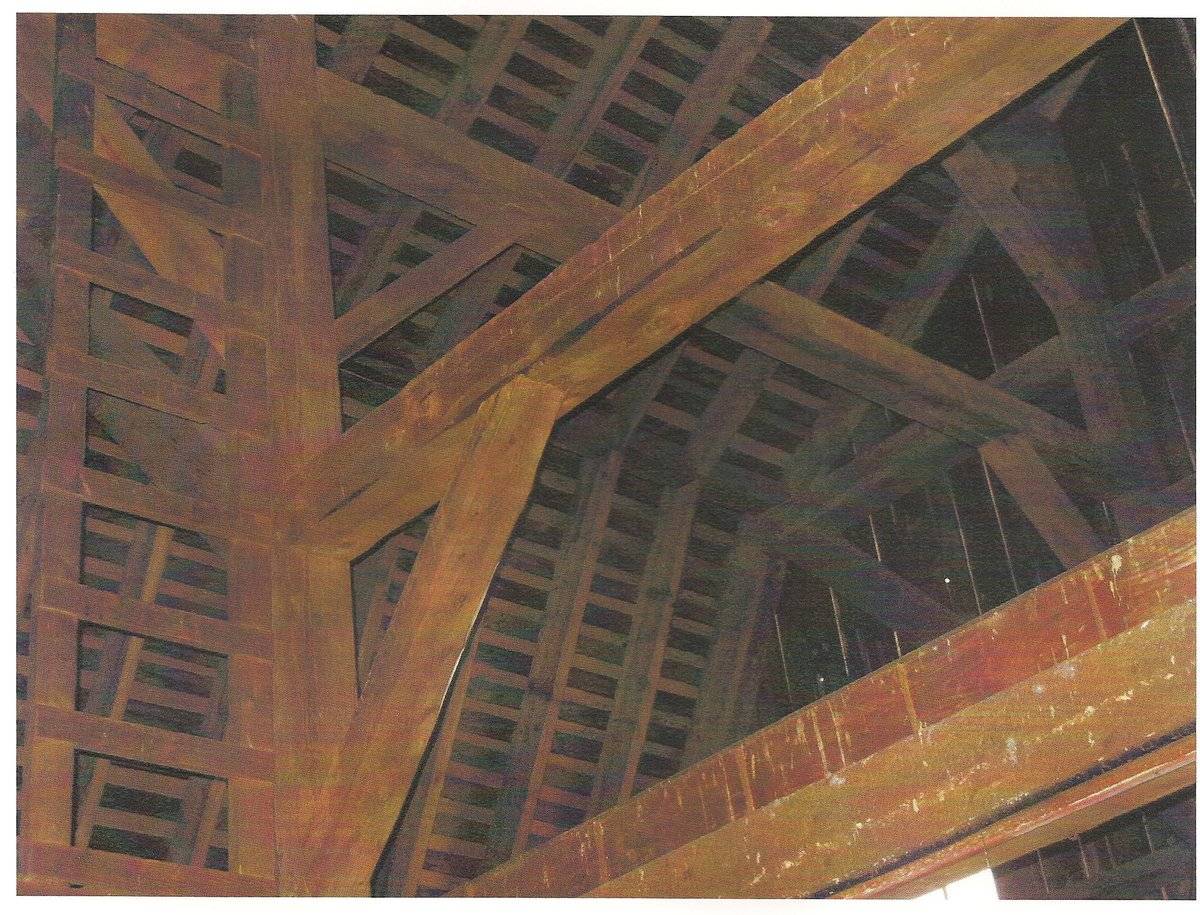
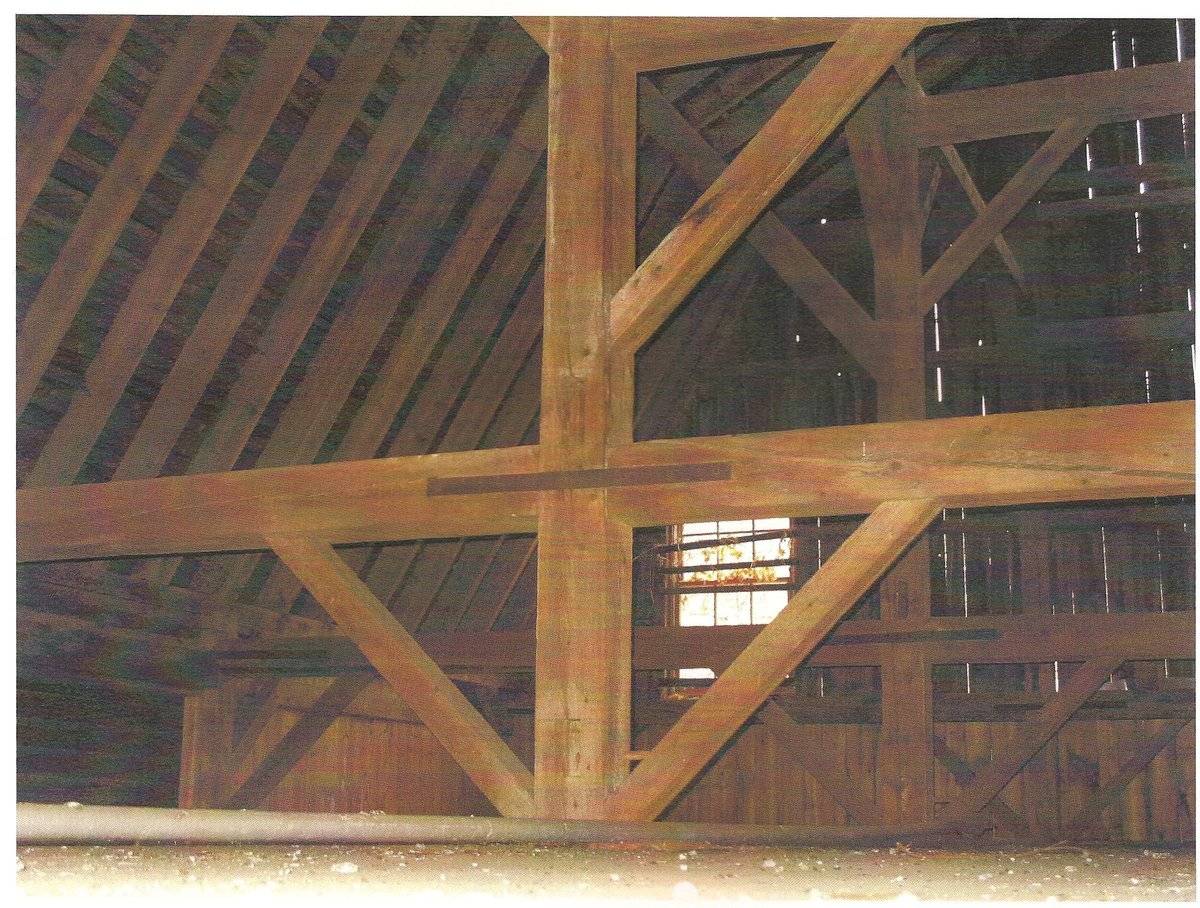
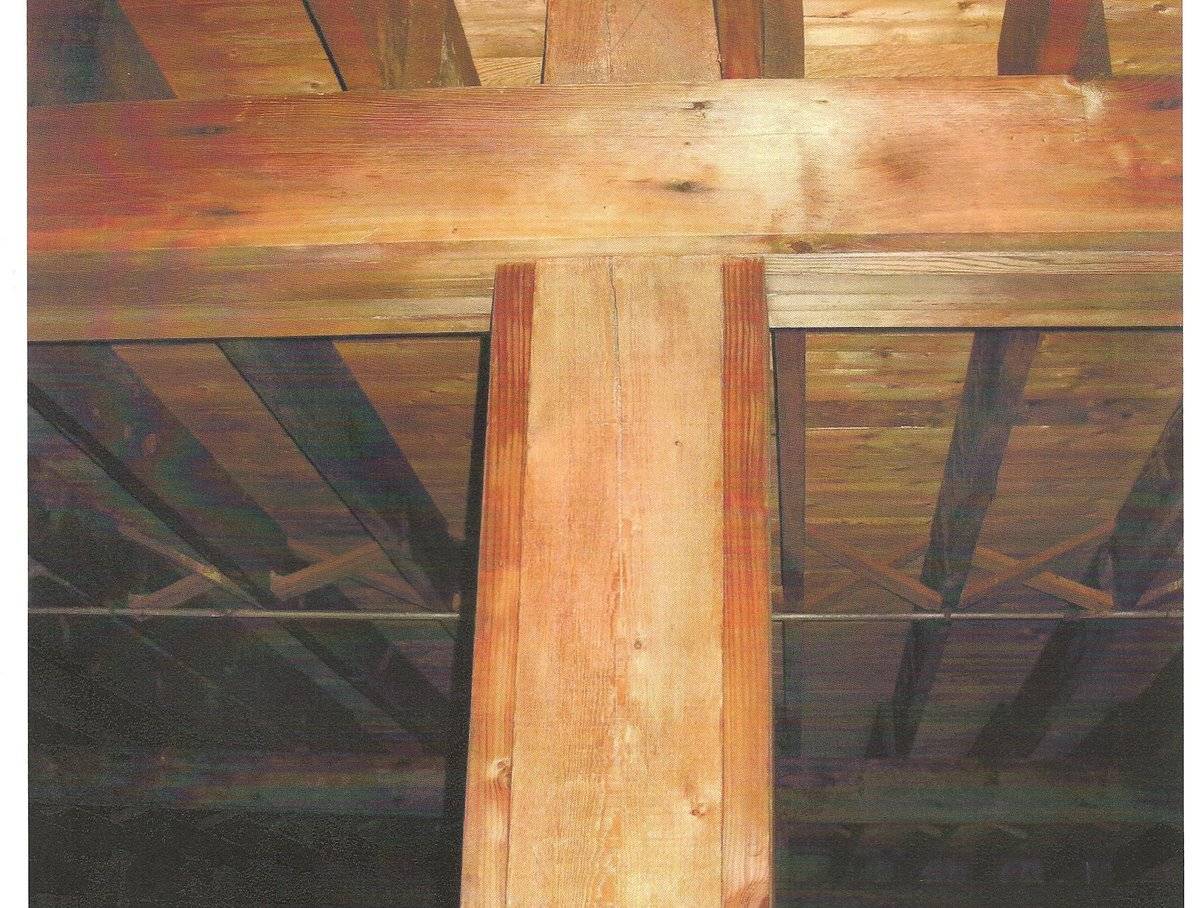
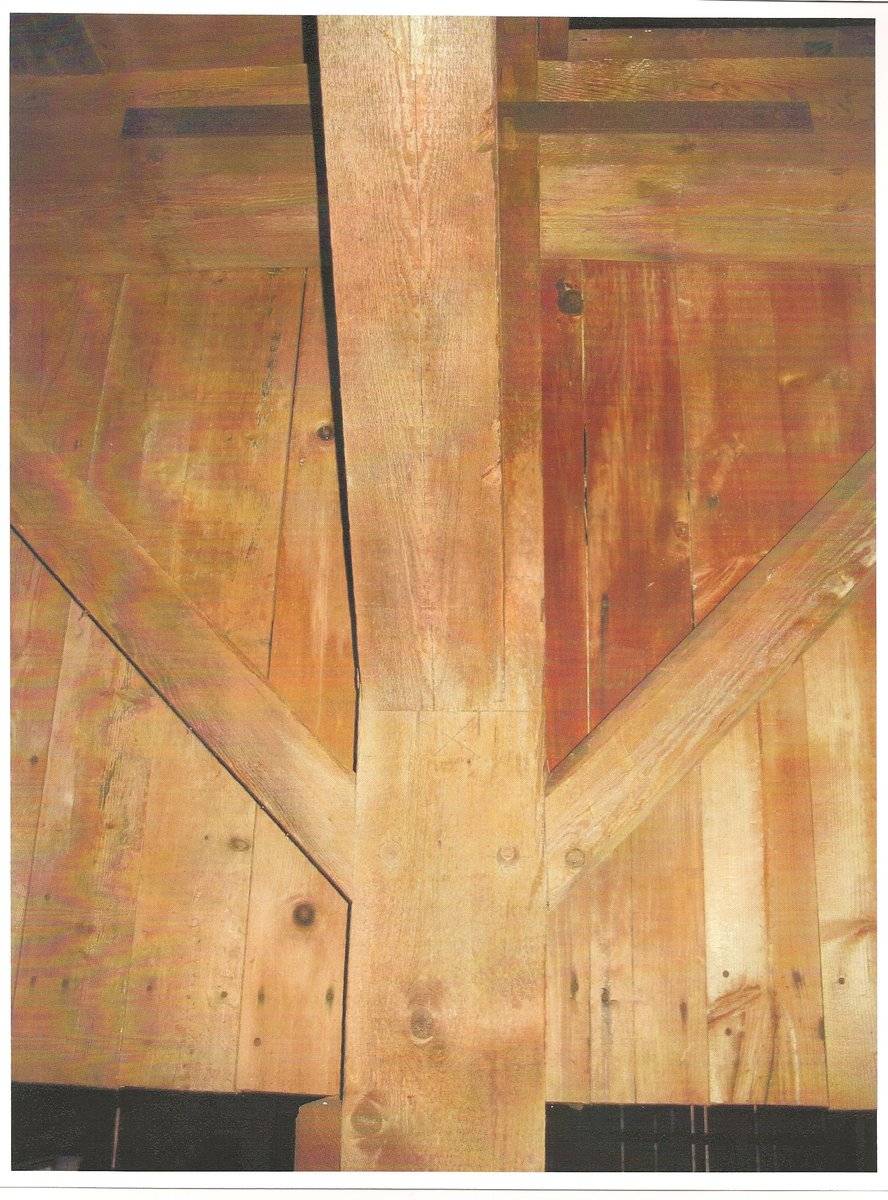
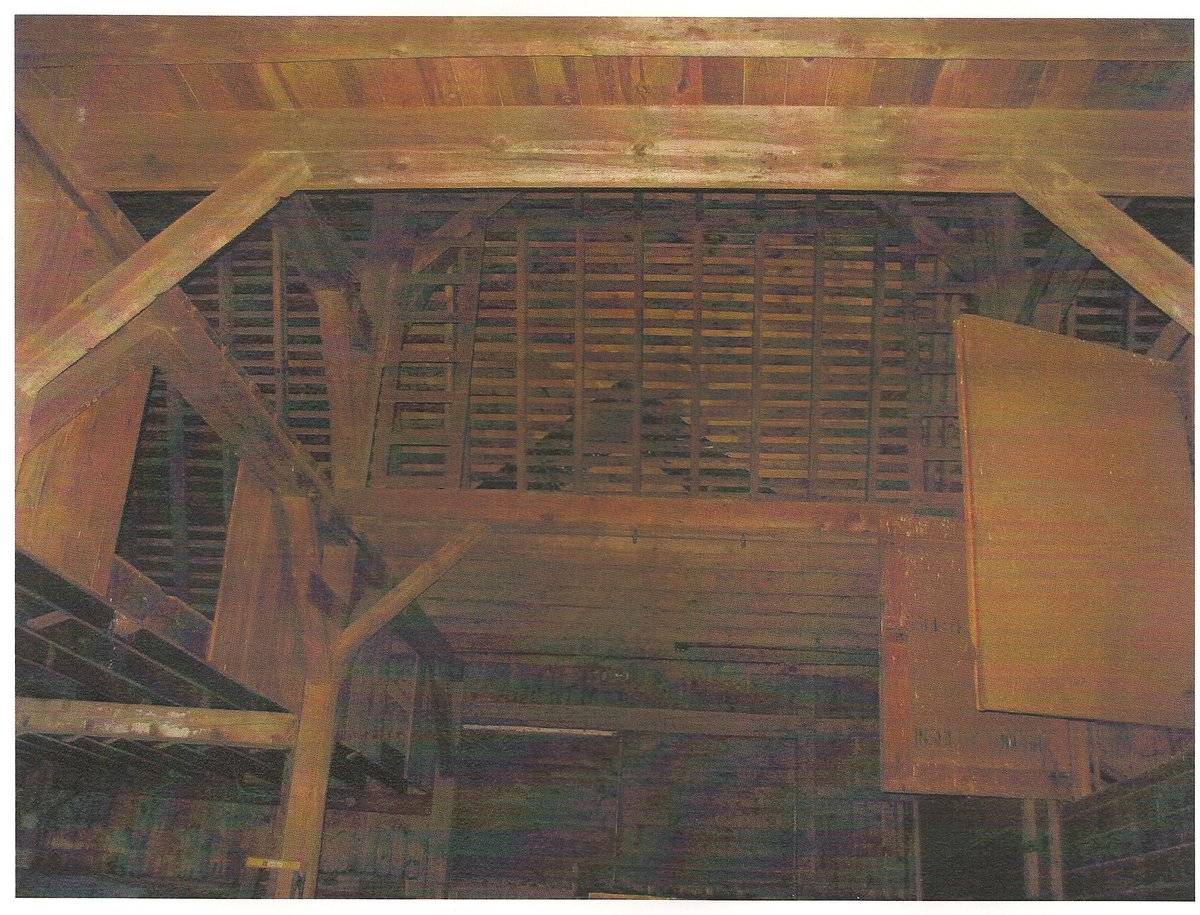
The barn has a main floor, a lower floor and a multi-level loft. The main floor framing consists of timber decking on wood joists which are supported on timber beams and brick piers. The loft is a later addition and uses dressed lumber in construction. The heavy timber frame of the barn is supported on mortared fieldstone masonry foundation. The barn has asphalt roofing and red painted vertical siding on walls.
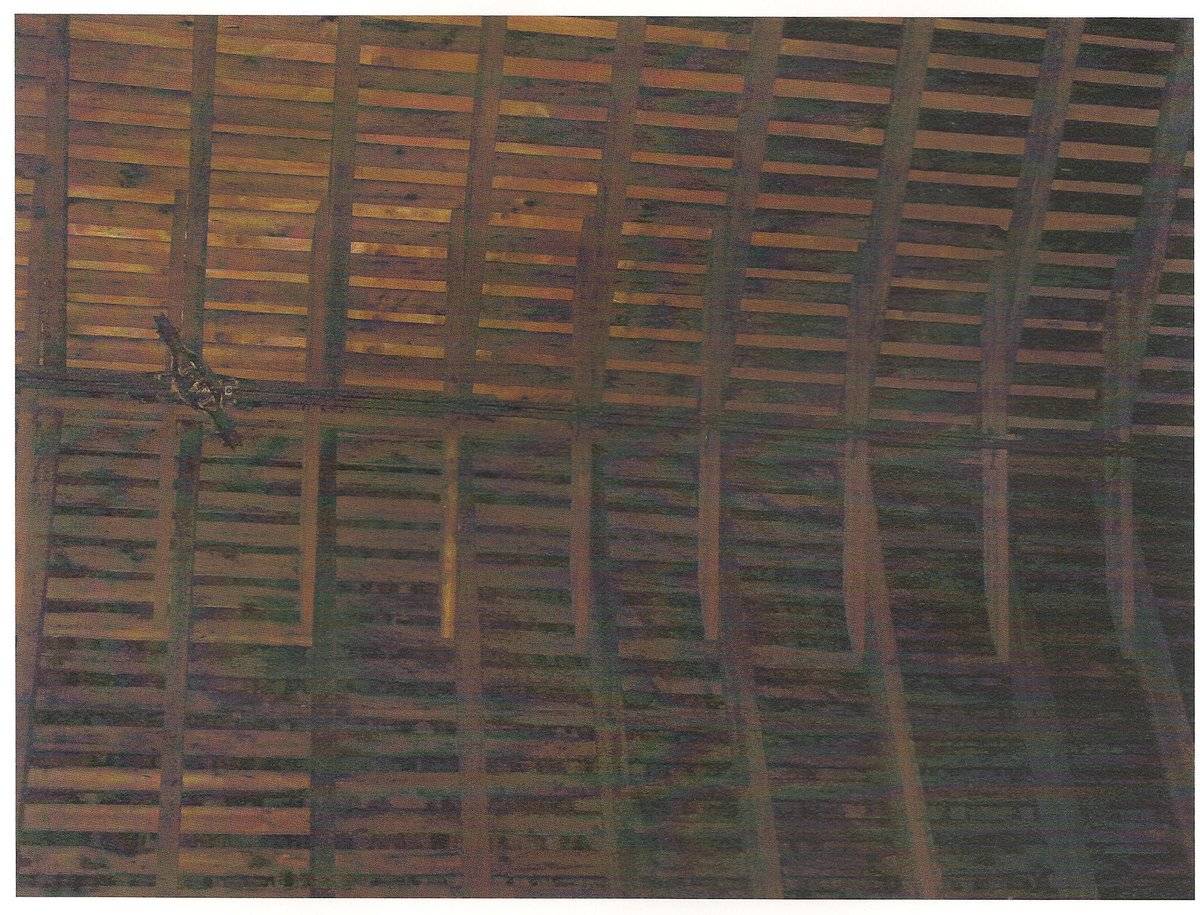
Historical Significance:The gambrel roof design was universally accepted for ground-level stable barns as it enclosed a much greater volume than a gable roof did, and its shape could be formed with trusses that did not require cross beams, which would interfere with the movement and storage of hay. Also known as the curb roof, the double slopes of the gambrel offer more volume in the hayloft without increasing the height of the side walls.
Field Notes
2008 Grant Recipient Also See: Hill-Stead Museum Horse Barn (2/3)- http://www.connecticutbarns.org/index.cgi/8093 Hill-Stead Museum Theatre Barn (3/3)- http://www.connecticutbarns.org/index.cgi/3726 Ransom David, Hill-Stead, National Register Nomination Number- 91002056 NRIS, National Park Service, 1991. Alfred A. Pope barn, 1901 http://pdfhost.focus.nps.gov/docs/NRHP/Text/91002056.pdf http://pdfhost.focus.nps.gov/docs/NRHP/Photos/91002056.pdf Alfred A. Pope barn, 1901 Ransom David, Hill-Stead, National Register Nomination Number- 91002056 NRIS, National Park Service, 1991. Red barn built at Hill-Stead, designed by Pope's daughter, Theodate, and built by Richard F. Jones. The bank barn, older than the red barn next to it, was built into a hillside slope. Commentary in an unidentified 1907 newspaper reported, "The 300 acre Pope estate supports a dozen horses, thirty sheep, 25 registered Guernseys...golf links, a sunken garden, an extensive vegetable garden, swine, apple and peach orchards, dairy buildings and silos." Hill-Stead Farm was especially famous for its prize-winning Guernsey, Anaesthesia's Faith (1919-1928), who was bred at Hill-Sted and was a world record holder producing 19,471 pounds of milk in a year, as well as 1,112 pounds of butterfat. Anaesthesia's Faith eventually spent time at Tillotson Farm on Town Farm Road. From an article by George Bragdon, Hartford Times, Nov. 15, 1958: In the flat river meadows near the ruins of the canal aqueduct, Theodate Pope Riddle would often go watch her flock of 300 sheep as they were driven homeward. In addition to her interest in sheep, Theodate was well known in cattle-breeding circles for her promotion of the Guernsey breed. Her father, Alfred A. Pope, established a Guernsey herd when he bought three cows as foundation stock from fellow townsman Charles J. Thompson, a charter member of the local Guernsey Club. While running her estate and farm, Theodate began buying up additional land and properties north and west of the Farmington River until she owned 3,000 acres. Among the properties acquired was the farm and home of father and son, Hezekiah and Edwin Tillotson, on (what is now) Town Farm Road. In the 1930s the Hill-Stead dairy barn was destroyed by fire. The herd was moved across the river to a big red barn Theodate built on the Tillotson place. It still stands today. Theodate Pope Riddle was Connecticut's sixth female licensed architect and gentlewoman farmer.
- Use & Accessibility
Use (Historic)
Use (Present)
Exterior Visible from Public Road?
Yes
Demolished
n/a
Location Integrity
Unknown
- Environment
Related features
Environment features
Relationship to surroundings
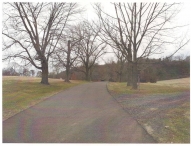
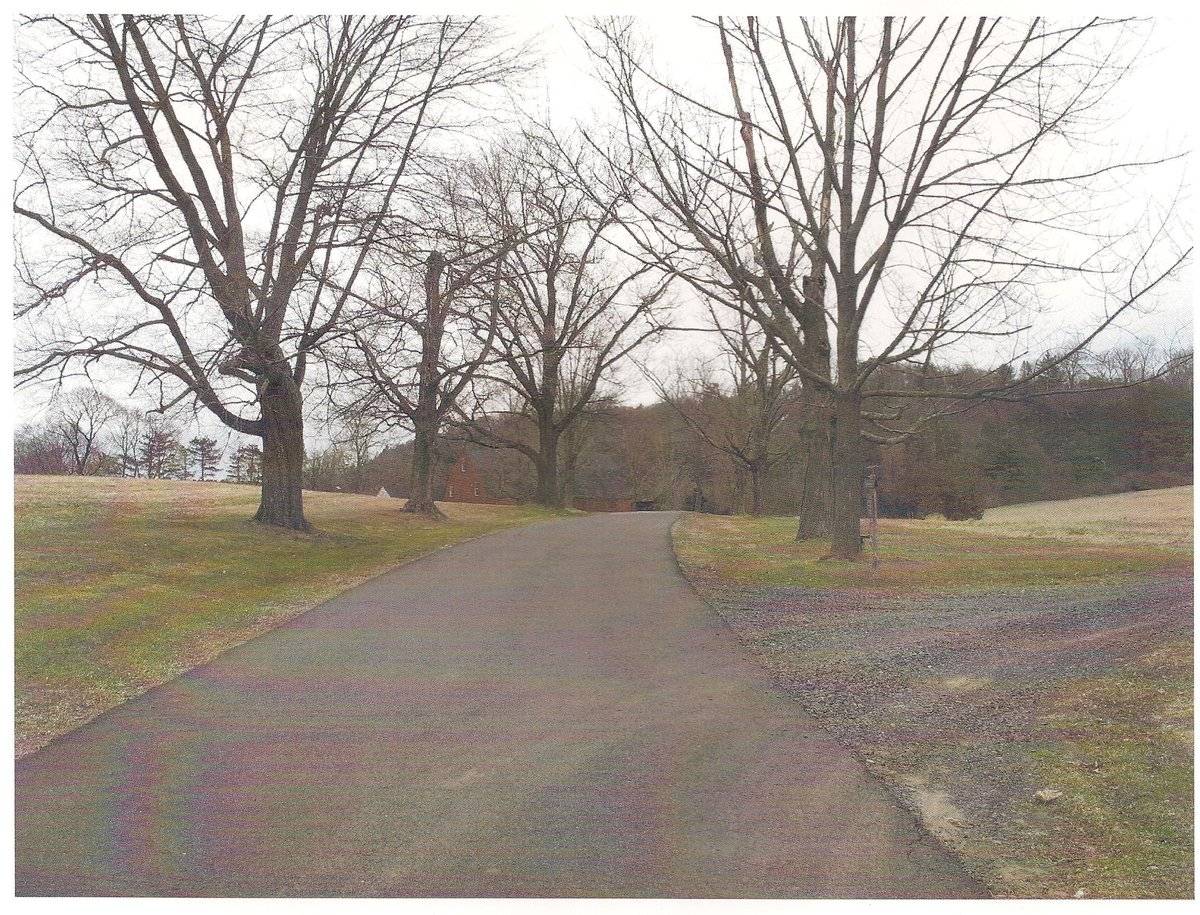
The property is situated on Route 4, very near to the Interstate 84 Farmington exit. It stands as a highly visible landmark at the ‘gateway’ into historic Farmington and speaks of the area’s agrarian past. Surrounded by former pasture lands and an apple orchard, they are a short distance from the Pope-Riddle House and Carriage Barn where visitors are greeted and collections are housed.
The barn is part of a three barn complex arranged in a U-shaped layout, opening to Hill-Stead Museum Road towards west. The barn forms one arm of the U-shaped barn complex with another 1 ½ story gable-roofed horse barn with perpendicular ridgeline forming the base [http://www.connecticutbarns.org/index.cgi/8093]. The other arm of the U-shaped barn complex is formed by a 1 ½ story make-shift theatre barn of the museum [http://www.connecticutbarns.org/index.cgi/3726]. The barn complex with the three barns is an integral part of the Hill-Stead Country Place estate.
The barn precinct includes a 1901 colonial-revival style house designed by architect Theodate Pope Riddle, a carriage barn complex with a garage/workshop and a lower farm complex including the U-shaped barn complex, Timothy North Farmhouse and Shepherd’s cottage.
- Typology & Materials
-
Building Typology
Materials
Structural System
Roof materials
Roof type
Approximate Dimensions
71 ft x 40.5 ft
- Source
-
Date Compiled
06/23/2010
Compiled By
T. Levine and M. Patnaik, reviewed by CT Trust
Sources
Photographs and information provided by –
Cynthia Cormier, Hill-Stead Museum, 35 Mountain Road, Farmington, CT-06032
cormierc@hillstead.org
860-677-4787, 860-677-01742008 Barns Grant application
Additional information provided by Charlotte Hitchcock.
Ransom David, Hill-Stead, National Register Nomination Number- 91002056 NRIS, National Park Service, 1991.
http://pdfhost.focus.nps.gov/docs/NRHP/Text/91002056.pdf
http://pdfhost.focus.nps.gov/docs/NRHP/Photos/91002056.pdf
Sexton, James, PhD; Survey Narrative of the Connecticut Barn, Connecticut Trust for Historic Preservation, Hamden, CT, 2005, http://www.connecticutbarns.org/history.Visser, Thomas D.,Field Guide to New England Barns and Farm Buildings, University Press of New England, 1997.
- PhotosClick on image to view full file
-