Barn Record Guilford
RETURN TO ‘FIND BARNS’- Building Name (Common)
- Frank O. Blatchley Carriage Barn
- Building Name (Historic)
- Frank O. Blatchley Carriage Barn
- Address
- 201 Water Street (Rte 146), Guilford
- Typology

- Overview
-
Designations
Historic Significance
Architectural description:
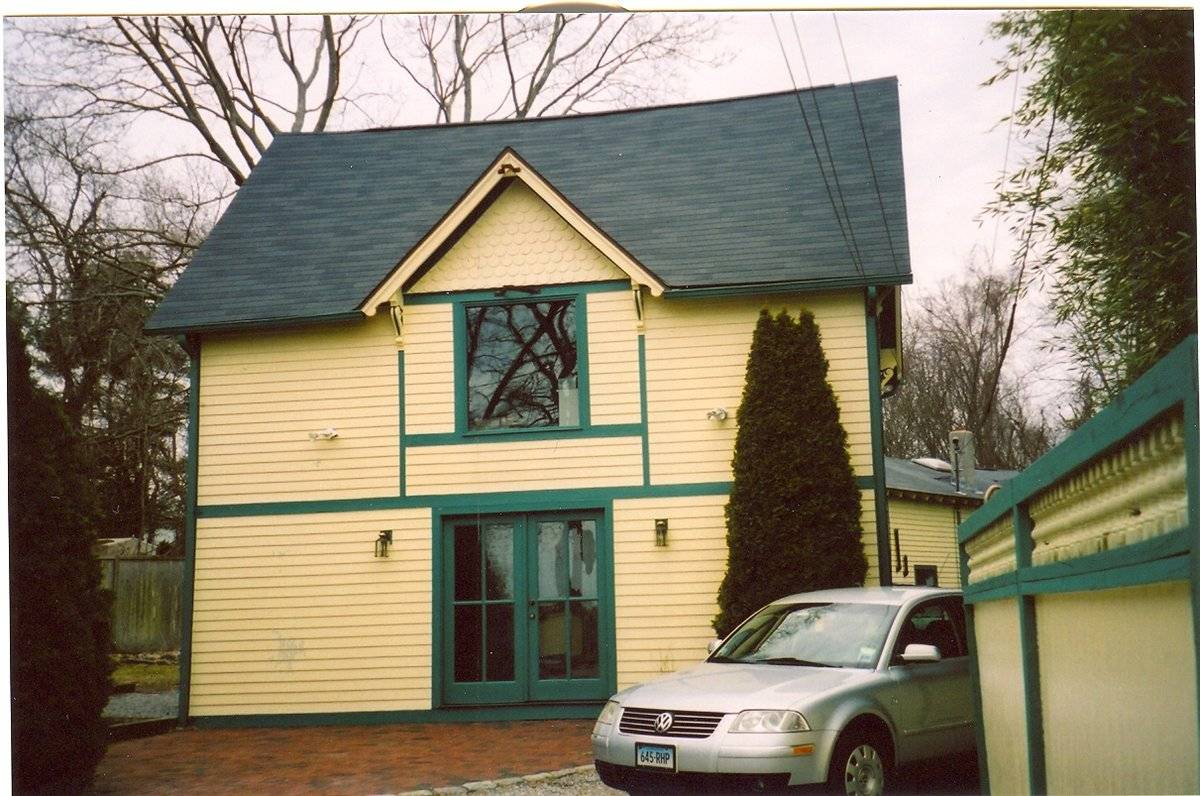
This is a 2 1/2-story gable-roofed eave-entry structure. The main façade faces south with the ridge-line running east to west, parallel to this portion of Water Street. The main entry is a central double pass-through doorway with two hinged four-pane glass “French” doors. Brass lanterns flank the doorway on each side. The second floor contains a single-pane picture window below a central wall dormer. The gable wall dormer features fish scale shingles, bargeboard with decorative ends, and scrolling brackets at the eaves. There also appear to be metal brackets centered at the bottom of the dormer and at the peak. The east gable-end first floor contains a double pass-through sliding glass door set off center to the south. The second floor consists of a set of four tall ribbon windows (probably casements) centered on the wall. The gable-story appears to be blank. The north eave-side appears to be blank. The first floor of the west gable-end contains two overhead garage doors. The upper story appears to be blank.
The barn is clad with clapboards with wood trim and decorative wood bands. The roof is covered with asphalt shingles. There is a wall dormer centered on the south façade. There are modern metal gutters along the eaves. The gable-ends feature bargeboards with curving ends, and scrolling brackets at the eaves. The barn has been converted for use as an office and garage. The windows and doors appear to be modern, though on the main façade they are likely in the original locations. The window above the south entry doors is in a location typically occupied by a hay door.
Historical significance:Until the 1830s, the horses used for riding and driving carriages were often kept in the main barn along with the other farm animals. By the 1850s, some New England farmers built separate horse stables and carriage houses. Early carriage houses were built just to shelter a carriage and perhaps a sleigh, but no horses. The pre-cursor to the twentieth-century garage, these outbuildings are distinguished by their large hinged doors, few windows, and proximity to the dooryard. The combined horse stable and carriage house continued to be a common farm building through the second half of the nineteenth century and the first decade of the twentieth century, until automobiles became common. Elaborate carriage houses were also associated with gentlemen farms and country estates of the late 19th and early 20th centuries. Another form of carriage barn, the urban livery stable, served the needs of tradespeople.
Field Notes
Adjacent to the salt marshes of the West River. Carriage house now used as an office. House circa 1892. Rear structure built as a tool storage building for a plumbing business, re-used as an office. The Blatchley family were ship-builders as far back as the 1830s. The shipyard was south of Route 146 on the bank of the West River. They sometimes built houses during the off-season. The Blatchley home was adjoining, and the family ran a boarding house at No. 207. 201 was built by Frank O., a mason and construction foreman who worked for the New York, New Haven and Hartford Railroad. As late as 1981, an advertising sign painted on the side of one of the outbuildings could still be seen. Contributing resource in the [Branford] Route 146 National Register Historic District No. 90000569.
- Use & Accessibility
Use (Historic)
Use (Present)
Exterior Visible from Public Road?
1
Demolished
n/a
Location Integrity
Unknown
- Environment
Related features
Environment features
Relationship to surroundings
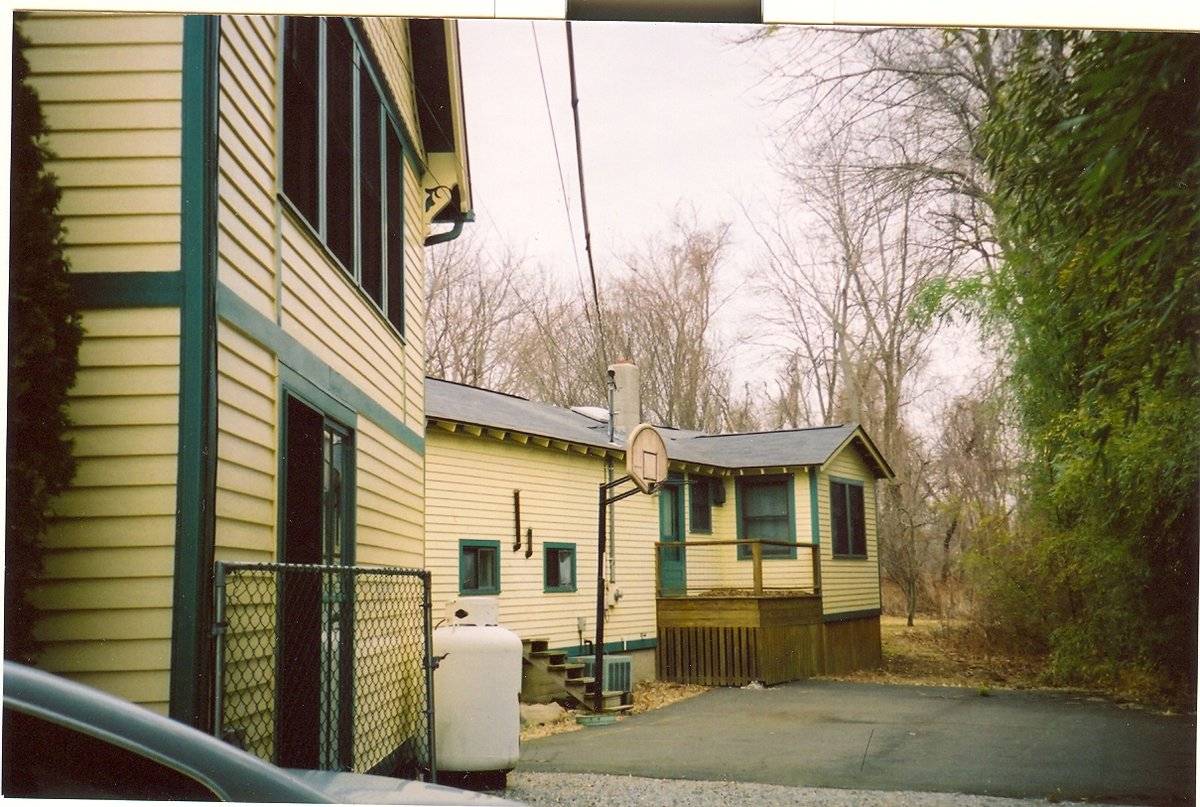
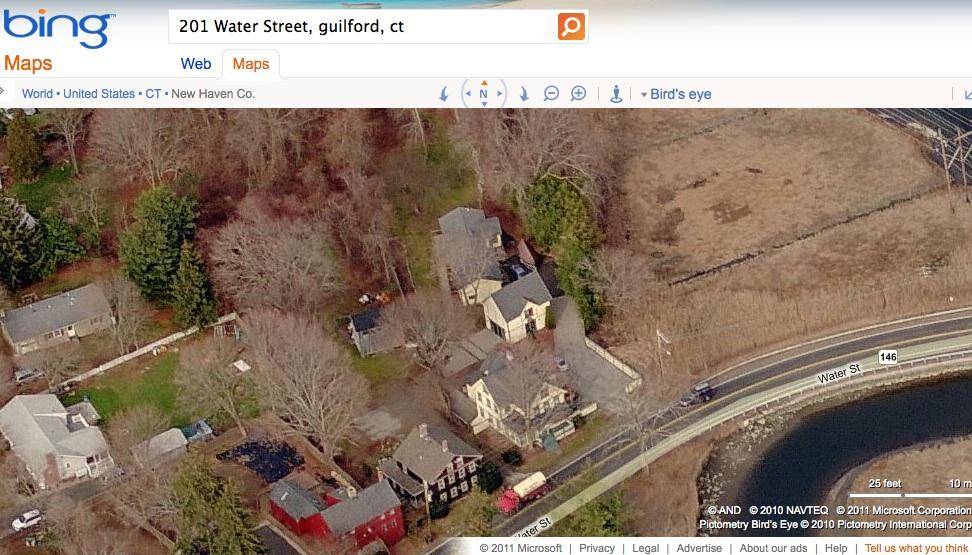
The barn is located on a .64-acre property on the north side of Water Street. The barn is associated with a cross-gable Victorian residence to the south with the main ridge-line perpendicular to the barn ridge-line. There is a one-story barn/ office to the north of the barn, which is set at an angle following a turn in the property line. This barn appears to have been converted into an office or residence. There is also a shed to the north behind the house. The property is in a residential area on the western edge of Guilford to the west of the West River and salt marshes. Guilford Harbor is to the south.
- Typology & Materials
-
Building Typology
Materials
Structural System
Roof materials
Roof type
Approximate Dimensions
Approximately 800 sq. ft.
- Source
-
Date Compiled
03/07/2011
Compiled By
W. Davey & T. Levine, reviewed by CT Trust
Sources
Field notes and photographs by Nona Bloomer date - 5/26/2008.
Town of Guilford GIS Viewer:
http://www.guilfordgis.com/detail.asp?parid=032013
Parcel ID: 032013
Book / Page 803 266Aerial Mapping:
http://maps.google.com
http://www.bing.com/maps accessed 03/06/2011.[Branford] Route 146 National Register Historic District No. 90000569, National Park Service, 1990.
Guilford Preservation Alliance, Survey of Barns and Outbuildings, 2008-2010.
Darling, Susan L., Brown, Elizabeth Mills, Survey of the historic architecture of Guilford, Connecticut, 1981-1982.
Helander, Joel E., A Treasury of Guilford Places, Joel E. Helander, 2008.
Sexton, James, PhD, Survey Narrative of the Connecticut Barn, Connecticut Trust for Historic Preservation, Hamden, CT, 2005, http://www.connecticutbarns.org/history.
Visser, Thomas D., Field Guide to New England Barns and Farm Buildings, University Press of New England, 1997.
- PhotosClick on image to view full file
-