Barn Record Guilford
RETURN TO ‘FIND BARNS’- Building Name (Common)
- Medad Stone Tavern Barn
- Building Name (Historic)
- Medad Stone Tavern
- Address
- 197 Three Mile Course, Guilford
- Typology

- Overview
-
Designations
Historic Significance
Architectural description:
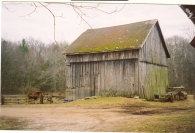
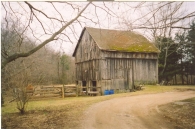
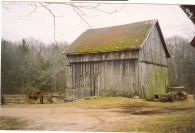
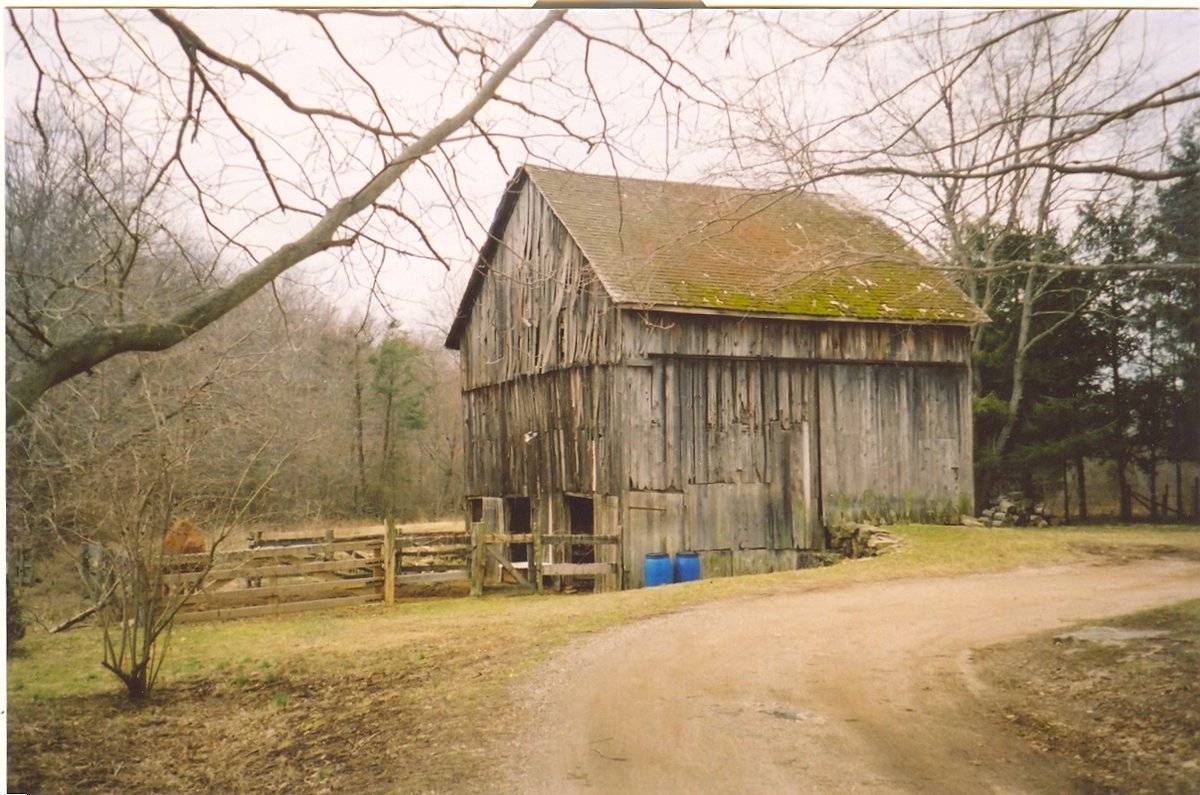
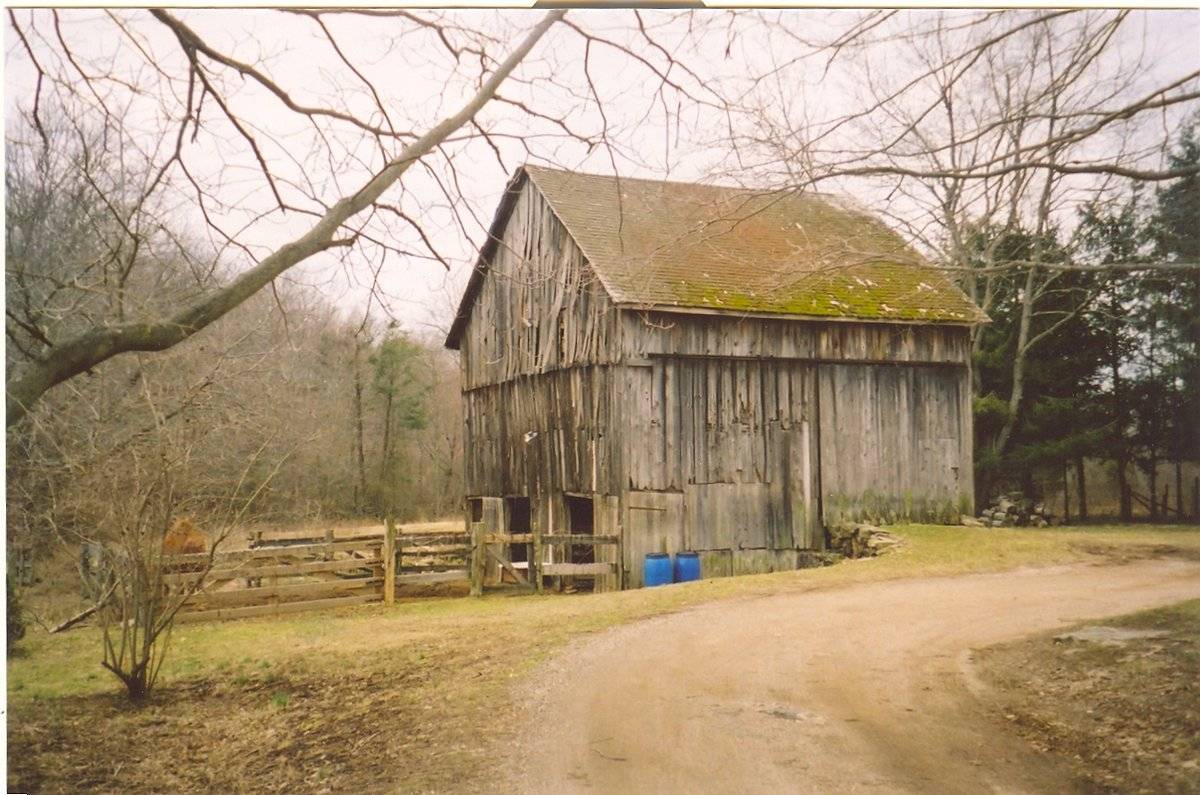
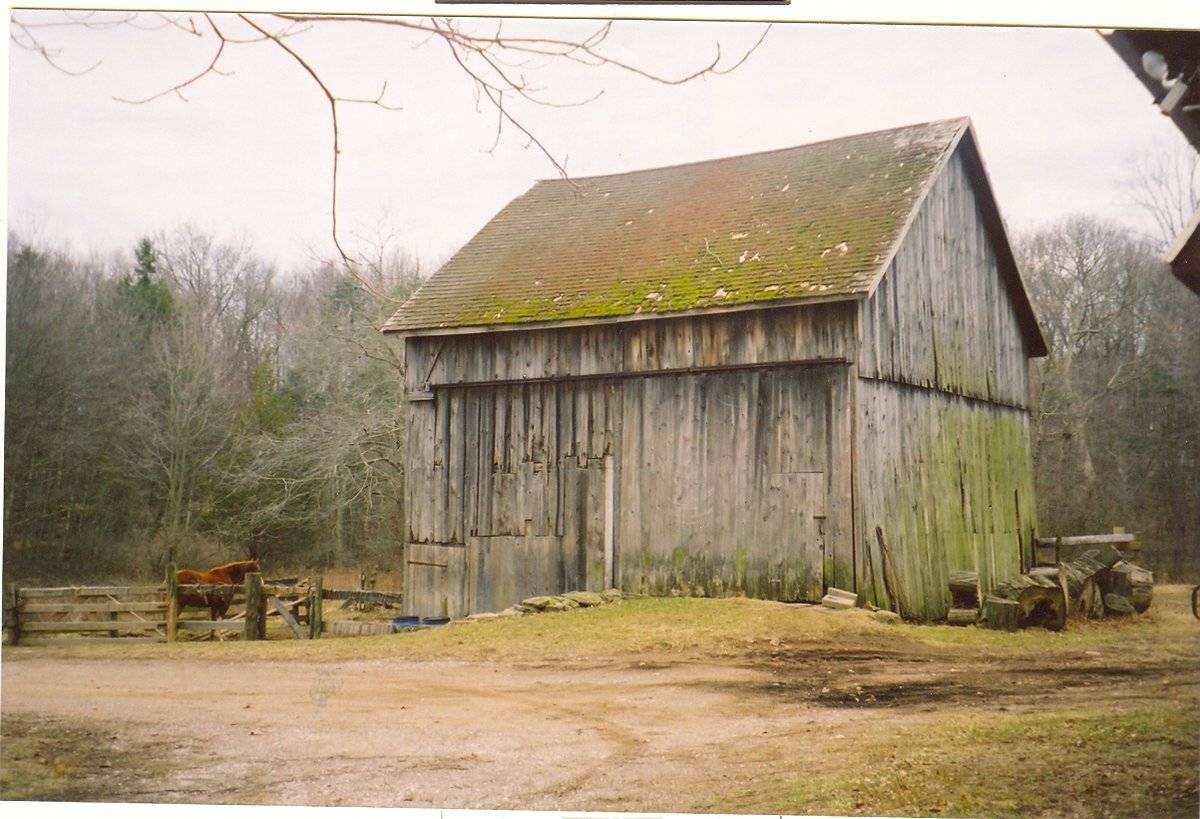
This is a 1 1/2–story two-bay eave-entry bank barn. The main eave-side faces east with the ridge-line running north to south, roughly parallel with Three Mile Course. The main entry on the east eave-side of the barn is a double-height sliding door in the north bay. There is a hinged pass-through door in the north side of the sliding door. On the basement level of the east eave-side there appears to be a hinged pass-through door in the south bay. The north gable-end of the barn is blank. There is a dropped girt line siding divide. On the west eave-side of the barn is a pair of double-height hinged doors with iron strap hinges opposite the main entry. The main stories of the south gable-end are blank. At the basement level there appear to be two separate hinged doors centered along the façade.
The barn is clad in flush-board. The gable roof appears to be sheathed in wood shingles. The foundation is dry-laid fieldstone. There is an earthen ramp leading to the main entry that is banked with fieldstone on the south side. A similar ramp appears to be extant on the west side.
Historical significance:The oldest barns still found in the state are called the “English Barn,” “side-entry barn,” “eave entry,” or a 30 x 40. They are simple buildings with rectangular plan, pitched gable roof, and a door or doors located on one or both of the eave sides of the building based on the grain warehouses of the English colonists’ homeland. The name “30 by 40” originates from its size (in feet), which was large enough for 1 family and could service about 100 acres. The multi-purpose use of the English barn is reflected by the building’s construction in three distinct bays - one for each use. The middle bay was used for threshing, which is separating the seed from the stalk in wheat and oat by beating the stalks with a flail. The flanking bays would be for animals and hay storage.
The 19th century saw the introduction of a basement under the barn to allow for the easy collection and storage of a winter’s worth of manure from the animals sheltered within the building. The bank barn is characterized by the location of its main floor above grade, either through building into a
hillside or by raising the building on a foundation. This innovation, aided by the introduction of windows for light and ventilation, would eventually be joined by the introduction of space to shelter more animals under the main floor of the barn.In this instance the typical three-bay barn has been shortened to two bays.
Historical background:
The Medad Stone Tavern which was built in 1803 by Medad Stone to serve as a Tavern. As the Boston Post Road was not rerouted that way it never opened. The building has 14 rooms and 10 fireplaces. The Guilford Keeping Society inherited it from Len Hubbard in 2001. It was decided to restore it and open it as the “Tavern that opened 200 years late.” The property also holds a barn, corn crib and extensive fields. (Guilford Keeping Society web site)
Field Notes
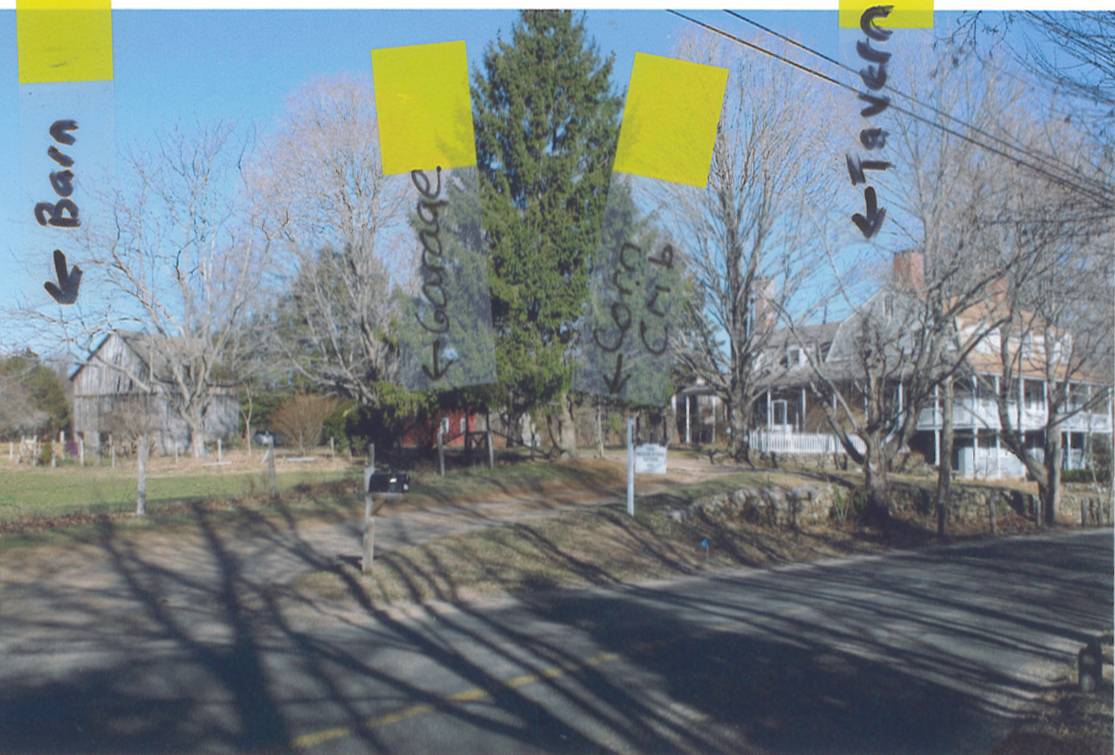
"Frame barn 1800; 624 sq. ft." (2007 assessment) 2012 Barns Grant pre-application. The barn is currently used to house 2 horses. The 10 acres of the Medad Stone Tavern property is located between land owned by the Guilford Land Trust and Westwoods to the east and west. An elementary school is almost adjacent to the north. There are private residences to the north and south. The barn is an integral part of the historic landscape of the Medad Stone Tavern property. The 10 acre site includes the 1803 tavern, the barn, a corn crib and a garage. The house and barn are situated between nature areas (including the Spencer Creek Preserve) the ensemble of which creates an outstanding rural landscape of the historic tavern building, open meadows and mixed hardwoods. The barn is visible from the public right of way and delineates the "historic barnyard" typical of 19th century farmsteads. In 2001, the site was donated to the Guilford Keeping Society by long time resident, Len Hubbard. Mr. Hubbard used the barn to board horses and store farm equipment and hay. The GKS has maintained the historic use, bartering the barn and south and west pastures to private owners for horses in return for lawn cutting and plowing services as Len had done. Since the spring of 2011, the Len Hubbard community garden has occupied the north pasture and has just completed it's first very successful garden season. The renewed garden has brought more people to the property and a renewed interest in the barn.
- Use & Accessibility
Use (Historic)
Use (Present)
Exterior Visible from Public Road?
Yes
Demolished
n/a
Location Integrity
Original Site
- Environment
Related features
Environment features
Relationship to surroundings
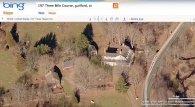
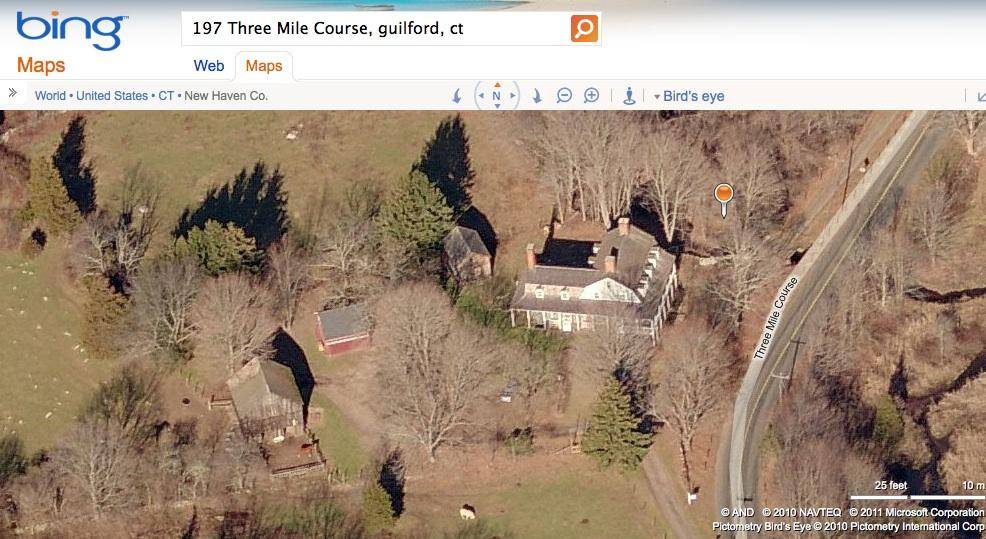
This barn is located on a 10 acre property along the west side of Three Mile Course. It is located to the southwest of a gambrel-roofed Georgian/Federal colonial style house built in 1803. The ridge-line of the barn is turned slightly to the west, while the ridge-line of the house is turned slightly to the east of north-south. There is a shed to the northeast of the barn and a small barn or shed directly behind the house. A post and plank fence extends from the south basement level of the barn forming an animal pen. There is a stonewall to the south of the animal pen running perpendicular to the barn ridge-line. There are two stonewalls in the field to the north of the barn. The property is located in a residential area to the west of Guilford town center and West River at the foot of a hill to the west.
- Typology & Materials
-
Building Typology
Materials
Structural System
Roof materials
Roof type
Approximate Dimensions
28 by 26, approximately 700 square feet.
- Source
-
Date Compiled
02/28/2011
Compiled By
W. Davey & T. Levine, reviewed by CT Trust
Sources
Field notes and photographs by Nona Bloomer - 5/26/2008.
Additional field notes and photographs by Winnie Seibert - 11/2/2011.
Aerial Mapping:
http://www.bing.com/maps accessed 02/28/2011.Medad Stone Tavern National Register Nomination No. 08001378, National Park Service, 2009.
Medad Stone Tavern:
http://www.guilfordkeepingsociety.com/Sexton, James, PhD, Survey Narrative of the Connecticut Barn, Connecticut Trust for Historic Preservation, Hamden, CT, 2005, http://www.connecticutbarns.org/history.
Visser, Thomas D., Field Guide to New England Barns and Farm Buildings, University Press of New England, 1997.
- PhotosClick on image to view full file
-