Barn Record Bristol
RETURN TO ‘FIND BARNS’- Building Name (Common)
- Brislington Meadows
- Building Name (Historic)
- Brislington Meadows
- Address
- 1330 Burlington Avenue, Bristol
- Typology
- Overview
-
Designations
n/a
Historic Significance
Architectural description:
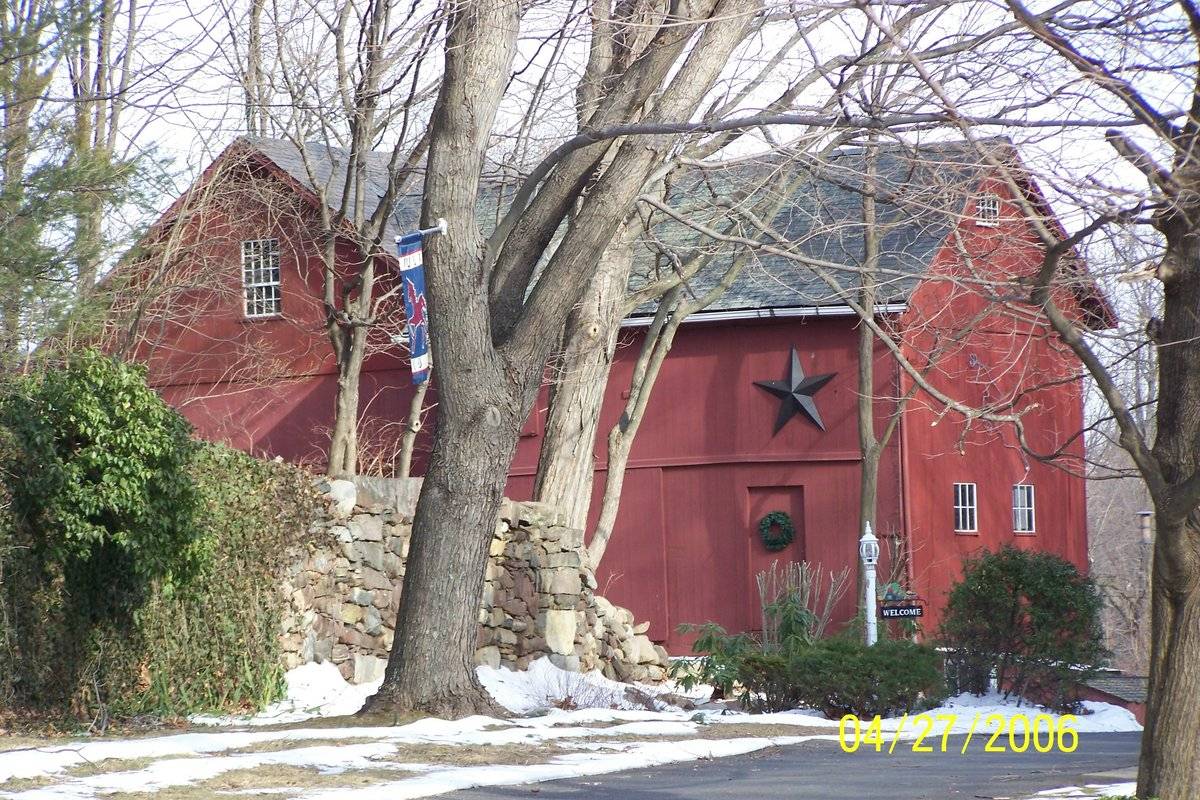
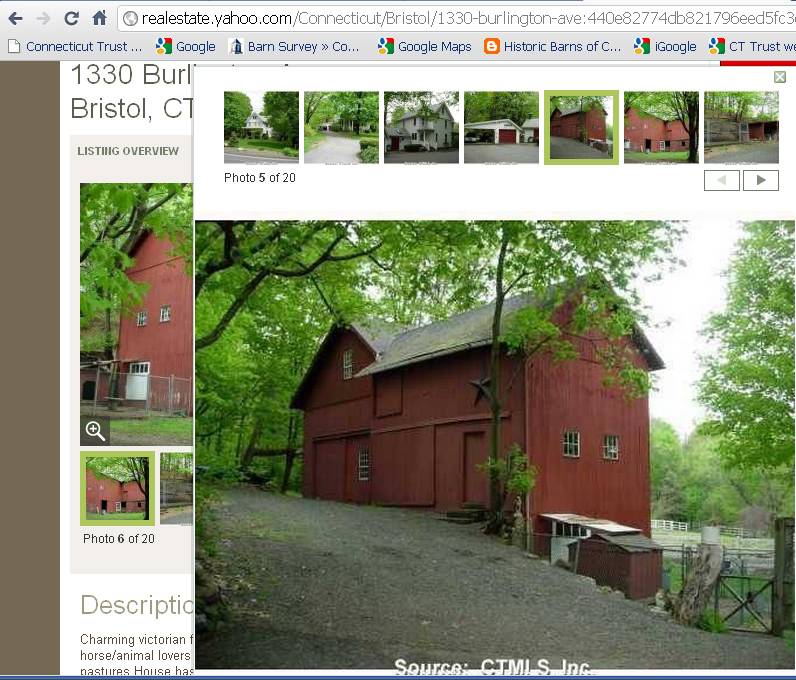
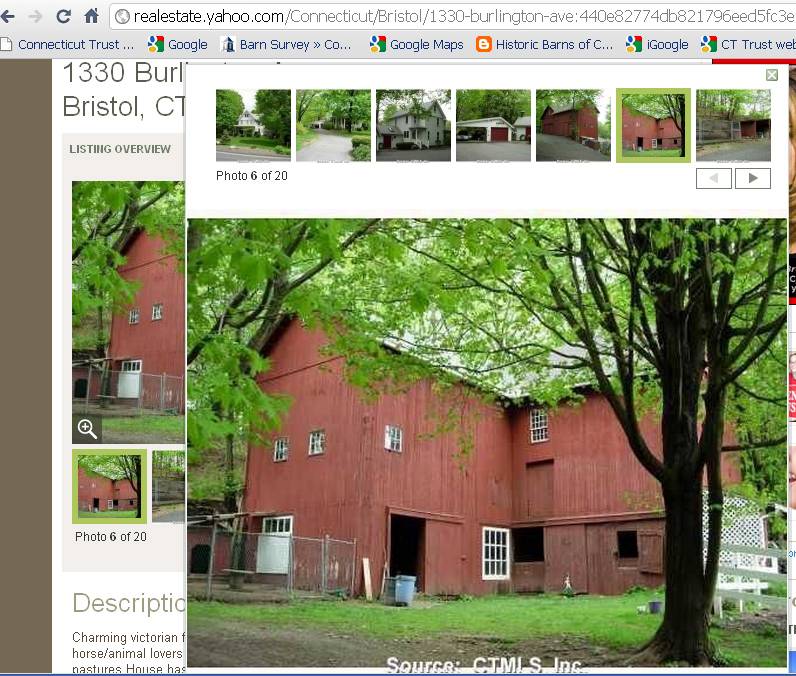
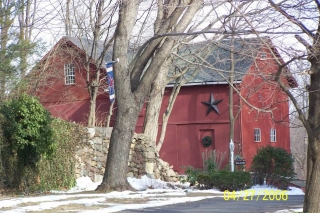
This is a 2 ½ - story L-shaped bank barn with intersecting gable-roofs and entries from both the eave-side and the gable-ends. The south eave-side of the main gable-roof bank barn, Arm-I is intersected by the second gable-roof bank barn, Barn-II towards the west. The ridge line of the main barn, Arm-I runs east-west perpendicular to Burlington Avenue while that of the intersecting barn, runs north-south. The west gable-end of Arm-I flush with the west eave-side of Arm-II is the main façade of the L-shaped barn with two main entrances. The west gable-facade of Arm-I has a main entrance off-centered towards the north through an exterior-hung double-height hooded sliding wagon door and appears to have a twelve-over-eight double-hung sash window towards the south. The gable attic lined by deep soffit is separated from the rest of the gable-end by a distinct dropped girt siding divide line and has a similar twelve-over-eight double-hung sash window just below the apex of the roof. The two-bay west eave-side of Arm-II flush with the west gable-end of Arm-I has a main entrance in the first bay from the north through an exterior-hung double-height hooded sliding wagon door and a second entrance centered in the second bay through a hinged pass-through door accessed by steps. The second floor level of the main west eave-façade of Arm-II has an exterior-hung sliding hay door above the main wagon door entrance, off-centered towards the north. The grade level along the west façade of the L-shaped barn gradually declines towards the south, wrapping the south gable-end of Arm-II to form the bank. The bank level of the south gable-end of Arm-II has an entrance towards the west through an over-head garage door while two six-pane windows can be seen at the first floor level. The gable attic lined by deep soffit is separated from the rest of the gable-end by a distinct dropped girt siding divide line and appears to have a similar six-pane just below the apex of the roof. The low grade level along the south gable-end continues to wrap the L-shaped barn to form the bank along the east eave-side of Arm-II and the south eave-side of Arm-I. The bank level of the east eave-side of Arm-II has an entrance towards the south through an exterior-hung hooded sliding wagon door and a twelve-pane window towards the extreme north. The first floor level of the east eave-side has a six-pane window towards the south, in line with the windows on the south gable-end. The bank level of the south eave-side of Arm-I has an entrance towards the west through an exterior-hung hooded sliding wagon door with a half-height wooden gate. The bank level also has a window opening with a hinged door leaf towards the east. The hood above the sliding door entrance continues along the south eave-side separating the first floor level which appears to have an interior-hung sliding hay door towards the west. The second floor level of the south eave-side of Arm-II has a twelve-over-eight double-hung sash window above the hay door.
The wooden frame of the L-shaped barn complex has asphalt shingle roofing and red painted vertical siding.
Historical significance:
The oldest barns still found in the state are called the “English Barn,” “side-entry barn,” “eave
entry,” or a 30 x 40. They are simple buildings with rectangular plan, pitched roof, and a door or
doors located on one or both of the “eave” sides of the building based on the grain warehouses of the
English colonists’ homeland. The New England barn or gable front barn was the successor to the
English barn and relies on a gable entry rather than an entry under the eaves. The gable front offers
many practical advantages. Roofs drain off the side, rather than flooding the dooryard. Although it
was seen by many as an improvement over the earlier side entry English Barn, the New England
barn did not replace its predecessor but rather coexisted with it. In this case, both an eave entry and
a gable entry are used.
The 19th century would see the introduction of a basement under the barn to allow for the easy
collection and storage of a winter’s worth of manure from the animals sheltered within the building.
The bank barn is characterized by the location of its main floor above grade, either through building
on a hillside or by raising the building on a foundation. This innovation, aided
by the introduction of windows for light and ventilation, would eventually be joined by the
introduction of space to shelter more animals under the main floor of the barn.Field Notes
The barn is difficult to see in summer. The property is currently for sale and has been recently used for goats and horses. There are stone walls on the property which is located in a rural residential area with fields and woodlands. The house and barn are believed to be over 100 years old. The current owner believes the barn is constructed with chestnut beams.
- Use & Accessibility
Use (Historic)
Use (Present)
Exterior Visible from Public Road?
Yes
Demolished
n/a
Location Integrity
Unknown
- Environment
Related features
Environment features
Relationship to surroundings
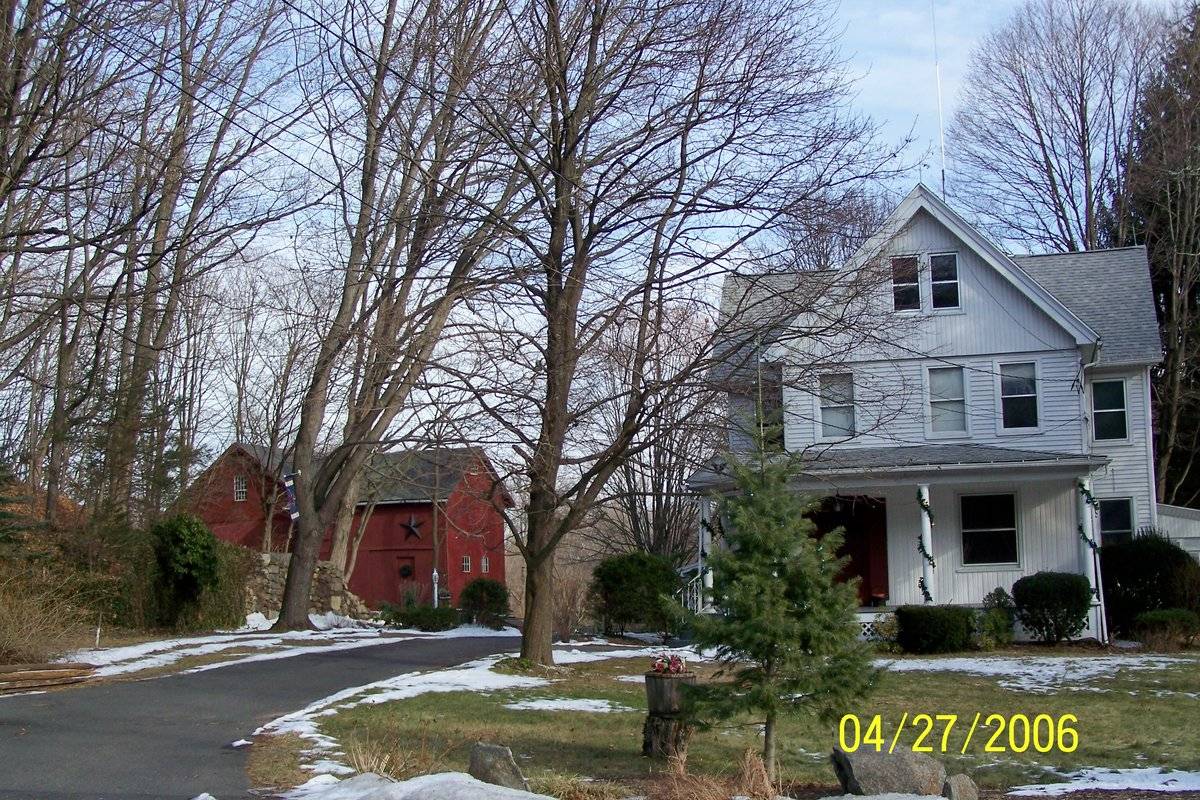
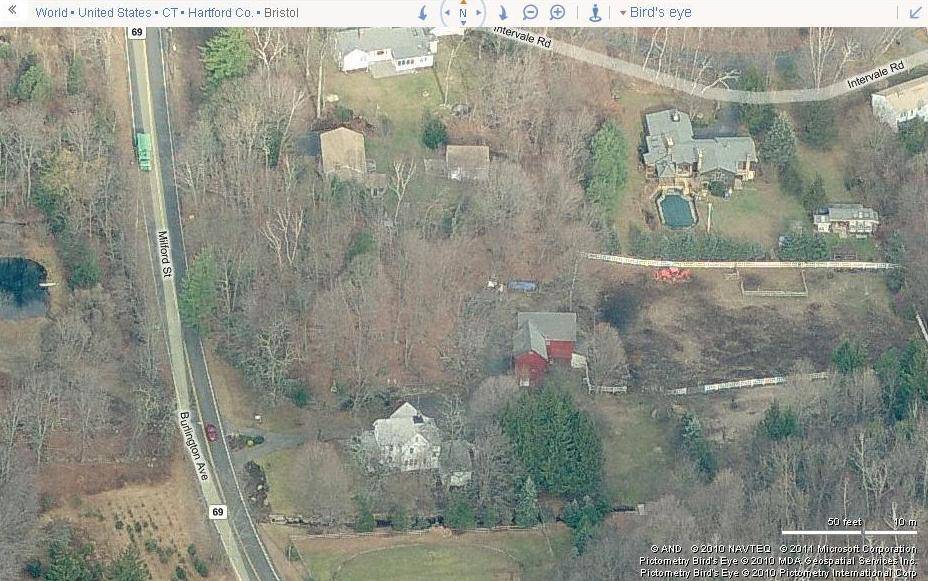
The 1.7 acres property, Account number – 0064823 and Map-Lot-unit number - 57/ / 12-1/ /, is located towards the east of Burlington Avenue (Milford Street), bordering the town limits of Bristol and Burlington. The property is situated in a predominantly residential area of rural character with individual plots separated by dense woodland. Residential plots can be seen towards the north and the south of the plot while the area towards the east is covered by dense woodland. A pond surrounded by dense woodland can be seen towards the west, across the road.
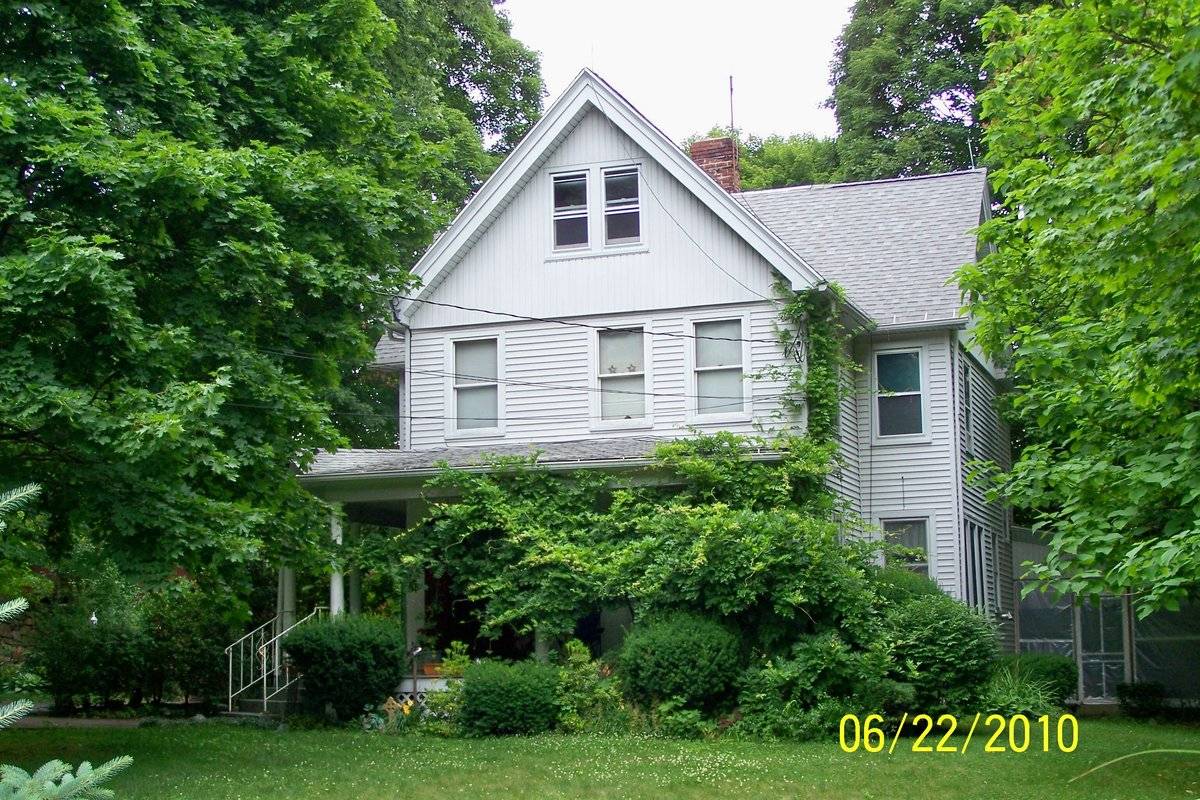
The L-shaped barn complex is located almost at the center of the plot with the circa 1900 main residence towards its southwest. The property is accessed by a driveway towards the north of the main residence that continues towards the northeast to approach the barn. A fenced paddock can be seen towards the immediate east of the barn complex while dense woodland covers the area towards the further east. The property also has dense woodland in its northwest corner while another fenced paddock can be seen towards the south.
- Typology & Materials
-
Building Typology
Materials
Structural System
Roof materials
Roof type
Approximate Dimensions
Bank barn: 632 SqFt; Bank barn: 850 SqFt; Canopy: 432 SqFt; Carport: 342 SqFt; Garage: 216 SqFt;
- Source
-
Date Compiled
04/27/2011
Compiled By
T. Levine and M. Patnaik, reviewed by CT Trust
Sources
Field notes and photographs provided by: Cherie Robinson, 03/25/2011.
Assessors’ records retrieved on April 20th, 2011 from website http://data.visionappraisal.com/BristolCT/DEFAULT.asp.
Photograph/Information retrieved from website http://www.realestate.yahoo.com/connecitcut/Bristol/.
Photograph/Information retrieved on April 26th, 2011 from website http://www.google.com.
Photograph/Information retrieved on April 26th, 2011 from website http://www.bing.com.
Photograph/Information retrieved on April 26th, 2011 from website http://www.zillow.com.
Sexton, James, PhD; Survey Narrative of the Connecticut Barn, Connecticut Trust for Historic Preservation, Hamden, CT, 2005, http://www.connecticutbarns.org/history.
Visser, Thomas D.,Field Guide to New England Barns and Farm Buildings, University Press of New England, 1997.
- PhotosClick on image to view full file
-