Barn Record Scotland
RETURN TO ‘FIND BARNS’- Building Name (Common)
- (Part 1 of 2)
- Building Name (Historic)
- n/a
- Address
- 137 Pudding Hill Road (Rte 97), Scotland
- Typology

- Overview
-
Designations
n/a
Historic Significance
Architectural description:
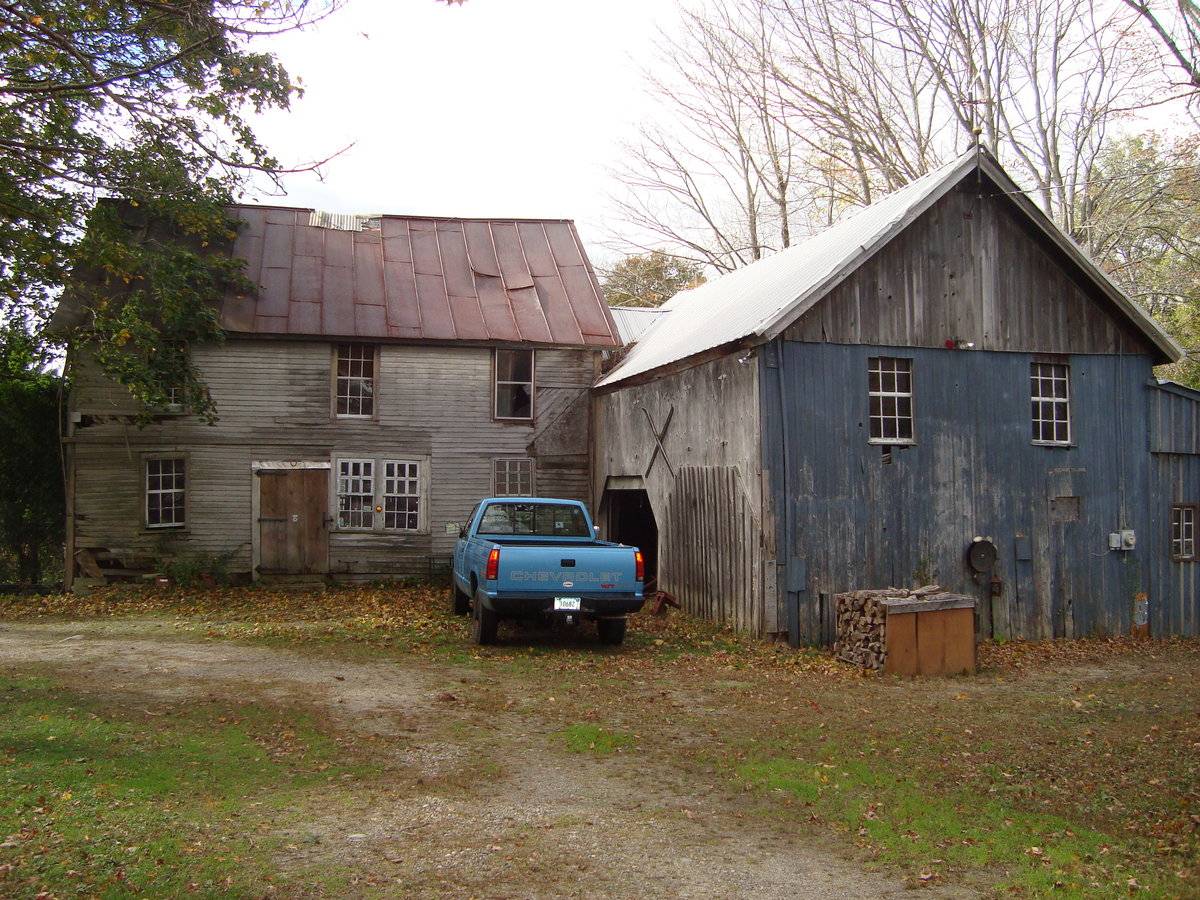
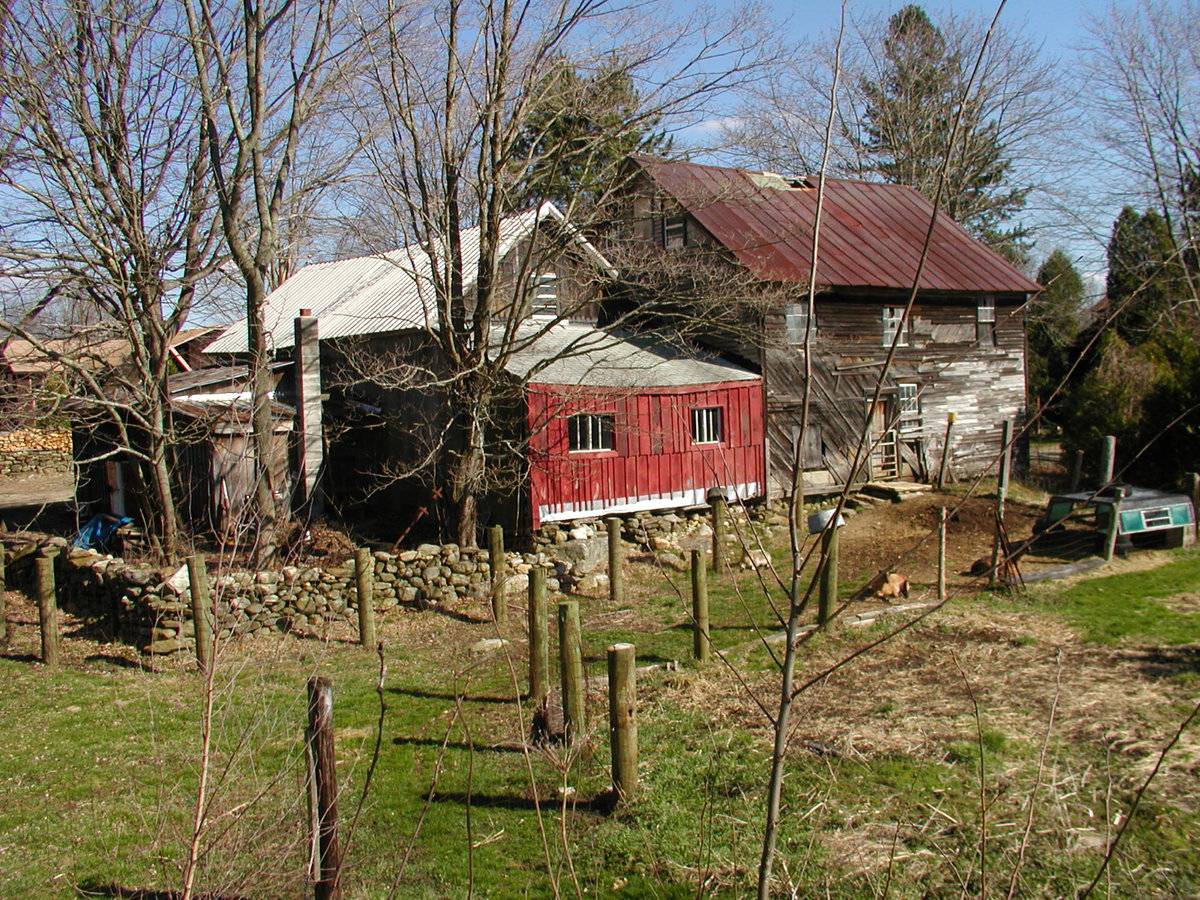
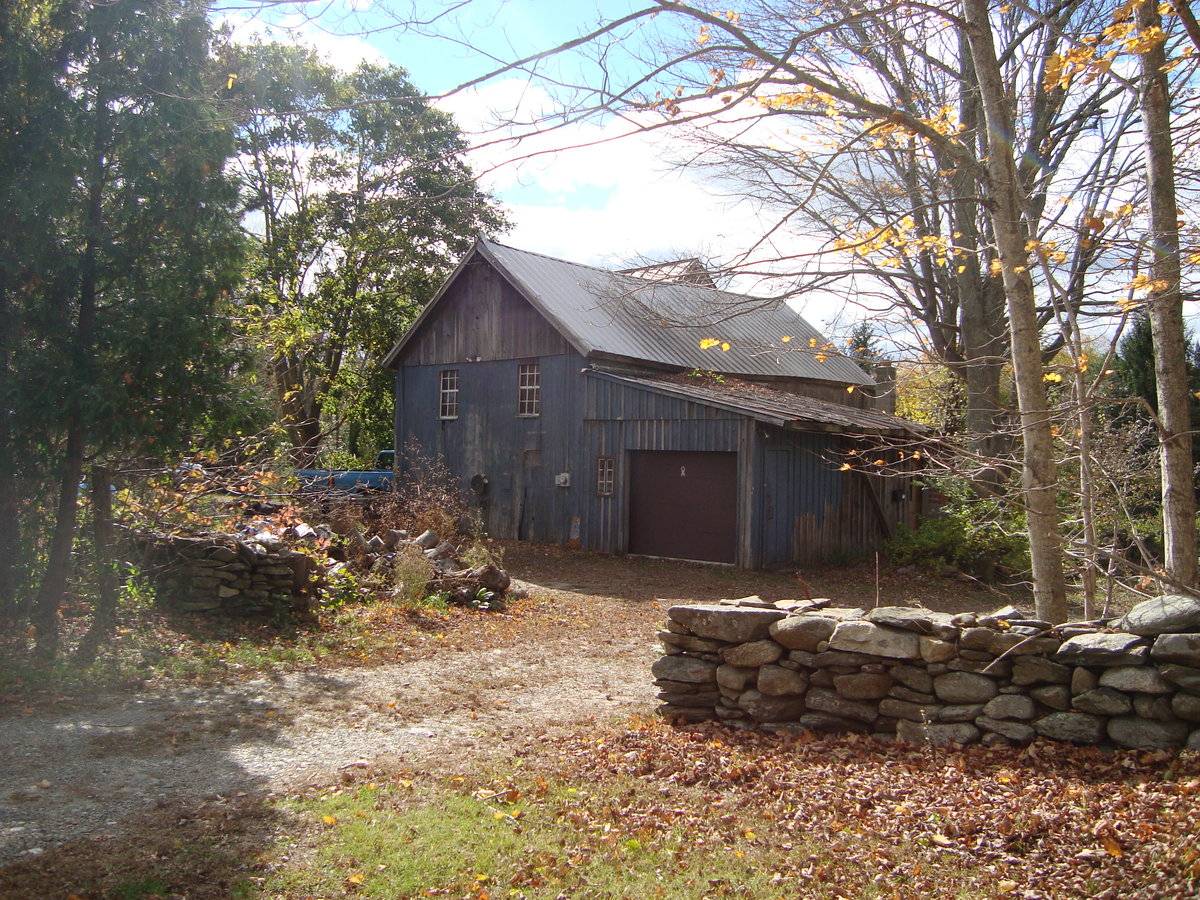
This is a 2 ½-story eave-entry barn with three-bays, a gable-roof and multiple additions. Its main façade faces east, and its ridge-line runs north-south, parallel to Pudding Hill Road which lies to the east. On the western half of the north gable-end of the barn is a 1-story shed-roof addition (Addition I). To its east, projecting eastward from the eastern half of the north gable-end of the barn is a large 1 ½-story eave-entry wagon shed with a gable-roof (Addition II). Its ridge-line runs east-west, perpendicular to that of the original structure. On the north eave-side of the wagon-shed are two additions. The first is a small, 1-story shed-roof addition (Addition III) in the eastern corner of the north eave-side, its roof sloping away to the north. Adjacent to the west of Addition III is a second shed-roof addition (Addition IV), its roof sloping away to the west.
In the center of the first story of the main façade of the original barn there appears to have once been a large stable door that has since been replaced by a smaller pass-through door and a sash window. The main door is now a hinged pass-through door constructed of vertical wood boards that is located just south of center on the main façade. Directly to its north is a twinned six-over-six double-hung window with trim. In the northern corner of the first story on the main façade is a nine-over-nine double-hung window with trim. To the south of the pass-through door, on the southern corner of the first story of the main façade of the original barn is a six-over-six double-hung window with trim. On the second story of the main façade of the original barn are three windows: a six-over-six double-hung window with trim in the southern corner, followed by an identical window in the center of the main façade, and in the northern corner is a one-over-one double-hung window.
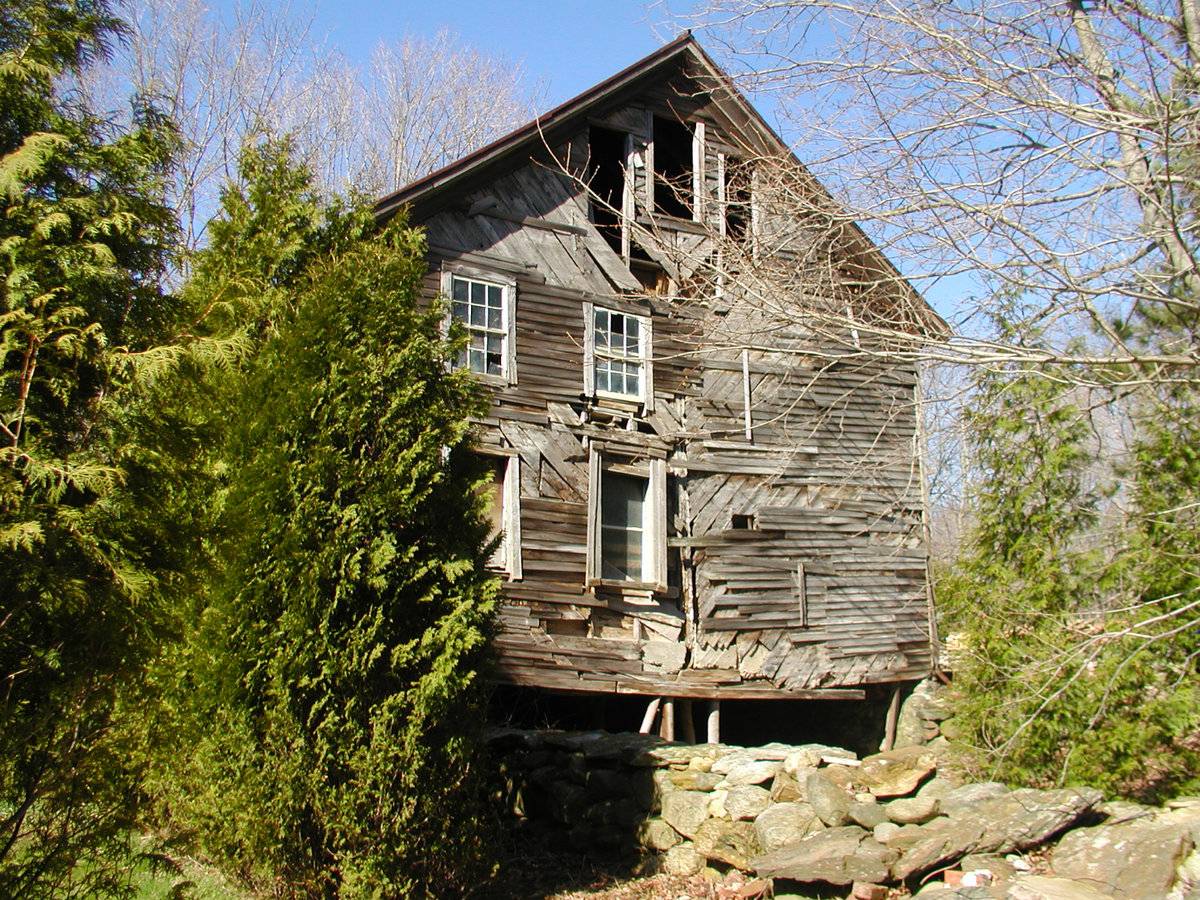
Along the western half of the south gable-end of the original barn are four windows; two on the first story and two on the second story. Along the first story, the window in the western corner of the south gable-end of the barn is covered with plywood, while that to its east is a one-over-one double-hung window with trim. On the second story of the south gable-end of the barn are two six-over-six double-hung windows with trim. In the gable-attic is a window opening.
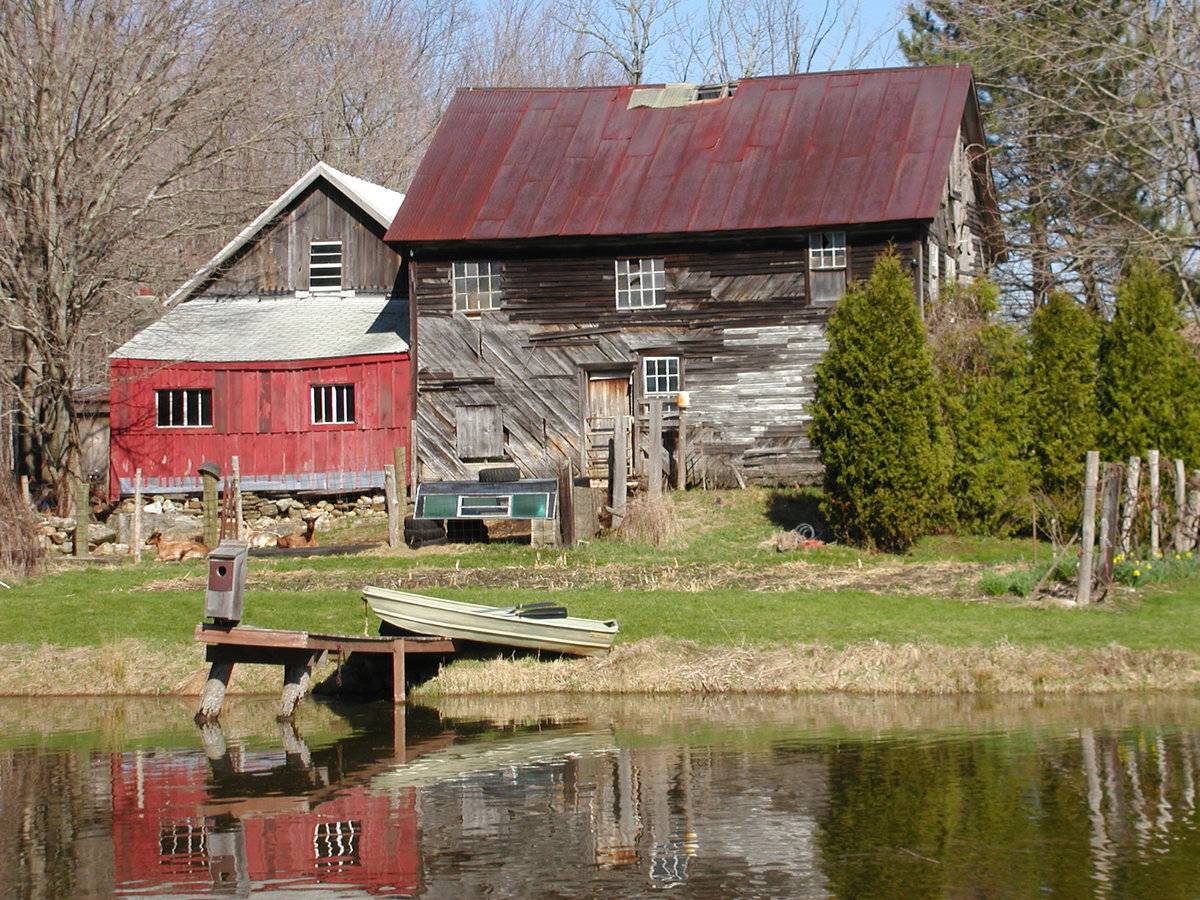
In the center of the first floor of the west eave-side of the barn, is a six-over-six double-hung window with trim. Directly to its north is a hinged pass-through door constructed of vertical wood boards. On the northern corner of the first story of the west eave-side of the barn is a window opening now covered with vertical wood boards. On the southern corner of the second story of the west eave-side of the original barn is a double-hung window. The top sash features six panes but the bottom sash is missing and has been replaced by a plywood panel. To its north are two twelve-pane stable windows, one located in the center of the west eave-side of the barn, the other in its northern corner.
Along the west eave-side of Addition I are two four-pane stable windows with trim, one on the southern half, the other located on the northern half. Above these windows, below the apex of the roof on the west gable-end of the wagon shed (Addition II) appears to be a four-pane vertical window.
The east gable-end of the wagon shed (Addition II), below the girt-line siding divide are two six-over-six double-hung windows with trim; one on the southern half of the gable-end, the other on its northern half. Further north, along the east side of Addition III, is a six-pane stable window followed by a modern overhead garage door. The south eave-side of Addition II features two large bays, the tops of which are beveled inward. The western door appears to feature a modern overhead garage door, while the eastern bay appears to now be covered by a large sheet of plywood adorned with decorative battens.
On the eastern corner of the north eave-side of Addition III is an extremely narrow pass-through door. On the western corner of this addition appears to be an additional pass-through door.
The exterior walls of the barn and additions are covered with a variety of different materials. The original barn is covered with unpainted clapboards, but large portions of these are missing, revealing the diagonal sheathing boards underneath. The walls of Addition I appear to be covered with board and batten siding. The walls of the wagon shed (Addition II) are covered with vertical board siding. Most of this is unpainted, but the walls on the east gable-side below the girt-line siding divide are painted blue. The walls of Addition III appear to be covered with a horizontal tongue and groove siding, painted blue. Addition IV features unpainted vertical boards. The foundations appear to be unmortared fieldstone. Like the walls, the roofs of the barn and its additions are covered in several different materials. The original barn features a flat-seam metal roof. The roof of Addition I is covered with asphalt shingles. The wagon shed (Addition II), and Additions III & IV are also covered with metal roofs. Projecting from the center of the west eave-side of addition IV is a small chimney constructed of concrete blocks.
Historical significance:The oldest barns still found in the state are called the “English Barn,” “side-entry barn,” “eave entry,” or a 30 x 40. They are simple buildings with rectangular plan, pitched gable roof, and a door or doors located on one or both of the eave sides of the building based on the grain warehouses of
the English colonists’ homeland. The name “30 by 40” originates from its size (in feet), which was large enough for 1 family and could service about 100 acres. The multi-purpose use of the English barn is reflected by the building’s construction in three distinct bays - one for each use. The middle
bay was used for threshing, which is separating the seed from the stalk in wheat and oat by beating the stalks with a flail. The flanking bays would be for animals and hay storage.Until the 1830s, the horses used for riding and driving carriages were often kept in the main barn along with the other farm animals. By the 1850s, some New England farmers built separate horse stables and carriage houses. Early carriage houses were built just to shelter a carriage and perhaps a sleigh, but no horses. The pre-cursor to the twentieth-century garage, these outbuildings are distinguished by their large hinged doors, few windows, and proximity to the dooryard.
The combined horse stable and carriage house continued to be a common farm building through the second half of the nineteenth century and the first decade of the twentieth century, until automobiles became common. Elaborate carriage houses were also associated with gentlemen farms and country estates of the late 19th and early 20th centuries. Another form of carriage barn, the
urban livery stable, served the needs of tradespeople.During the 1930s and 1940s, poultry farming was adopted by many farmers in New England as a replacement for dairy farming. Many large cow barns were converted into chicken barns with the addition of more floors and numerous windows and dormers.
Field Notes
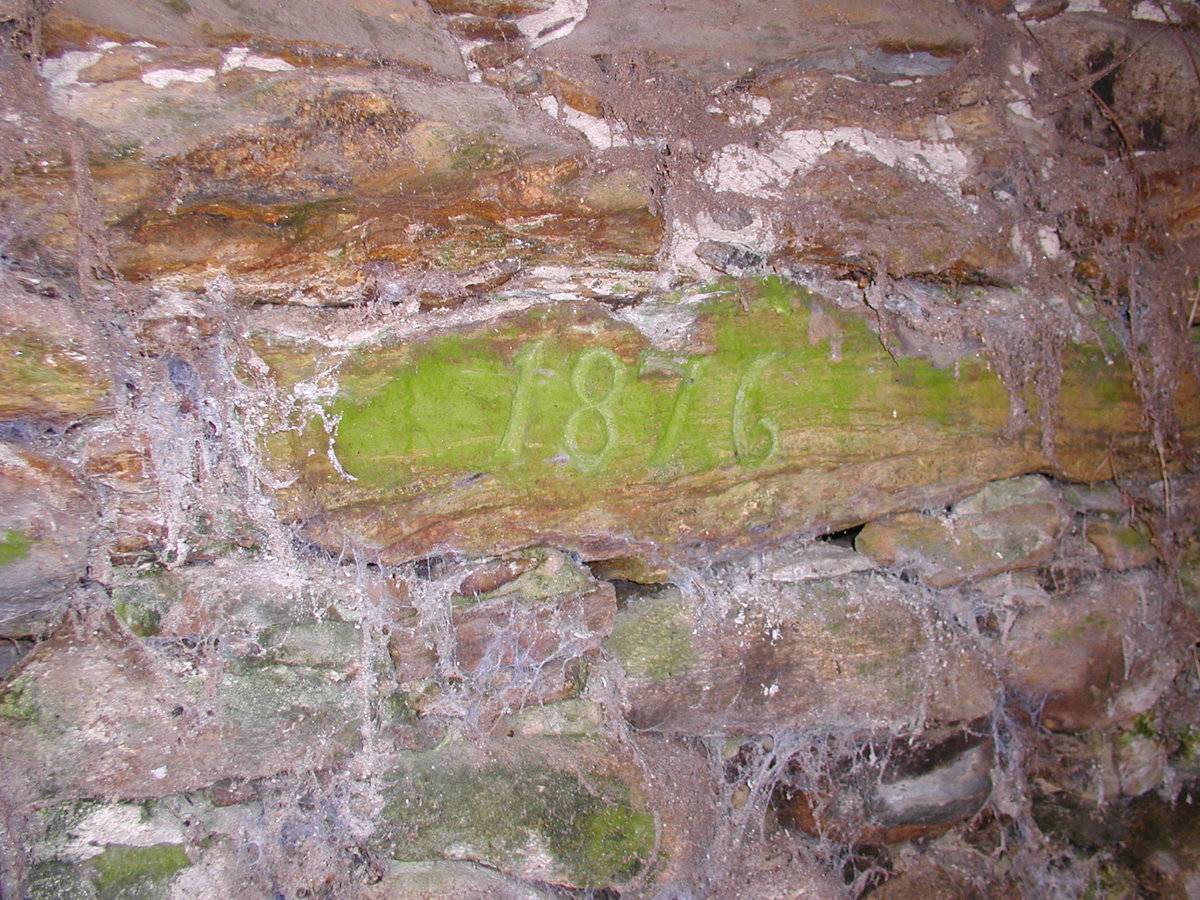
2 1/2 story post and beam livestock barn with attached carriage shed, converted to housing chickens for a hatchery operation in the mid 20th century. Date stone in west foundation wall is inscribed with the date of 1876. Cement floors added for the hatchery operation has lead to a rapidly deteriorating condition leading to an overall poor condition assessment for the 1876 portion of this structure.
- Use & Accessibility
Use (Historic)
Use (Present)
Exterior Visible from Public Road?
Yes
Demolished
n/a
Location Integrity
Unknown
- Environment
Related features
Environment features
Relationship to surroundings
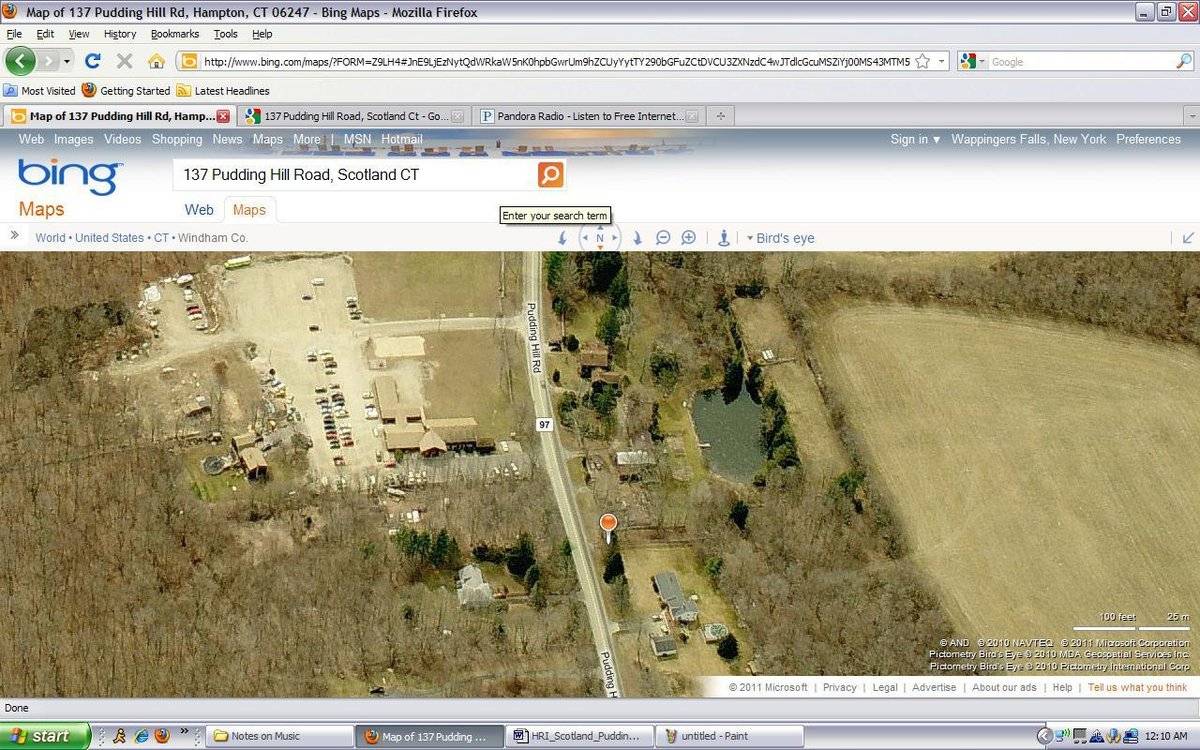
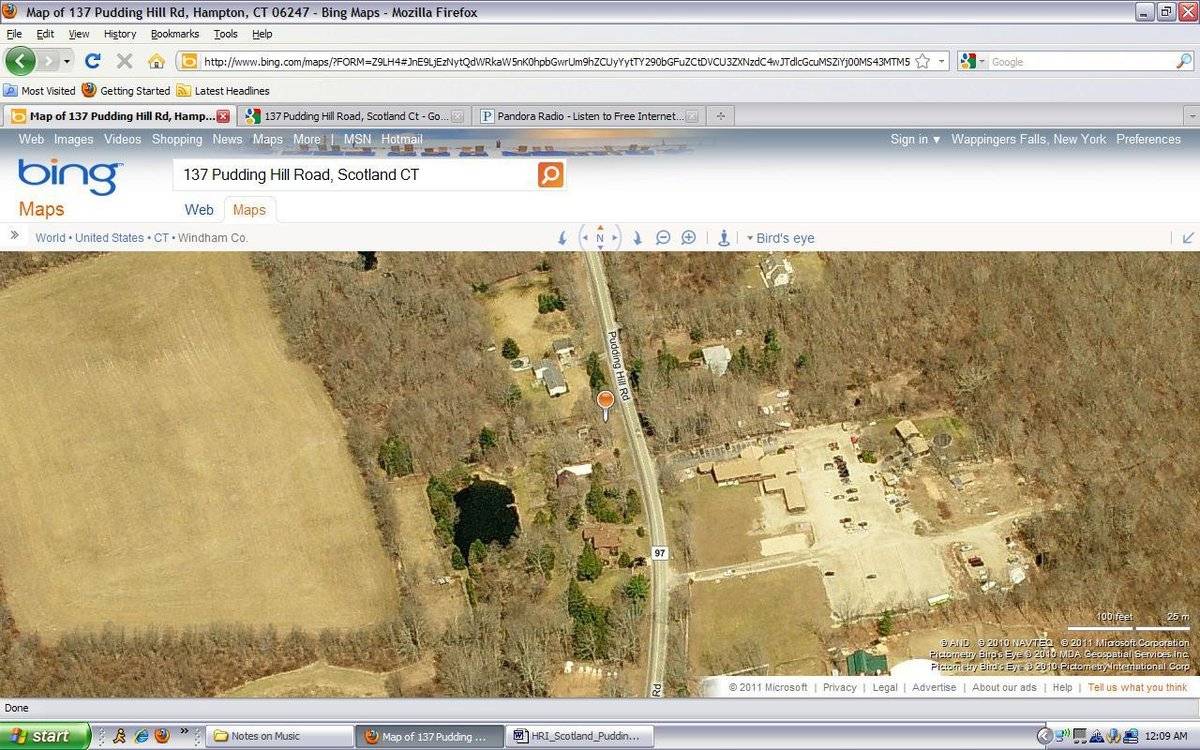
This property is located to the northeast of the Town of Scotland, in a rural residential area with a few scattered businesses and farms. The barn is located on the northern portion of a 4.11-acre parcel that is bordered by Pudding Hill Road to the east. In addition to the barn, the property also features a c. 1840 residential structure with high-style Greek Revival details.
The c. 1840 house is located to the south of the barn and carriage house. This is a 2 ½-story gable-entry house with three-bays and two additions. Its main façade faces east, and its ridge-line runs east-west. On the center of both its north and south eave-sides, are 1 ½-story additions with gable-roofs. Their ridge-lines run north-south perpendicular to that of the main house. The walls are covered with stained clapboard siding. The roofs are covered with asphalt shingles.The property consists mainly of woods. To the west of the barn is a large pond. To the east of the barn is a large circular drive with two entrances on Pudding Hill Road. On the eastern border of the property is an unmortared fieldstone wall. Beyond the boundaries of the property to the west is a large agricultural field followed by a large expanse of woodland. To the east of the property is Christian Fellowship Church and a large expanse of woodland.
- Typology & Materials
-
Building Typology
Materials
Structural System
Roof materials
Roof type
Approximate Dimensions
2492 square feet
- Source
-
Date Compiled
03/30/2011
Compiled By
E. Reisman & T. Levine; reviewed by CT Trust
Sources
Field notes and photographs by Kevin P. Ring Sr., 02/22/2010.
Town of Scotland’s GIS Viewer:
http://www.wincog-gis.org/ags_map/default.asp?town=Scotland
(Parcel ID #14/3/5: 4.1-acres: c. 1840 house, 3,222 sq. ft.)
Aerial Mapping:
http://www.bing.com/maps accessed 03/30/2011.Sexton, James, PhD, Survey Narrative of the Connecticut Barn, Connecticut Trust for Historic Preservation, Hamden, CT, 2005, http://www.connecticutbarns.org/history.
Visser, Thomas D., Field Guide to New England Barns and Farm Buildings, University Press of New England, 1997. - PhotosClick on image to view full file
-