Barn Record Southington
RETURN TO ‘FIND BARNS’- Building Name (Common)
- Rogers Orchards/Ebenezer Evans Barn (Part 2 of 3)
- Building Name (Historic)
- Rogers Orchards/Ebenezer Evans Barn
- Address
- 36 Long Bottom Road, Southington
- Typology

- Overview
-
Designations
Historic Significance
Architectural description:
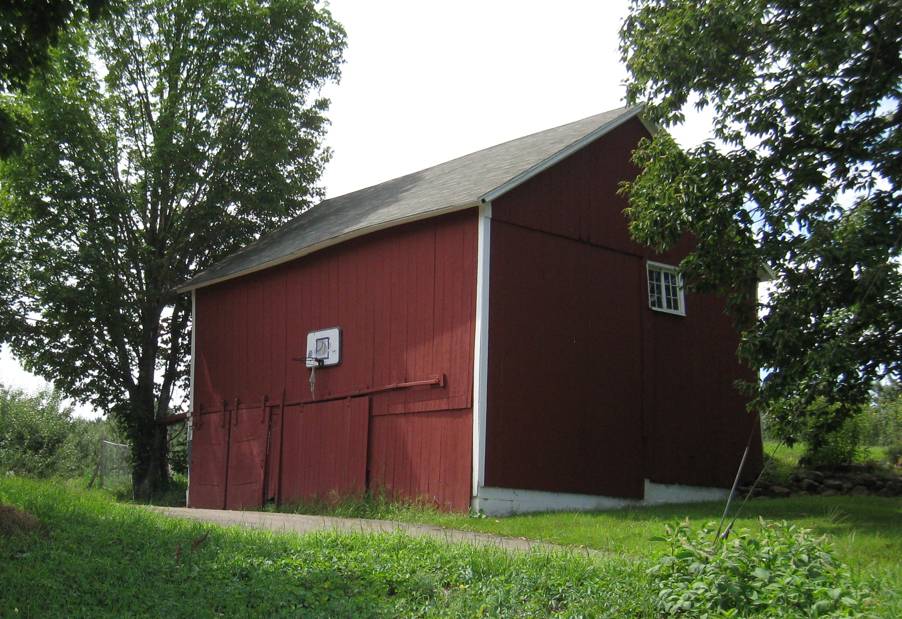
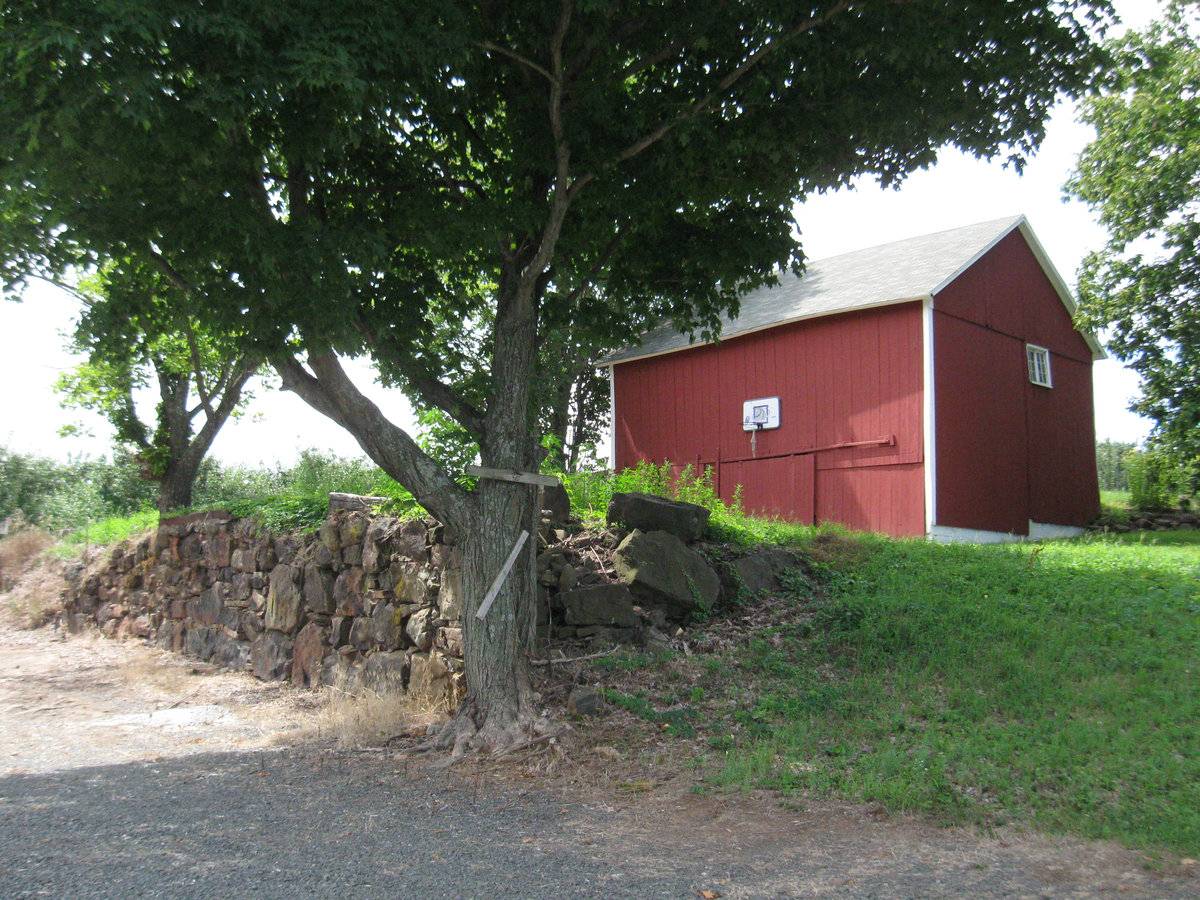
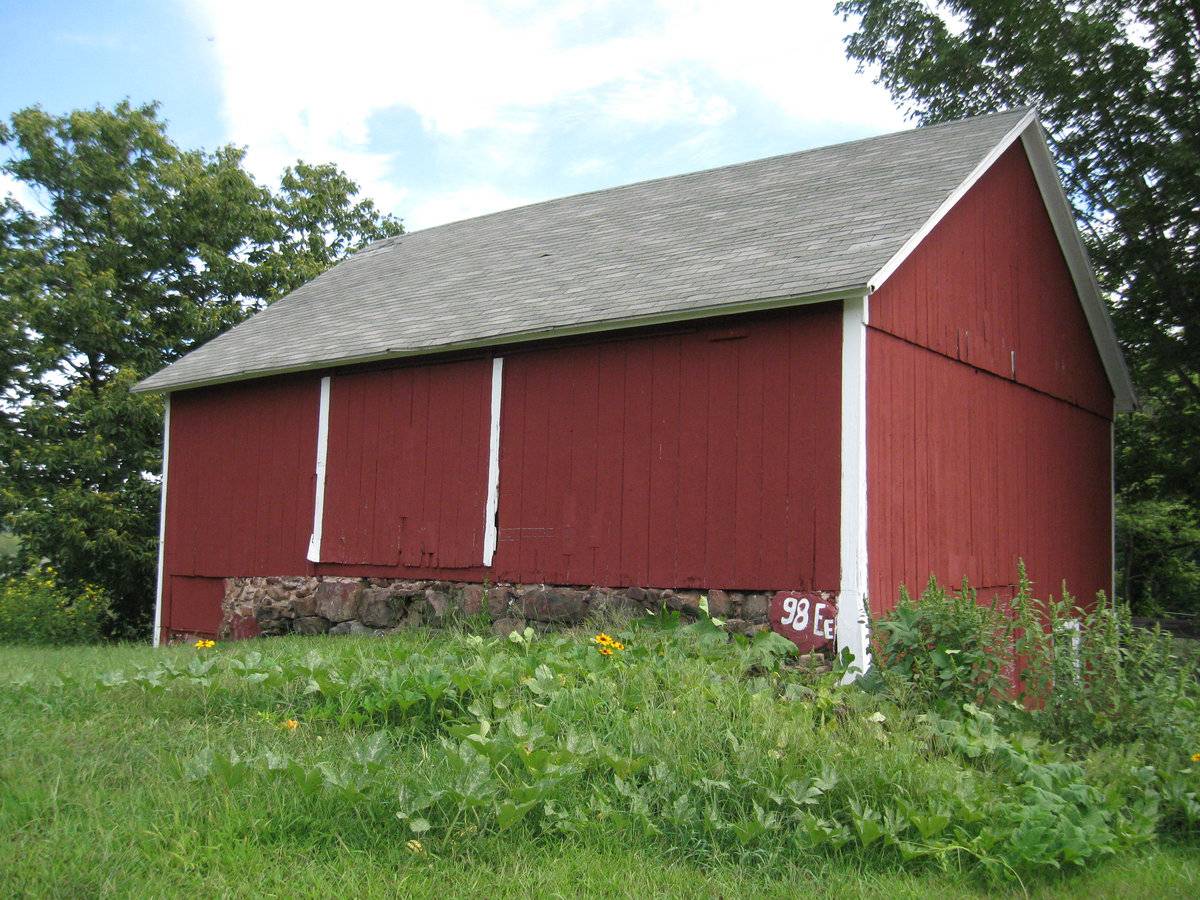
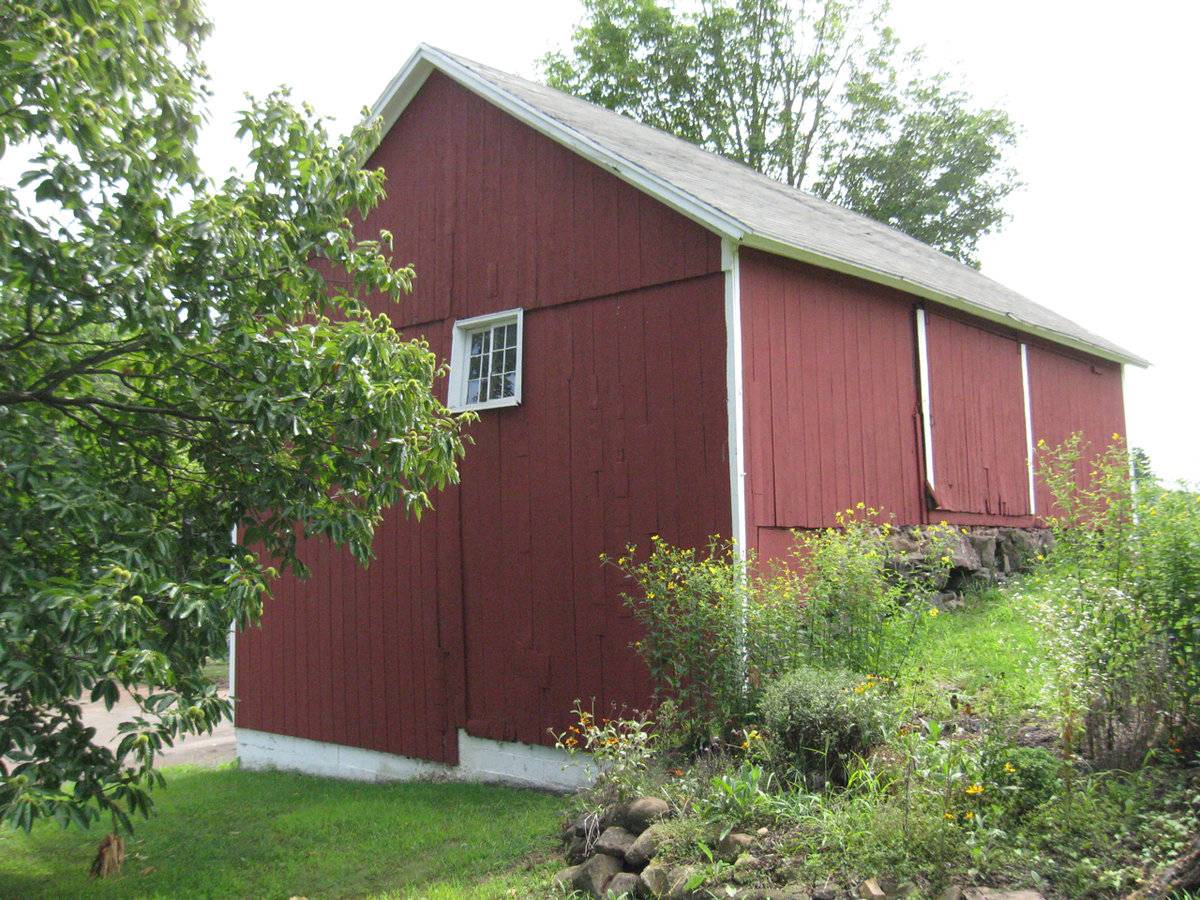
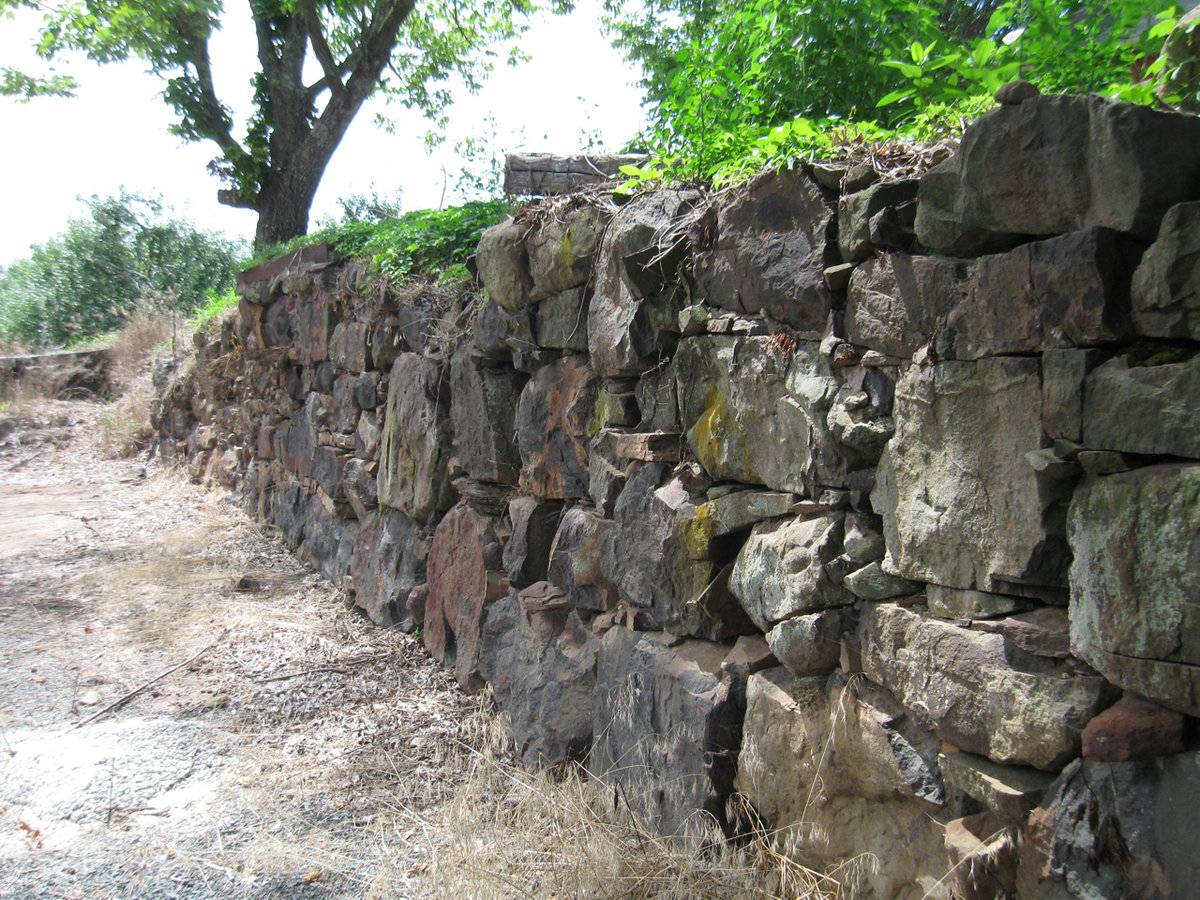
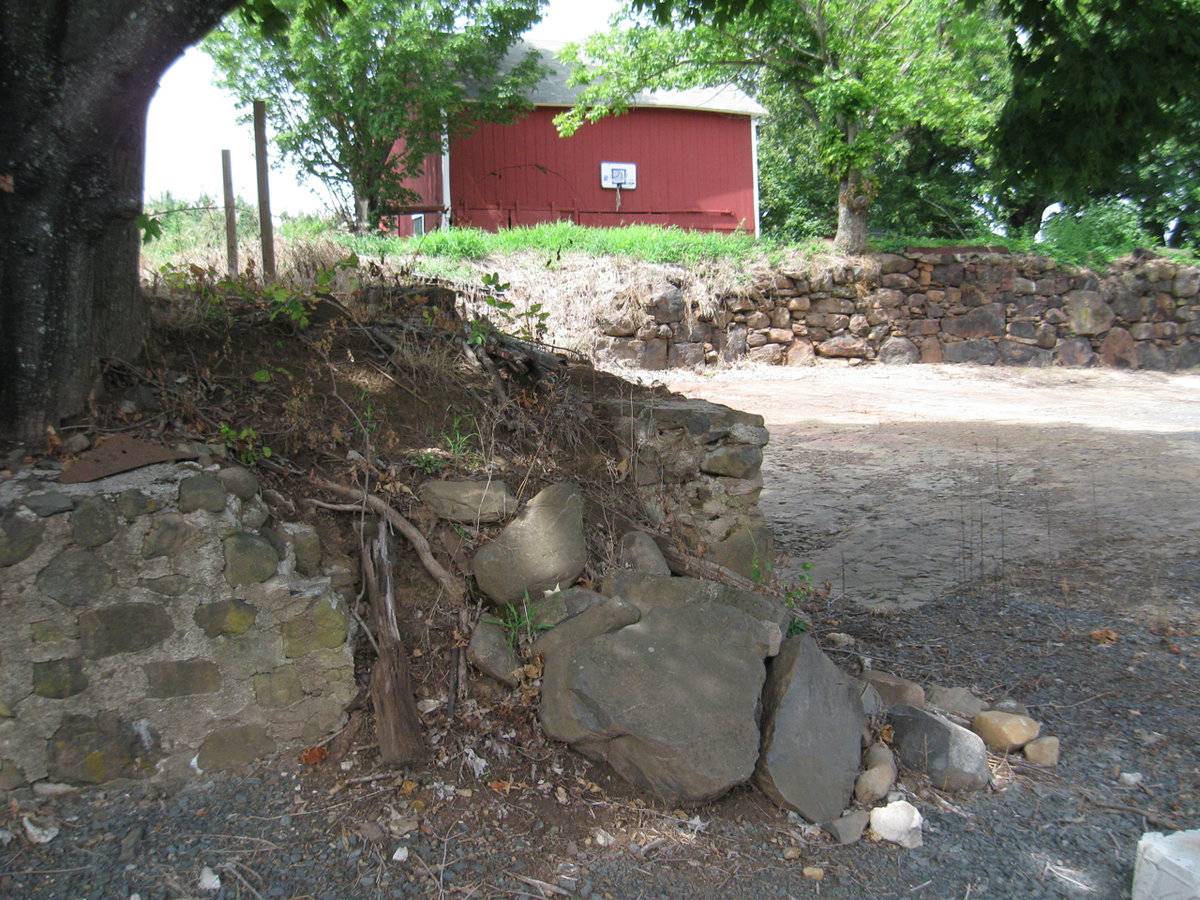
This is a 1 ½-story gable-roofed three-bay bank barn structure, with its ridge-line oriented north-south. Grade slopes down toward the east, and the original main level entrance appears to have been the west eave-side. On this west side, there is a full-height doorway in the center bay. It appears to be fixed shut, as no hinges are visible, and the grade does not ramp up to the sill but rather about two feet of rubble foundation wall are exposed below the door sill. There are no other openings on the west side.
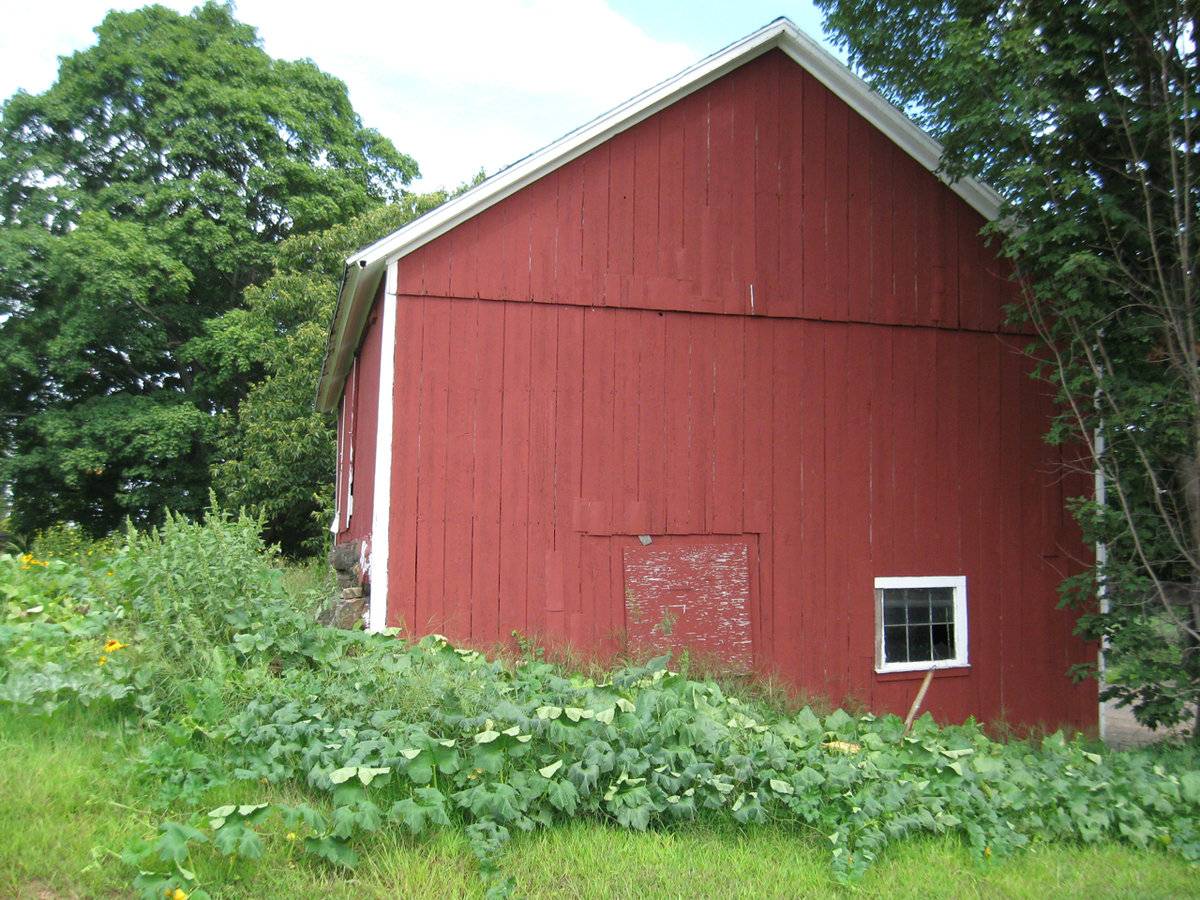
The north gable-end has the sloping grade against the wall, revealing more of the foundation toward the east corner. The foundation material is concrete block masonry, and the siding is stepped down toward the east corner. There is one opening, a sliding sash window located just below the girt line siding divide and consisting of two six-pane sash, one sliding over the other.
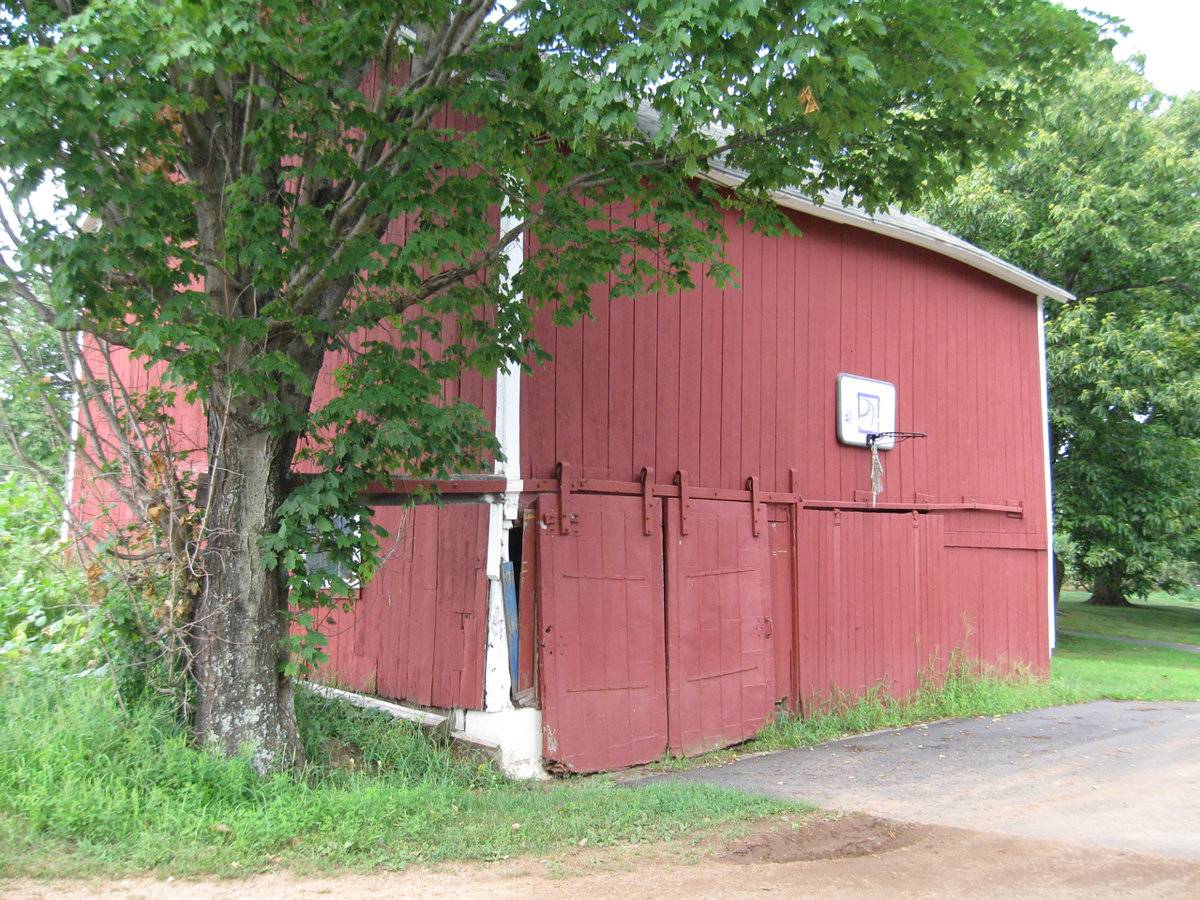
The east eave-side has a basement level opening to grade. The main level has no openings and the basement level has a pair of metal-faced sliding doors in the left (south) bay which appear to be reused from another location where fire-proof or insulated doors would have been required. In the center bay there is a wood sliding door. In the right (north) bay there appears to have been an opening which has been closed.
The south gable-end has a boarded-up window opening left of center and a six-pane stable-type window right of center.
Siding is vertical boards, and some vertically-grooved plywood, painted red with white trim. The roof has a slight overhand and asphalt shingles.
Historical significance:
The oldest barns still found in the state are called the “English Barn,” “side-entry barn,” “eave entry,” or a 30 x 40. They are simple buildings with rectangular plan, pitched gable roof, and a door or doors located on one or both of the eave sides of the building based on the grain warehouses of the English colonists’ homeland. The name “30 by 40” originates from its size (in feet), which was large enough for 1 family and could service about 100 acres. The multi-purpose use of the English barn is reflected by the building’s construction in three distinct bays - one for each use. The middle bay was used for threshing, which is separating the seed from the stalk in wheat and oat by beating the stalks with a flail. The flanking bays would be for animals and hay storage.
The 19th century saw the introduction of a basement under the barn to allow for the easy collection and storage of a winter’s worth of manure from the animals sheltered within the building. The bank barn is characterized by the location of its main floor above grade, either through building into a hillside or by raising the building on a foundation.
This innovation, aided by the introduction of windows for light and ventilation, would eventually be joined by the introduction of space to shelter more animals under the main floor of the barn.
Historical background:Originally part of the town of Farmington, Southington’s first settlement occurred in 1598, when Samuel Woodruff of Farmington built a home (no longer standing) near the modern intersection of Pleasant and Woodruff Streets. Other settlers came north from New haven and Wallingford. The earliest homes are documented in the “Colonial Houses of Southington Thematic Resource.” In 1779 Southington incorporated. The town continued to grow, thanks to increased travel and prosperity along the New Haven Path, although population remained moderate.
Farming was the basis of the Southington economy throughout the 19th century, leaving its mark in the remaining barns scattered throughout the town. As the soil became exhausted, farming diminished, with the exception of orchards in the hills in the east side of the town and industry began to increase.Elijah Rogers (1861-1949), the first member of this family to operate a farm in the [area], was the son of James and Mary Horsford Rogers of England, who came to Simsbury i n 1857. In 1888, Elijah Rogers purchased the farm owned by Horatio Dunham at the foot of Shuttle Meadow. He married Sarah F. Merriman, the daughter of Josiah and Anna Merriman. Josiah Merriman was t h e grandson of Anson Merriman (1786-1853), the second owner of the Ebenezer Evans House. Josiah established the first orchard in the [area] about 1850 on the land behind the house and across Andrews Street to the east. The Merriman family also probably owned the property on Mine Hollow Road to the northwest. Both Merriman properties eventually became part of the Rogers Farm through inheritance. Two children were born to Elijah and Sarah Rogers: Ruth L. (1892-7) and Harold M. (1894-1980). For the first 40 years, the Rogers farm combined dairy farming with pomiculture; Elijah was the first orchardist in the state to successfully cultivate peaches. He abandoned the dairy business to concentrate solely on the growing of fruit in 1921 (Cunningham, Section 8, page 1).
Field Notes
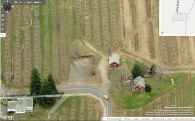
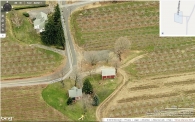
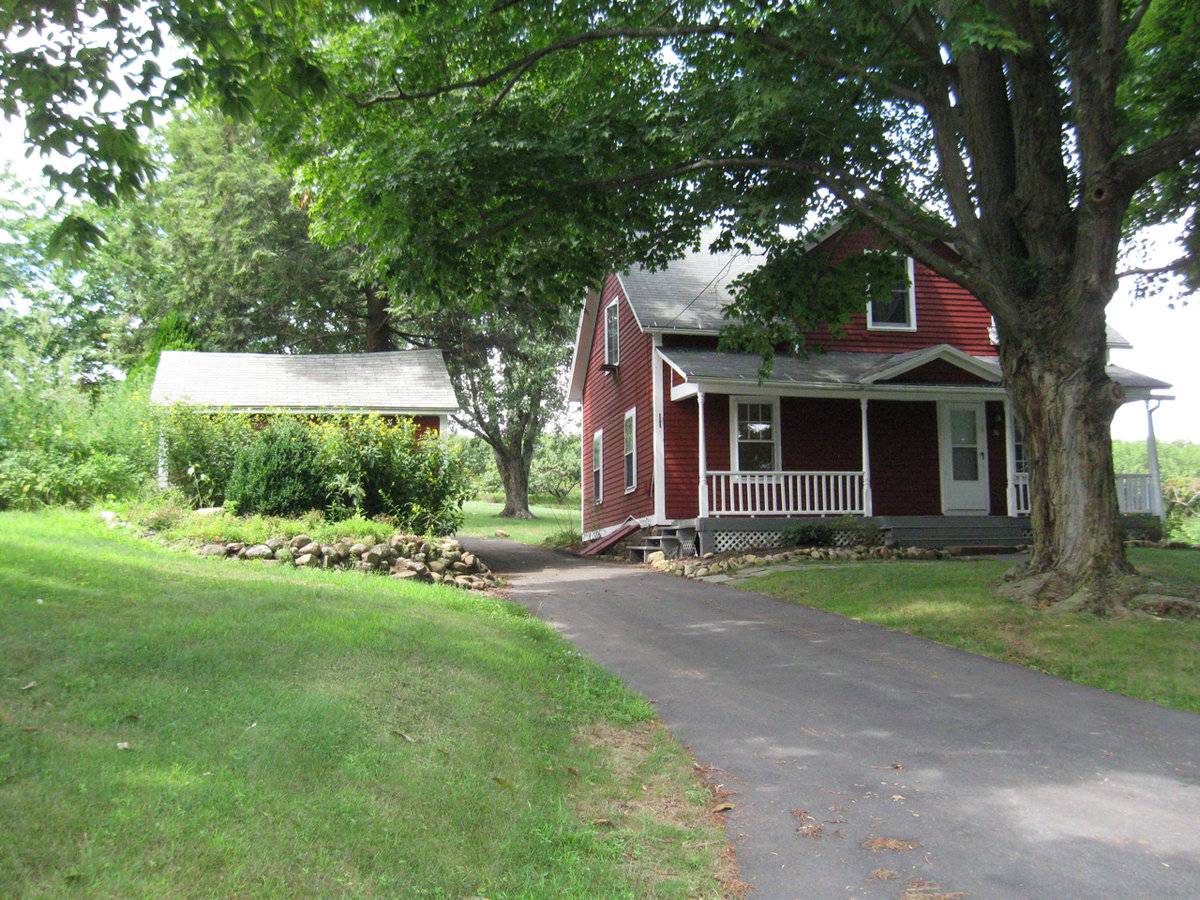
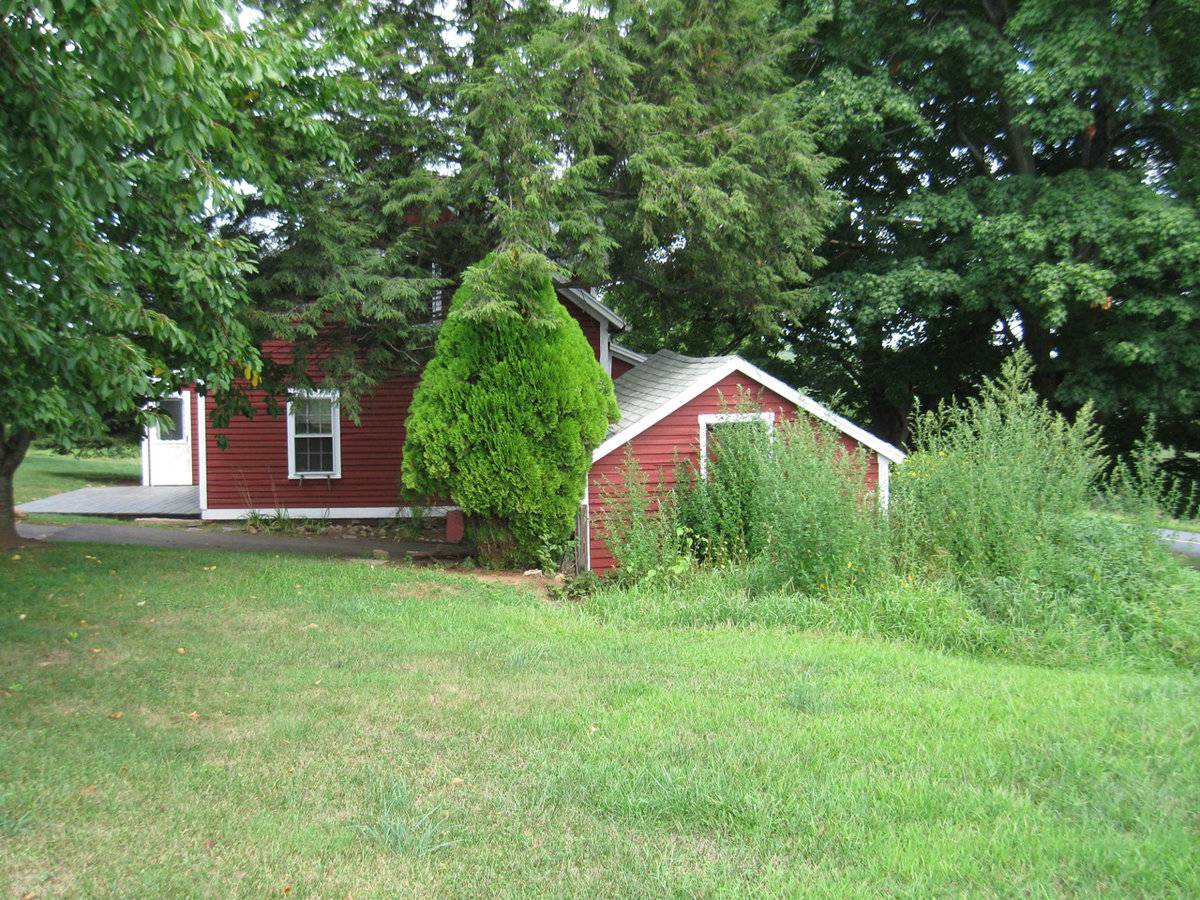
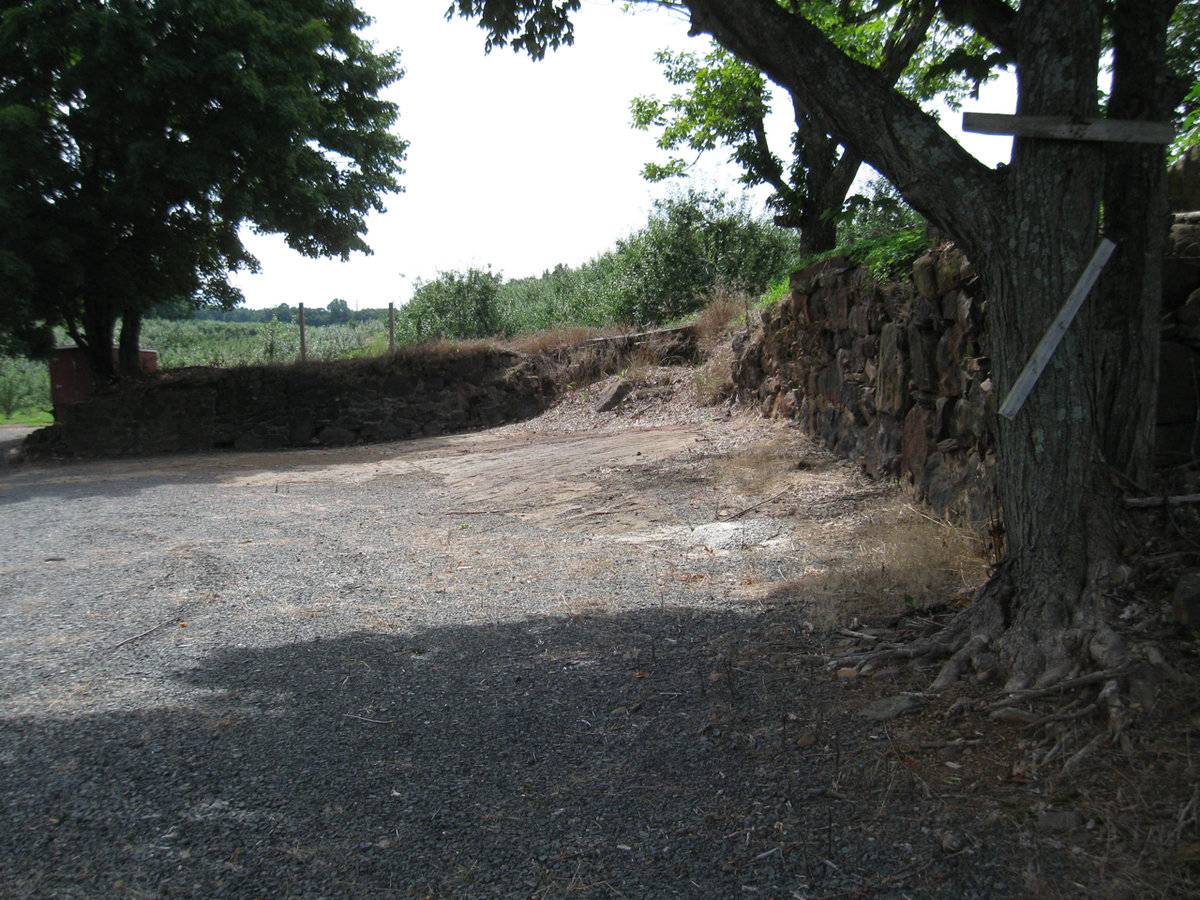
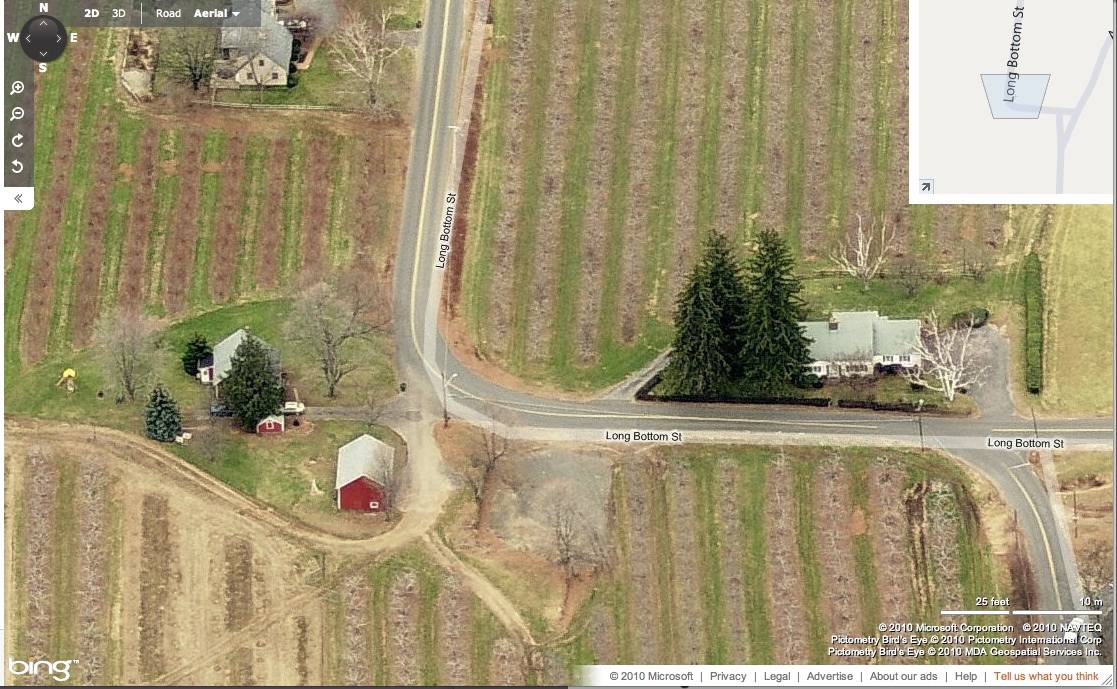
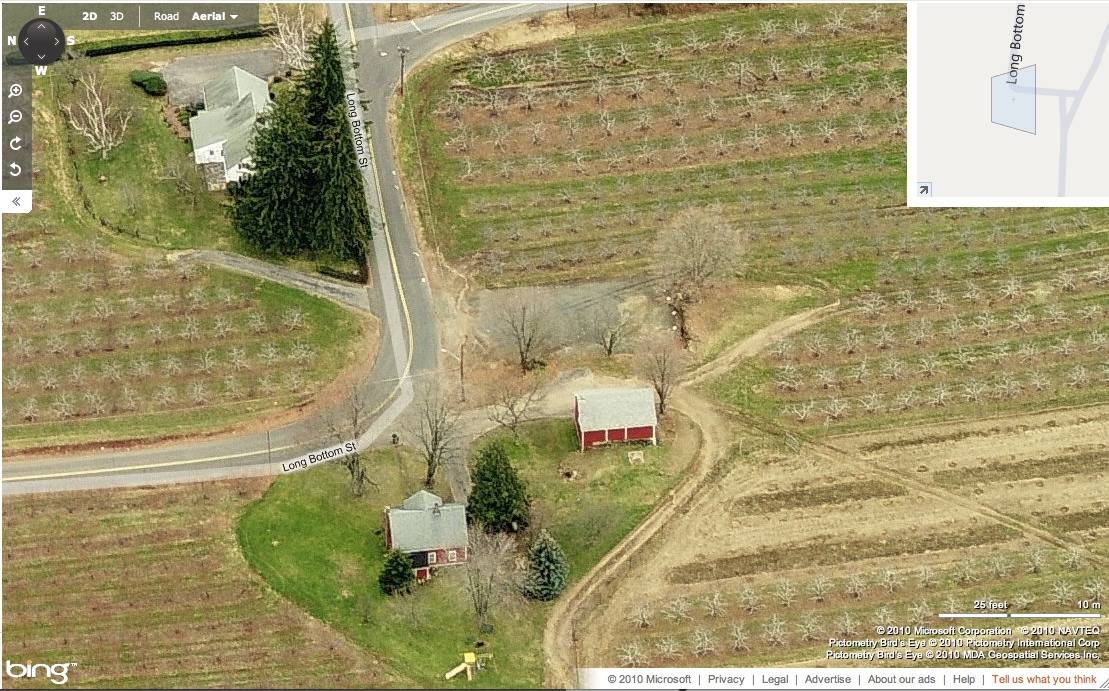
Complex includes Ebenezer Evans House (18th century), Farm Cottage (c. 1890), small outbuilding built into hill near the cottage, English bank barn, and foundation of what appears to have been a large bank barn located east of the extant barn. See 336 Long Bottom Road and 341 Mine Hill Road for parts 1 and 3.
- Use & Accessibility
Use (Historic)
Use (Present)
Exterior Visible from Public Road?
Yes
Demolished
n/a
Location Integrity
Unknown
- Environment
Related features
Environment features
Relationship to surroundings
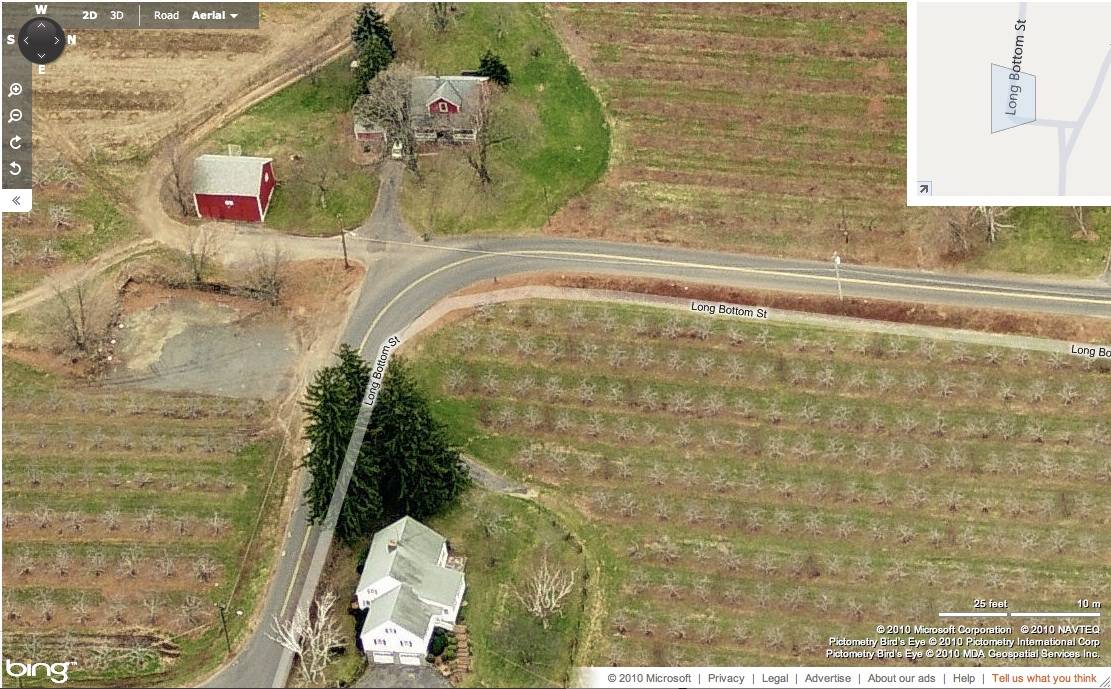
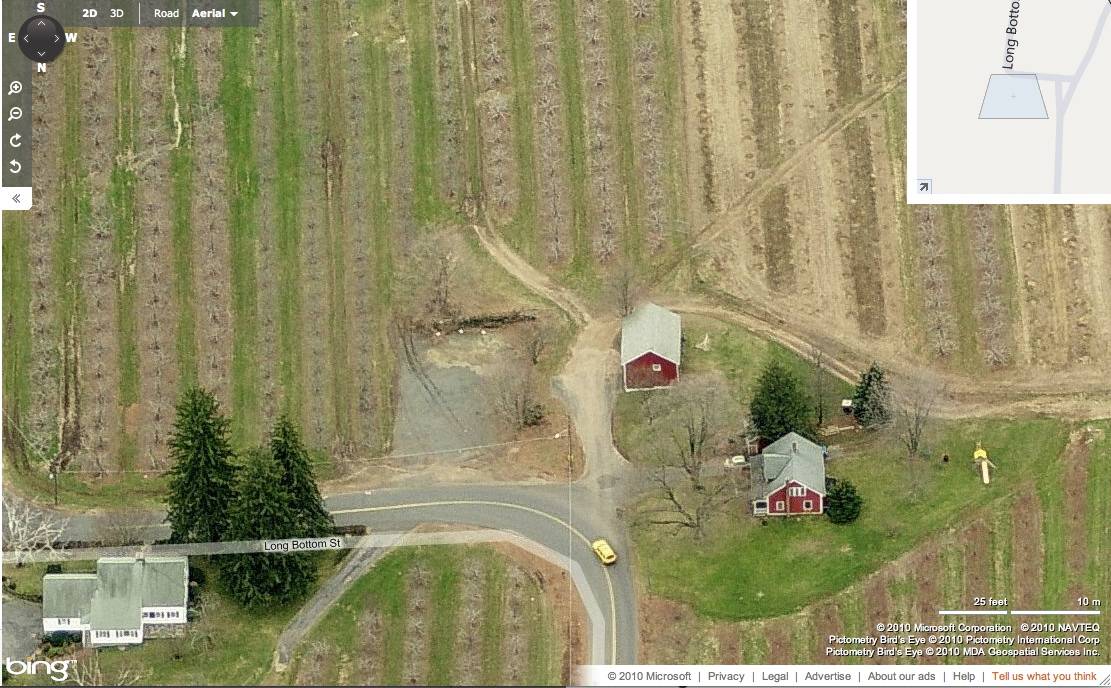
Rogers [Orchards] is an extensive farm complex in the northeast corner of Southington, Connecticut. It encompasses approximately 160 acres of gently rolling farmland on a plateau overlooking the southern end of Shuttle Meadow Reservoir. The [complex] is bounded on the west by a steep slope which drops several hundred feet down to a broad open plain where the more urban areas of Southington are located. There are two major roads: Long Bottom Road, which runs between Shuttle Meadow Road on the north to Andrews Street on the east; and Mine Hollow Road, which runs from Long Bottom, at the center of the complex, to Flanders Road in a southwesterly direction.
The Rogers Farm complex is devoted exclusively to pomiculture (the growing of fruit trees), with more than 100 acres of land in cultivation in the [complex]. The orchards run gradually down-slope from the south and west to the bowl of the reservoir. In addition to three main orchards primarily used for growing apples, with some pear and peach trees, the [complex] contains six houses with their barns and other associated outbuildings, a retail store with an associated warehouse, and a modern cold storage and processing facility (Cunningham, Section 7).
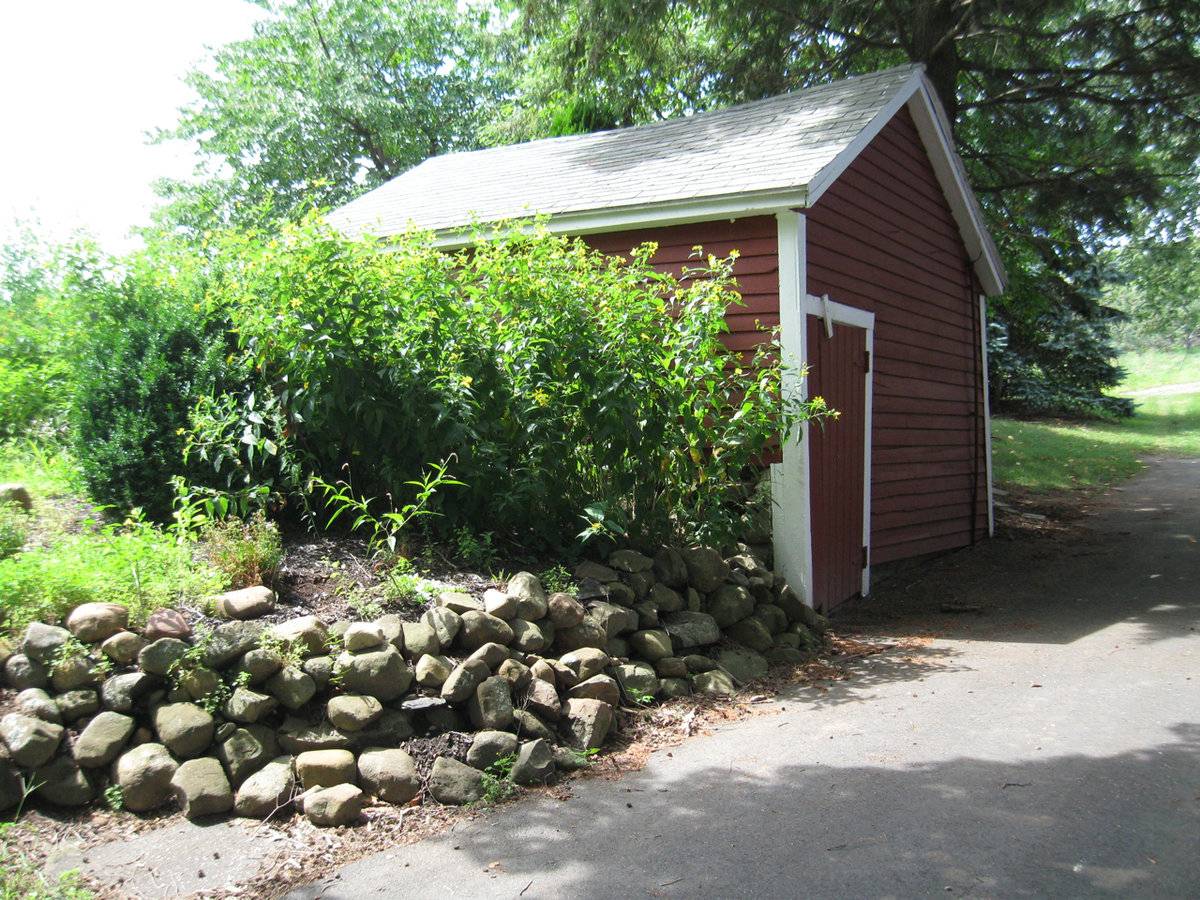
The house at 17 Long Bottom Road, across the street to the north, is the 1867 Ebenezer Evans House, the oldest in the Rogers Orchards complex. To the northwest a small c. 1890 farmhouse faces east at a bend in the road. Another small outbuilding is set into the hill to the south of the farmhouse, in the manner of an icehouse or root cellar.
- Typology & Materials
-
Building Typology
Materials
Structural System
Roof materials
Roof type
Approximate Dimensions
28 feet x 34 feet
- Source
-
Date Compiled
08/25/2010
Compiled By
Charlotte Hitchcock, reviewed by CT Trust
Sources
Field notes and photographs by Charlotte Hitchcock and Helen Higgins date 8/21/2010.
Town of Southington Assessor’s Record & GIS Viewer http://www.southingtongis.com/ags_map
Parcel ID: 173001 Barn 28 x 34 ftAerial Mapping:
http://maps.google.com
http://www.bing.com/maps accessed 11/17/2010.Andrews, Gregory, Sherrow, Doris, Colonial Houses of Southington Thematic Resource National Register Nomination, National Park Service, 1987.
Cunningham, Jan, Review Draft for Rogers Farm Historic District (not registered), 1988, Ct Trust for Historic Preservation files. National Register Nomination No. 88002688.
Ransom, David, Johnson, Lisa Fern, Southington Center National Register District Nomination No. 88002961, National Park Service, 1988.
Sexton, James, PhD, Survey Narrative of the Connecticut Barn, Connecticut Trust for Historic Preservation, Hamden, CT, 2005, http://www.connecticutbarns.org/history.
Visser, Thomas D., Field Guide to New England Barns and Farm Buildings, University Press of New England, 1997. - PhotosClick on image to view full file
-