Barn Record New London
RETURN TO ‘FIND BARNS’- Building Name (Common)
- Joshua Hempsted House
- Building Name (Historic)
- Joshua Hempsted House
- Address
- 11 Hempstead Street, New London
- Typology

- Overview
-
Designations
Historic Significance
Architectural description:
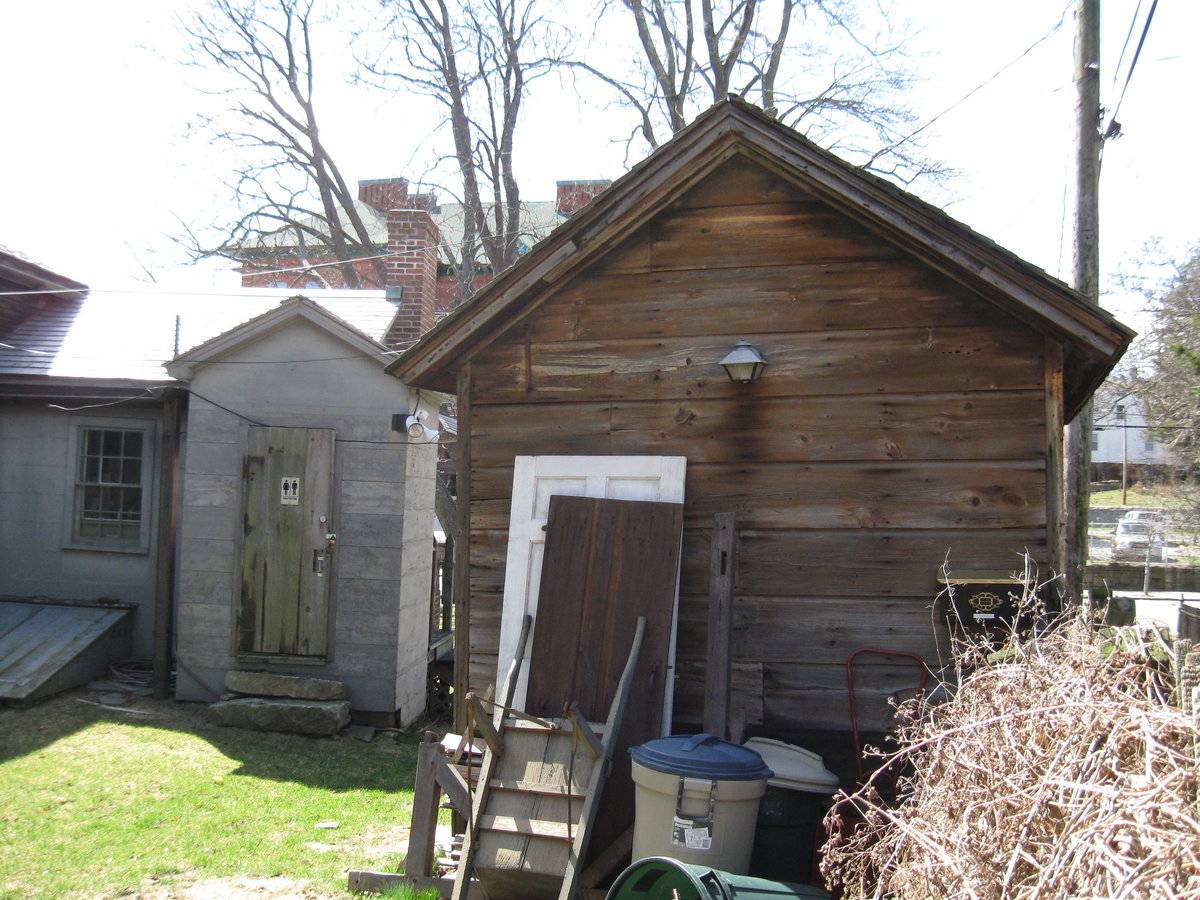
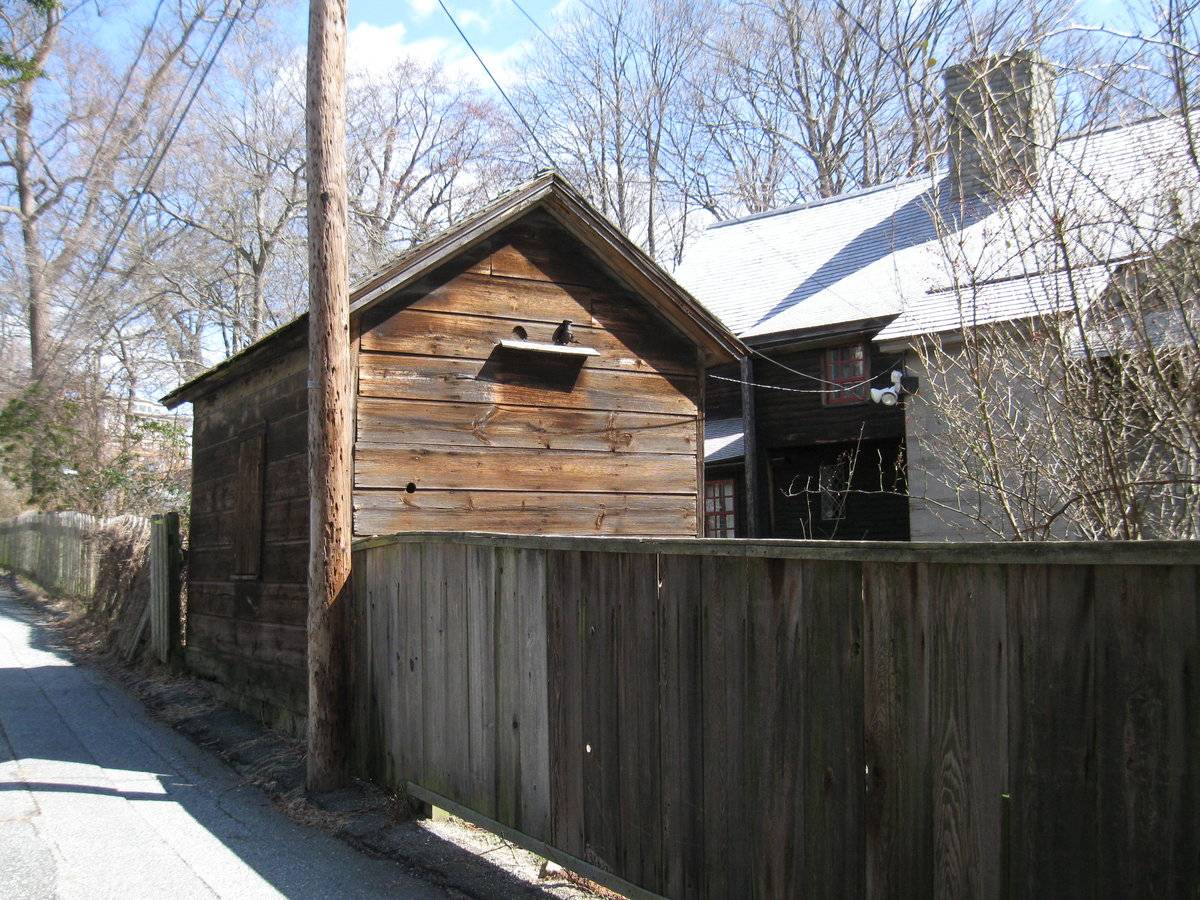
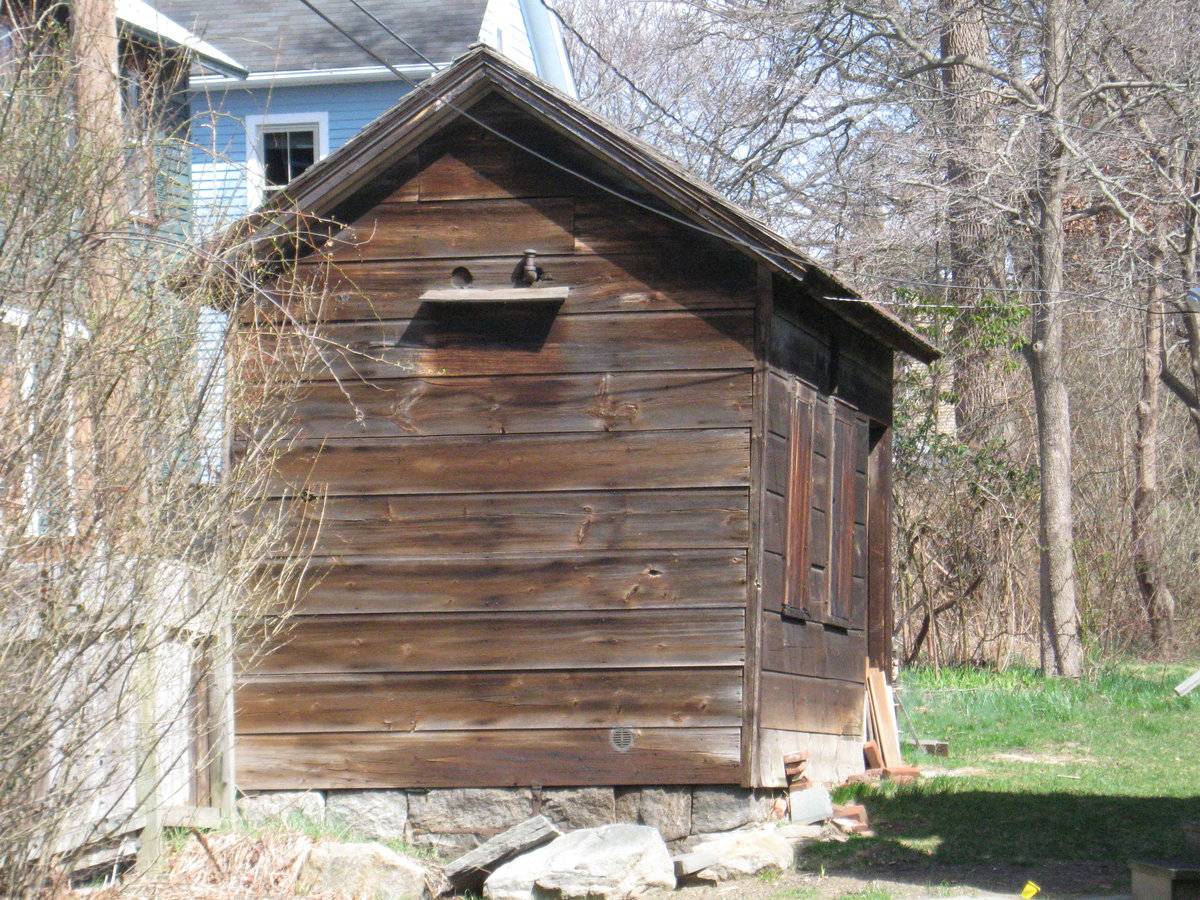
This is a small one-story gable-roofed shed with a foundation of roughly quarried stones. The shed is oriented roughly east-west, with its north eave-side forming the property line of the rear yard. There are two windows in the south side, and one in the north side, all covered by wooden shutters. A pass-through door is located in the south side at the southeast corner. The gable roof is wood shingled, and siding is random width horizontal boards, possibly ship-lapped, and butted at the corners to a narrow vertical corner board.
Historical significance:
Known as the shop, workshop, carpentry shop, toolshed, blacksmith shop, or machine shop, these small, well-lighted buildings provide a heated space for making and repairing furnishings, tools, and equipment, as well as for earning outside income through various trades. Typically 1 1/2 stories with a gabled front, and easily accessible doorway, and windows all around, most shops have a chimney for venting a cast iron rood or coal stove.
This instance may have been a toolshed or simply storage.
Historical background:
New London is a historically-rich community located at the convergence of the Thames River and Long Island Sound. The area was called Nameaug by the Pequot Indians. John Winthrop, Jr. founded the first English settlement here in 1646. Inhabitants informally named it Pequot after the tribe. On March 10, 1658 the town was officially named after London, England.
The harbor was considered to be the best deep water harbor on Long Island Sound, and consequently New London became a base of American naval operations during the Revolutionary War.
For several decades beginning in the early 19th century, New London was the second busiest whaling port in the world. The wealth that whaling brought into the city, and later connections by rail and water, furnished the capital to fund much of the city’s present architecture, including examples from the early 19th-century whaling period, the late 19th-century industrial age, and an early 20th-century period of popularity as a summer colony for the wealthy.Field Notes
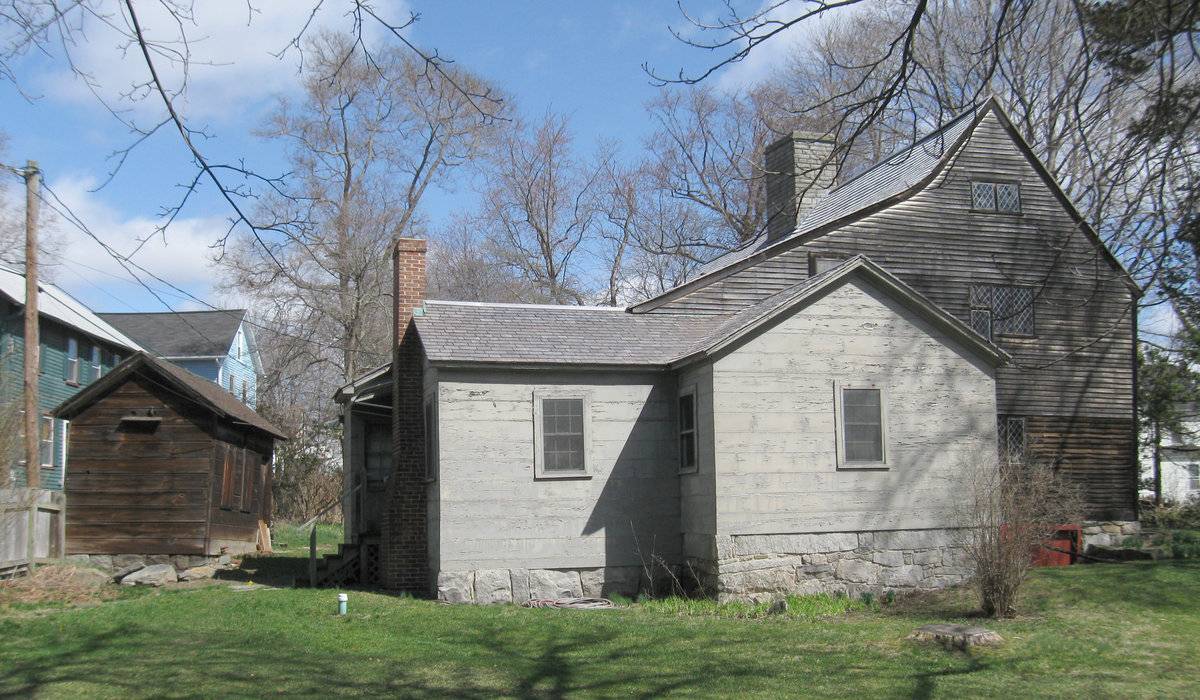
Hempsted Houses includes the Joshua Hempsted House at 11 Hempsted Street and the Nathaniel Hempsted House at 75 Jay Street. Located in the Hempsted Historic District. This outbuilding is a small shed near the Hempstead Court (north) side of the Joshua Hempstead House. The Hempsted Houses comprises two buildings: the 1678 Joshua Hempsted House and the 1759 Nathaniel Hempsted House. The Joshua Hempsted House is a frame building and is one of New England’s oldest and best-documented dwellings. Joshua Hempsted lived here his whole life, filling many roles, including farmer, judge, gravestone carver, shipwright, and father of nine children left motherless by his wife’s death in 1716. As a boy, Joshua lived in the house with his parents and 7 sisters. As a young husband and father, he shared the house with Abigail and their 9 children. Later in life, he was joined by enslaved African-American, Adam Jackson, some of his children, hired helpers, and 2 grandsons whom he raised. Joshua kept a diary for nearly 50 years prior to his own death in 1758. It is full of sometimes meaty, sometimes mundane, details of daily life in colonial Connecticut ( http://www.ctlandmarks.org/index.php?page=hempsted-houses ).
- Use & Accessibility
- Environment
Related features
Environment features
Relationship to surroundings
The Hempstead Historic District is a neighborhood in New London, located north of the harbor. It extends from a hollow behind the County Courthouse on Huntington Street, and runs up a steep rocky hill to the south and west. The district has the moderate density of a primarily residential neighborhood of 19th-century single and two-family dwellings. The hilly topography of the district required the extensive use of terracing and retaining walls during its development. The houses as they now stand reflect the evolution of a cohesive urban neighborhood from 17th-century homelots.
Though now located a mile from the river in the center of New London,
the Hempsted House was originally very nearly on the waterfront. Truman’s Brook ran only thirty feet from the house and spilled into Shaw’s Cove only a quarter of a mile away.- Typology & Materials
-
Building Typology
Materials
Structural System
Roof materials
Roof type
Approximate Dimensions
126 square feet
- Source
-
Date Compiled
04/20/2010
Compiled By
Charlotte Hitchcock, reviewed by CT Trust
Sources
Field notes and photographs by Charlotte Hitchcock 3/10/2010
New London Assessor’s Record Map/Lot F12/ 169/ 23/
(house built 1678 , barn area 126 sf).Churchill, Sharon P., Hempstead Historic District National Register Nomination No.86002112, National Park Service, 1996.
Luyster, Constance, Joshua Hempstead House National Register Nomination No.7110090023, National Park Service, 1970.
City of New London Office of Development and Planning, Preserving Our Heritage: A Guide to the National Register Historic Districts and Individually Listed Properties in New London, New London, CT 06320 undated.
Sexton, James, PhD, Survey Narrative of the Connecticut Barn, Connecticut Trust for Historic Preservation, Hamden, CT, 2005, http://www.connecticutbarns.org/history.
Visser, Thomas D., Field Guide to New England Barns and Farm Buildings, University Press of New England, 1997.
Wikipedia: http://en.wikipedia.org/wiki/New_London,_Connecticut - PhotosClick on image to view full file
-