Barn Record East Hampton
RETURN TO ‘FIND BARNS’- Building Name (Common)
- n/a
- Building Name (Historic)
- n/a
- Address
- 216 Wopowog Road, East Hampton
- Typology

- Overview
-
Designations
n/a
Historic Significance
Architectural description:
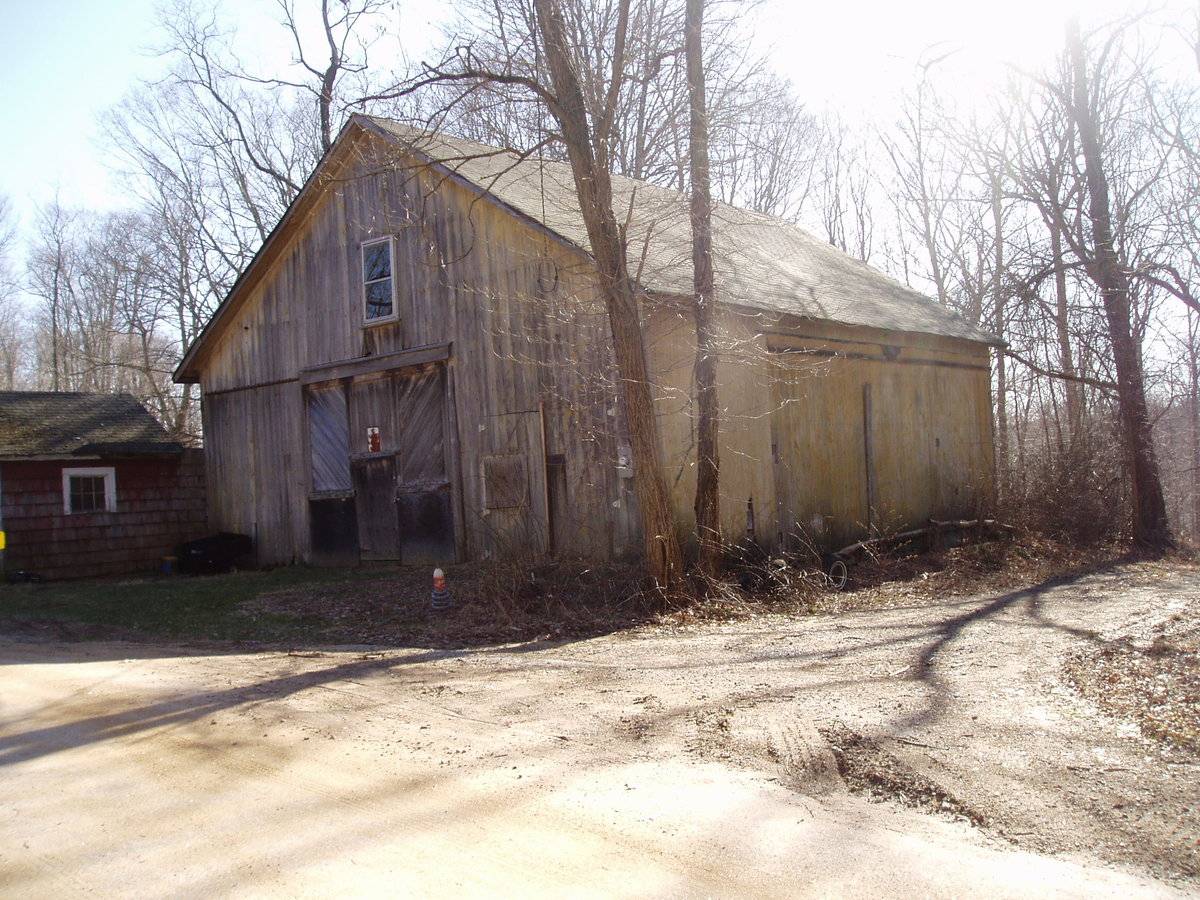
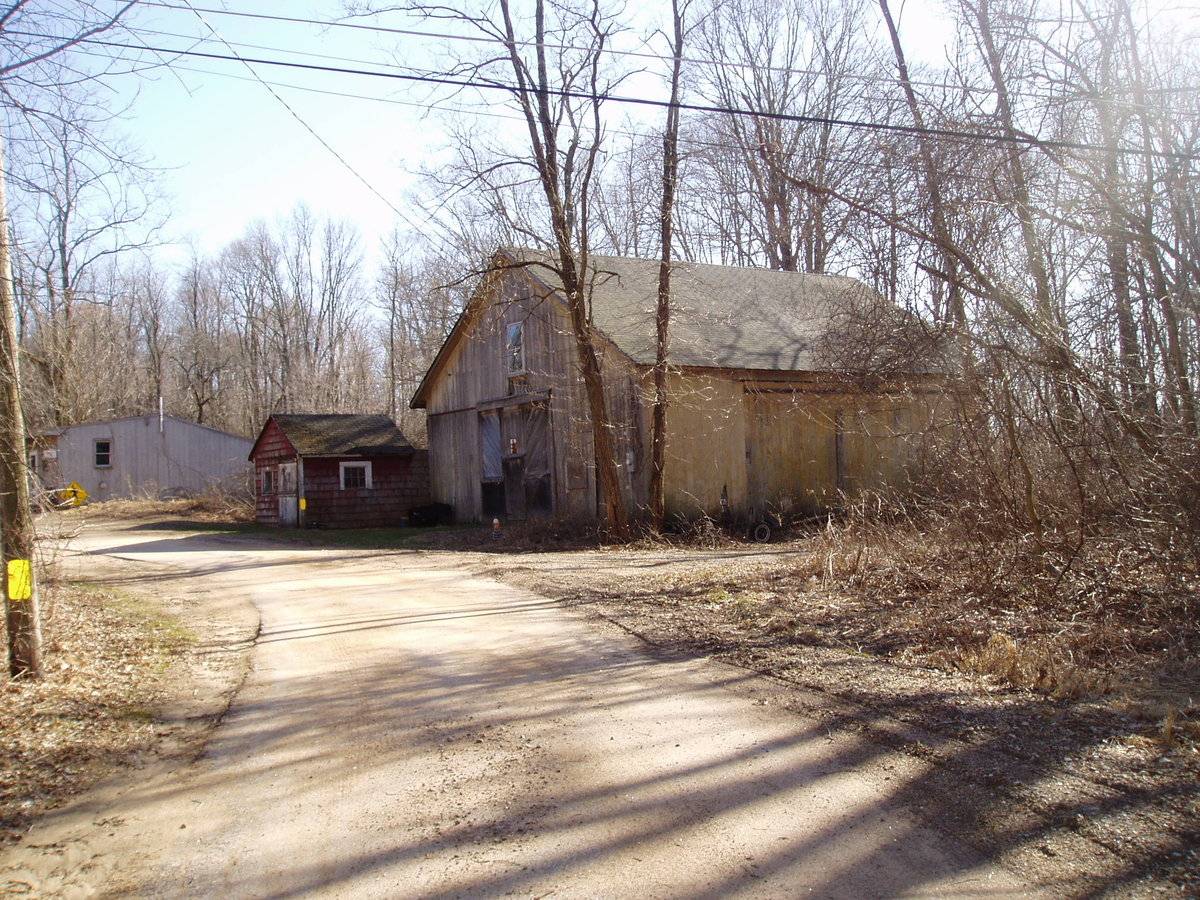
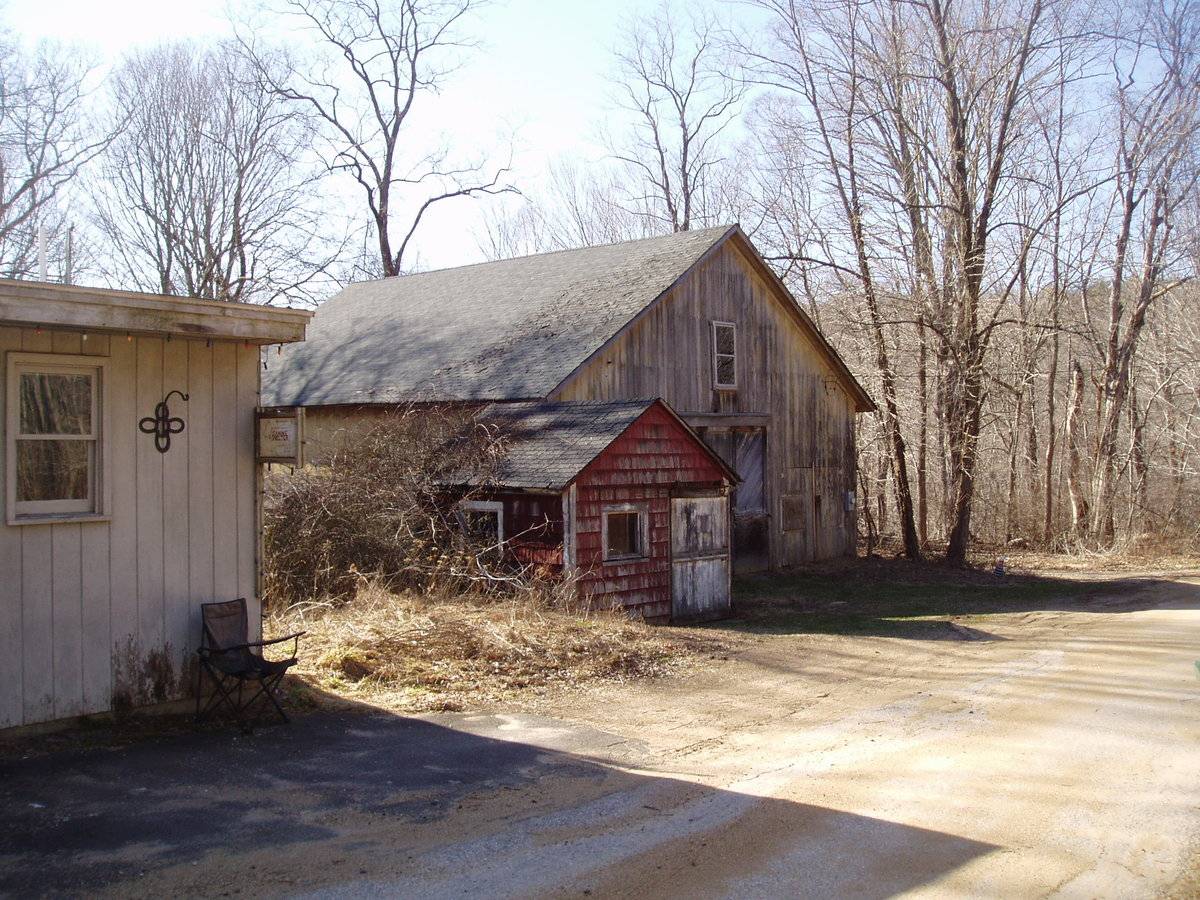
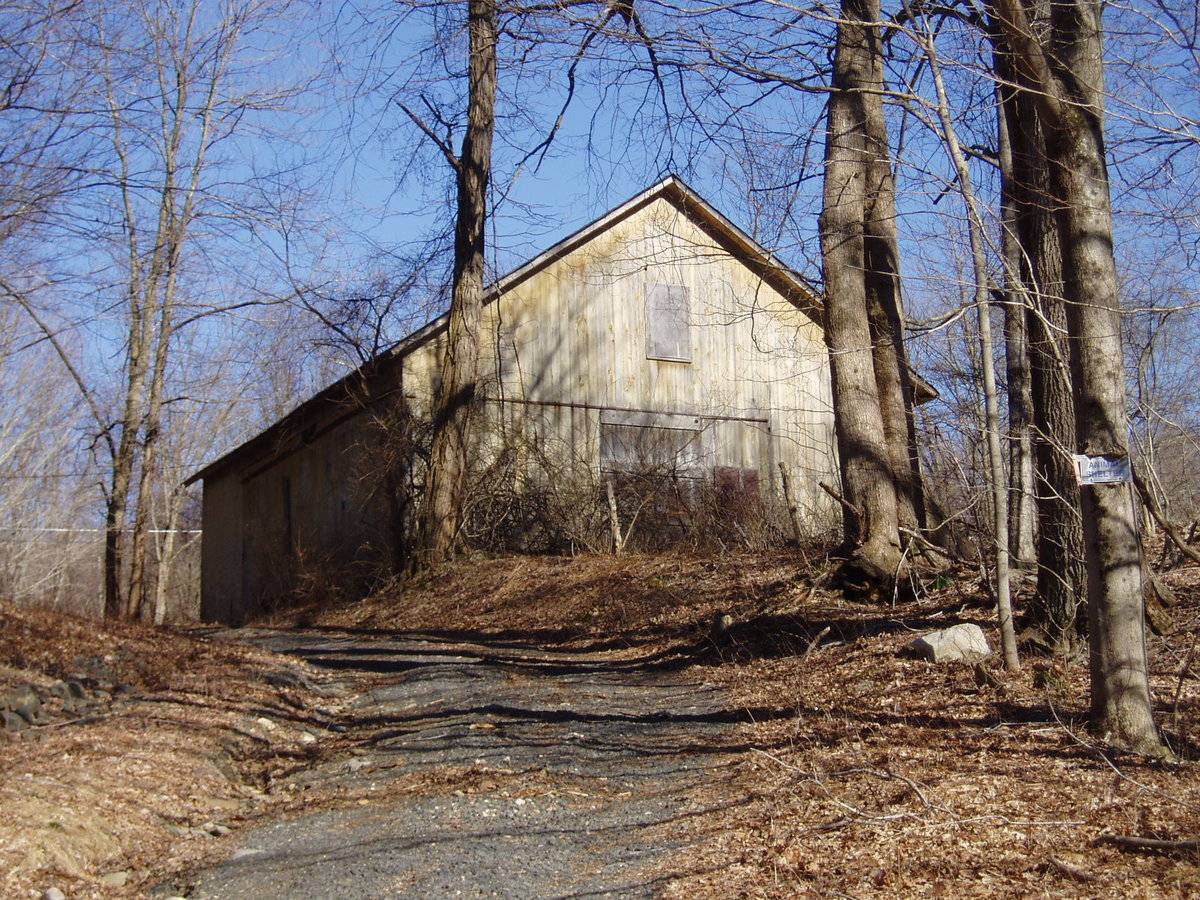
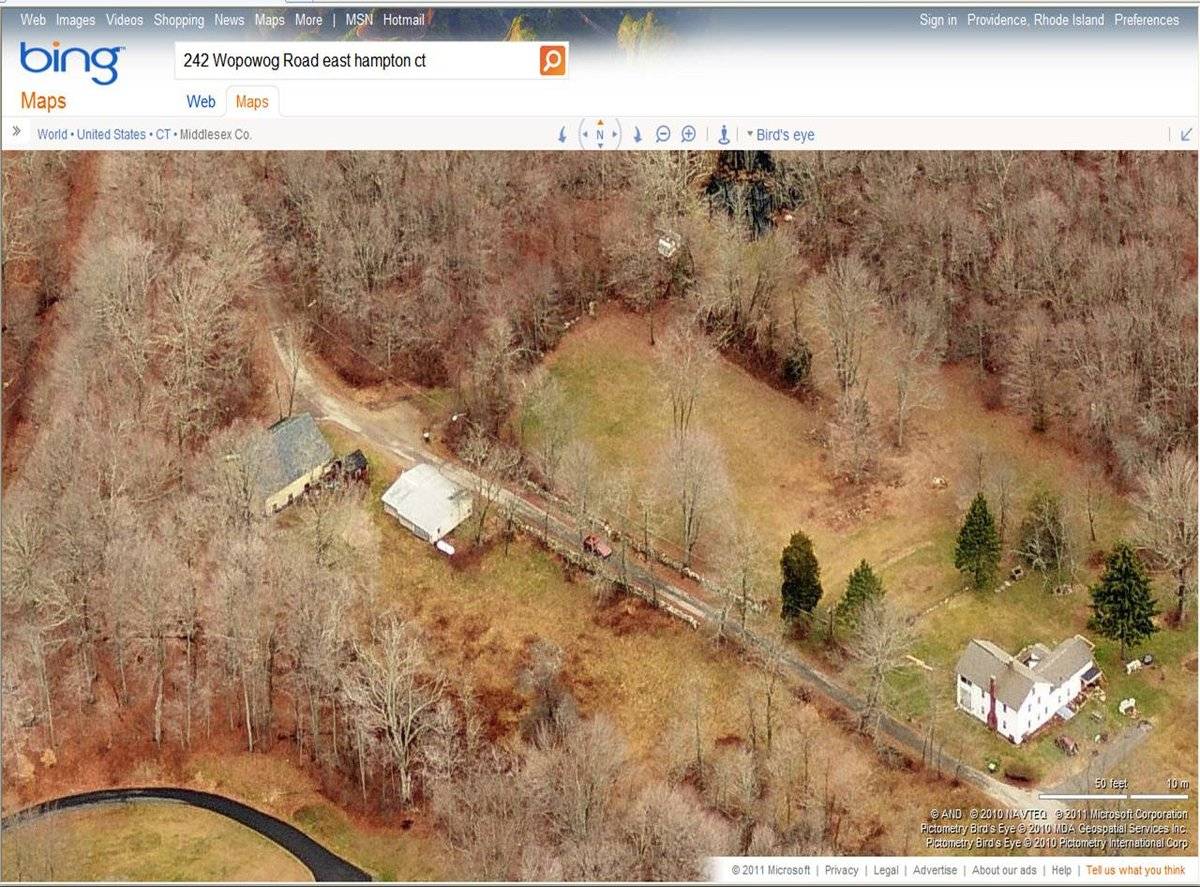
This is a a 1 1/2-story gable-entry barn. The main facade faces northeast and the ridge-line of the barn is perpendicular to this portion of Wopowog Road, which runs approximately north-south. The main entry is centered in the northeast gable-facade of the barn and given the existence of a track, appears to have originally consisted of a sliding door. It has been partially filled-in and altered to accommodate a pass-through door. A second pass-through door is located towards the north corner of the northeast gable-end of the barn. There is a window opening in the gable attic. The southeast eave-side of the barn appears to have three window or door openings, based on aerial maps. The southwest gable-end of the barn has a sliding door roughly in the center and a window opening, boarded shut, in the gable attic. The northwest eave-side of the barn is blank, but there is physical evidence that there used to be a structure extending off this side of the barn. The barn has unpainted vertical flushboard siding and the roof has asphalt shingles. The foundation is not visible.A small, 1-story, front-gable shed is located at the southeast corner of the barn. Its ridge line parallels that of the main barn. The main entry to the shed is a pass through door located in the northeast gable-end of the building. There is a small window opening with wood trim immediately to the south of the door. The southeast eave-side of the shed has a small window opening with wood trim located roughly in the center. The southwest gable-end of the shed is not visible. The northwest eave-side of the shed has a three-by-two, fixed wood window sash with wood trim located roughly in the center. The shed has wood shingles, painted red with white trim and corner boards, and the roof has asphalt shingles. The foundation of the shed is not visible.
Historical significance:
The New England barn or gable front barn was the successor to the English barn and relies on a gable entry rather than an entry under the eaves. The gable front offers many practical advantages. Roofs drain off the side, rather than flooding the dooryard. With the main drive floor running parallel to the ridge, the size of the barn could be increased to accommodate larger herds by adding additional bays to the rear gable end. Although it was seen by many as an improvement over the earlier side-entry English Barn, the New England barn did not replace its predecessor but rather coexisted with it, as both types continued to be built.
Field Notes
New England style barn adjacent to town animal shelter, 1/10 mile north of 242 Wopowog. Evidence of a shed or addition removed from north side of building.
- Use & Accessibility
Use (Historic)
Use (Present)
Exterior Visible from Public Road?
Yes
Demolished
n/a
Location Integrity
Unknown
- Environment
Related features
Environment features
Relationship to surroundings
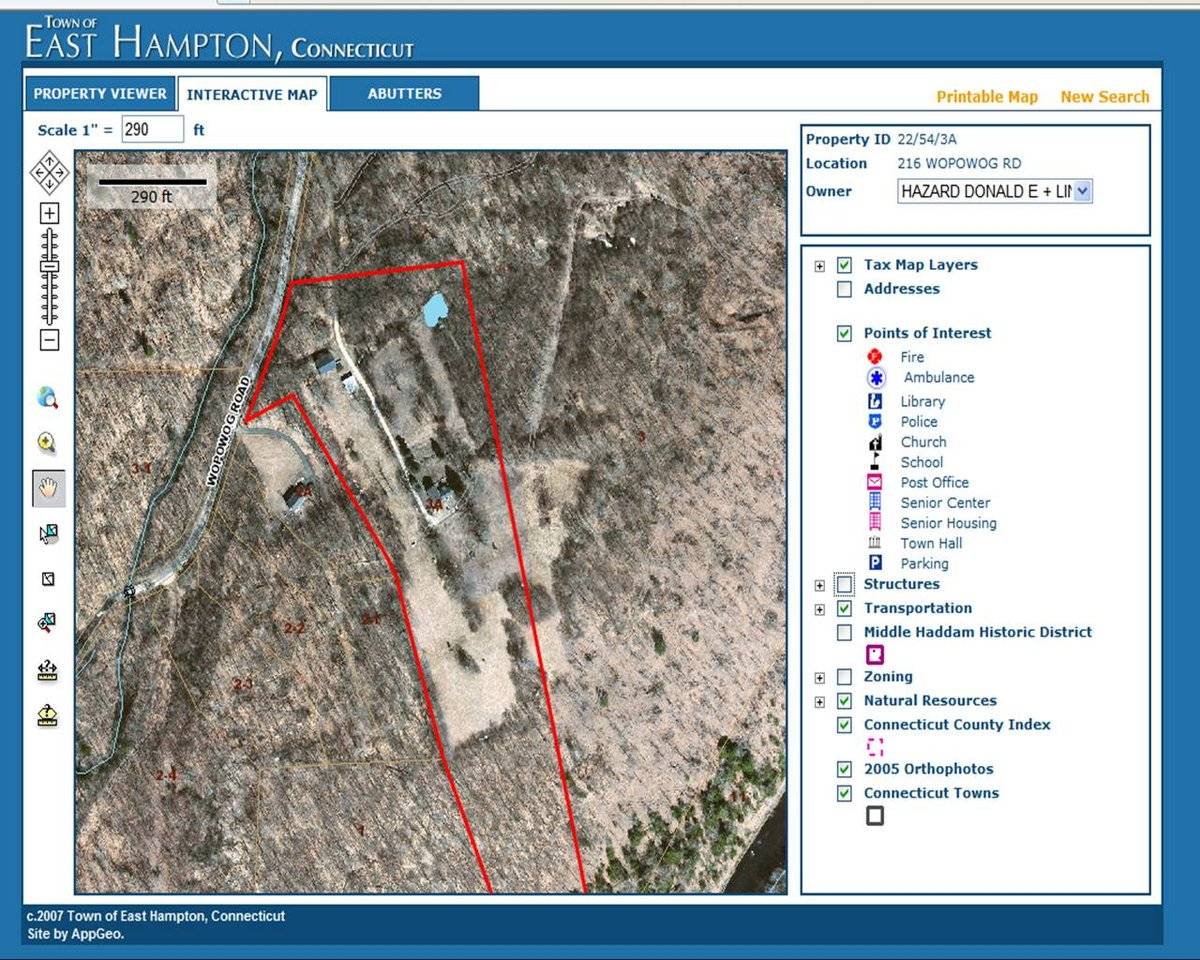
The barn is located on a 15-acre parcel on the east side of Wopowog Road which is accessed by a long driveway that runs northwest to southeast. The drive leads first to the barn, then to the town animal shelter (located immediately to the southeast of the barn) and finally to a c1900 residence. The ridge-line of the house is perpendicular to the ridge-line of the barn. Stone walls line either side of a portion of the driveway, as it leads southeast from the animal shelter. The area surrounding the site is rural residential and woodland.
Parcel ID: 22/ 54/ 3A
- Typology & Materials
-
Building Typology
Materials
Structural System
n/a
Roof materials
Roof type
Approximate Dimensions
1530 sq. ft.
- Source
-
Date Compiled
02/12/2011
Compiled By
J. Doherty & T. Levine; reviewed by CT Trust
Sources
Field notes and photographs by Thom Sawyer 05/23/2010.
Town of East Hampton Assessor’s Record:
http://data.visionappraisal.com/EastHamptonCTTown of East Hampton Geographic Information System
http://host.appgeo.com/easthamptonct/
Parcel ID: 22/ 54/ 3AAerial Mapping: http://www.bing.com/maps accessed 02/12/2011.
Sexton, James, PhD, Survey Narrative of the Connecticut Barn, Connecticut Trust for Historic Preservation, Hamden, CT, 2005, http://www.connecticutbarns.org/history.
Visser, Thomas D., Field Guide to New England Barns and Farm Buildings, University Press of New England, 1997. - PhotosClick on image to view full file
-