Barn Record Lebanon
RETURN TO ‘FIND BARNS’- Building Name (Common)
- n/a
- Building Name (Historic)
- n/a
- Address
- 379 Goshen Hill Road, Lebanon
- Typology
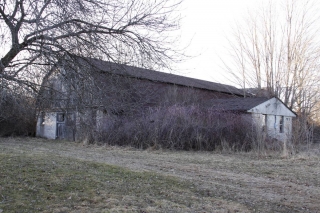
- Overview
-
Designations
n/a
Historic Significance
Architectural description:
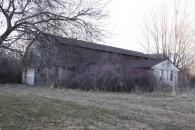
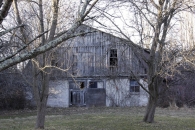
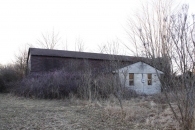
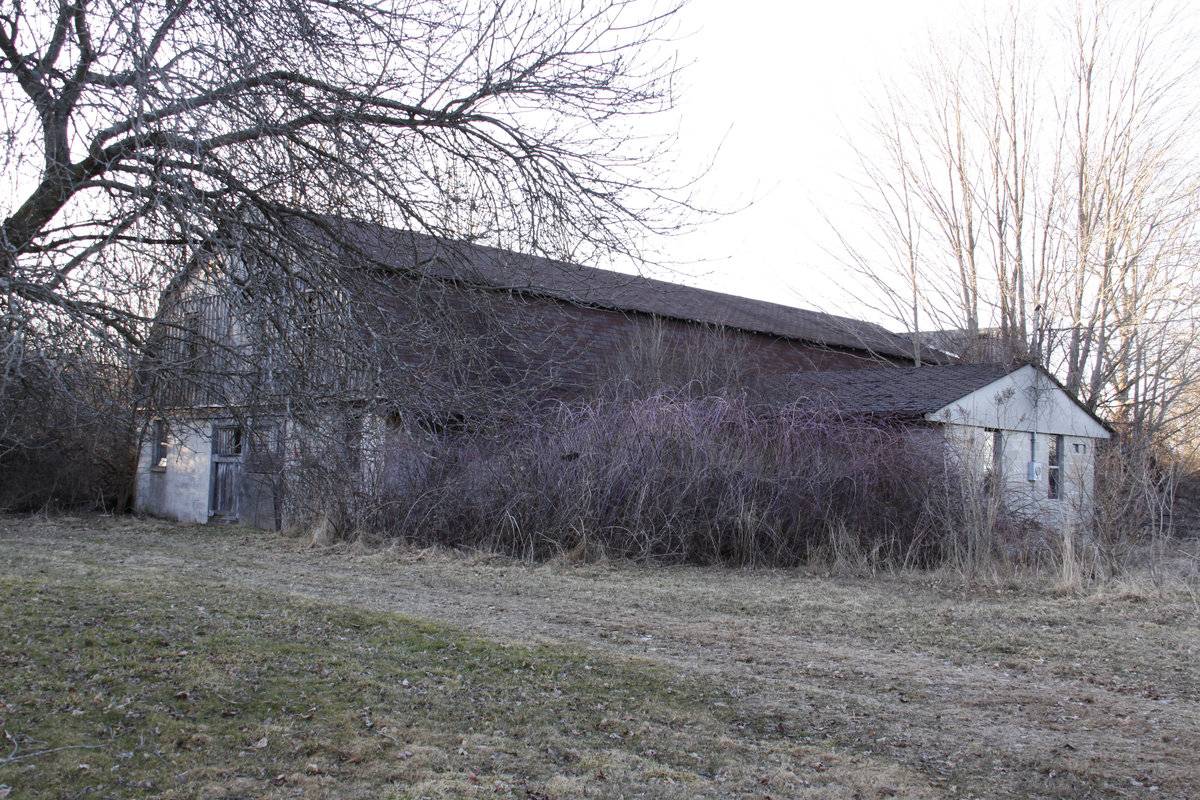
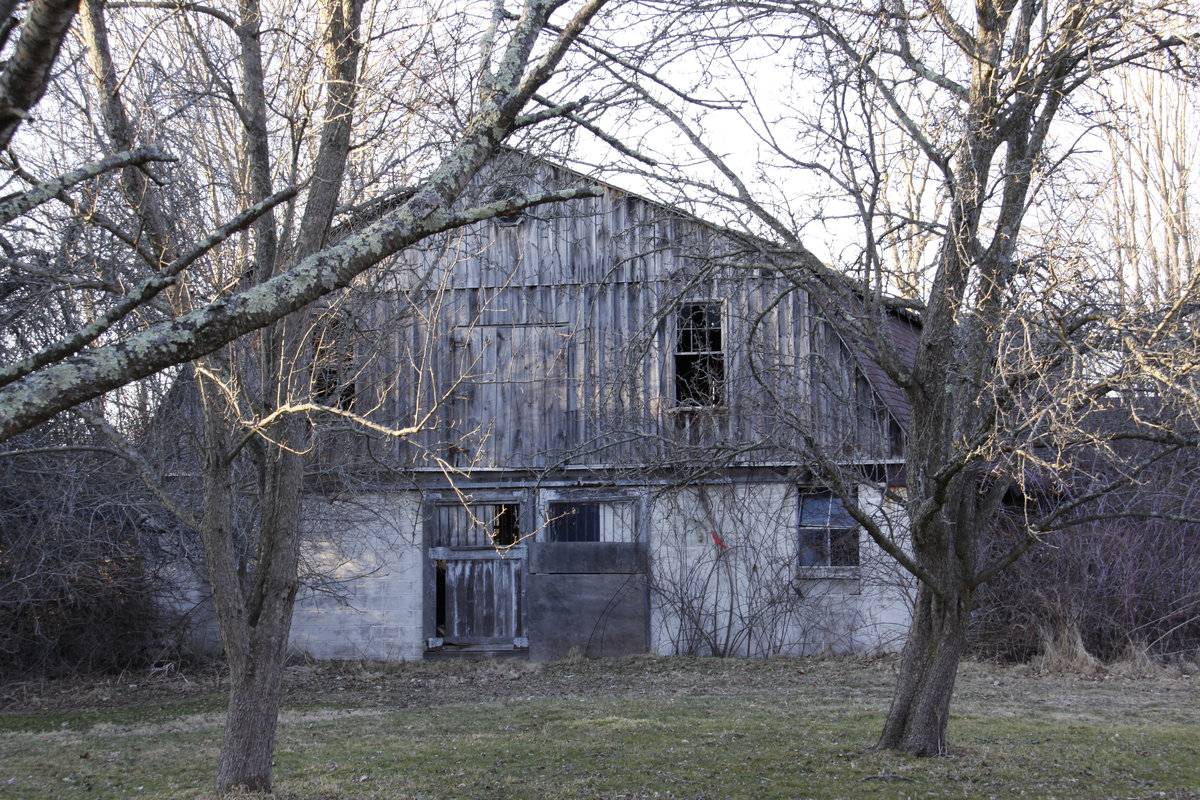
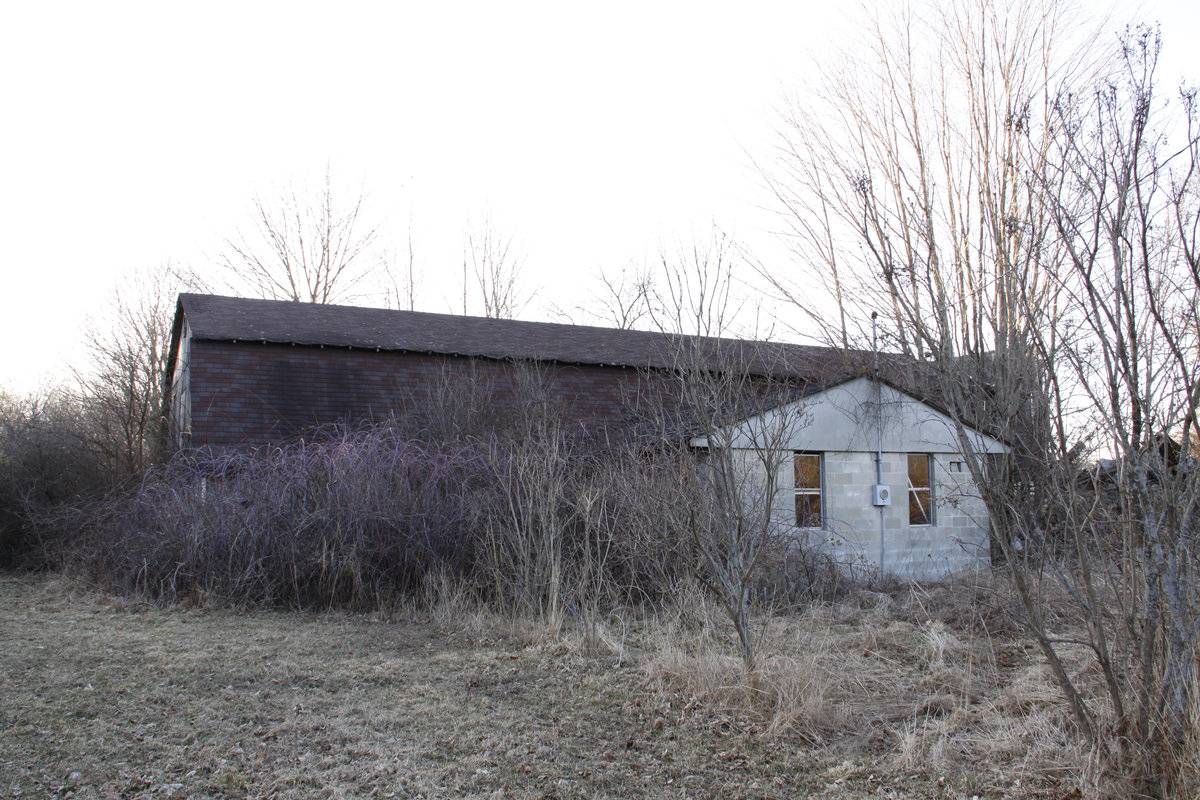
This is a 2 story gable-entry gambrel stable barn with a gable-roofed addition. The main facade faces south towards the intersection of Goshen Hill Road and Hinckly Road. The main entry on the south gable-facade is a pair of exterior sliding doors on the main level flanked by four-pane hopper windows. Centered above in the second level is a side-hinged hay-door flanked by six-over-six double hung windows. Beneath the apex of the roof is an octagonal window. The eave-facades have a series of stable windows. The east eave-facade of the barn has a gable-roofed addition that extends to the east, possibly a milkhouse. The eaves and the first level of the gable-facade are concrete block masonry construction. The second floor of the south gable-facade is board-and-batten siding. The gable attic of the south gable-facade is vertical flush-board siding. The barn is unpainted. The roof has asphalt shingles.
Historical significance:
By the early 20th century agricultural engineers developed a new approach to dairy barn design: the ground-level stable barn, to reduce the spread of tuberculosis bacteria by improving ventilation, lighting, and reducing the airborne dust of manure. A concrete slab typically serves as the floor for the cow stables. Many farmers converted manure basements in older barns into ground-level stables with concrete floors. Some older barns were jacked up and set on new first stories to allow sufficient headroom. With the stables occupying the entire first story, the space above serves a a hayloft. By the 1920s most ground-level stable barns were being constructed with lightweight balloon frames using two-by-fours or two-by-sixes for most of the timbers. Tongue-and-groove beveled siding is common on the walls, although asbestos cement shingles also were a popular sheathing. Some barns have concrete for the first-story walls, either poured in place or built up out of blocks. The gambrel roof design was universally accepted as it enclosed a much greater volume than a gable roof did, and its shape could be formed with trusses.
Field Notes
No one was available for information Corner of Goshen Hill and Hinkley Rd Picture #3 shows main barn the cow barn was attached on right side is totally flat
- Use & Accessibility
- Environment
Related features
Environment features
Relationship to surroundings
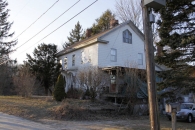
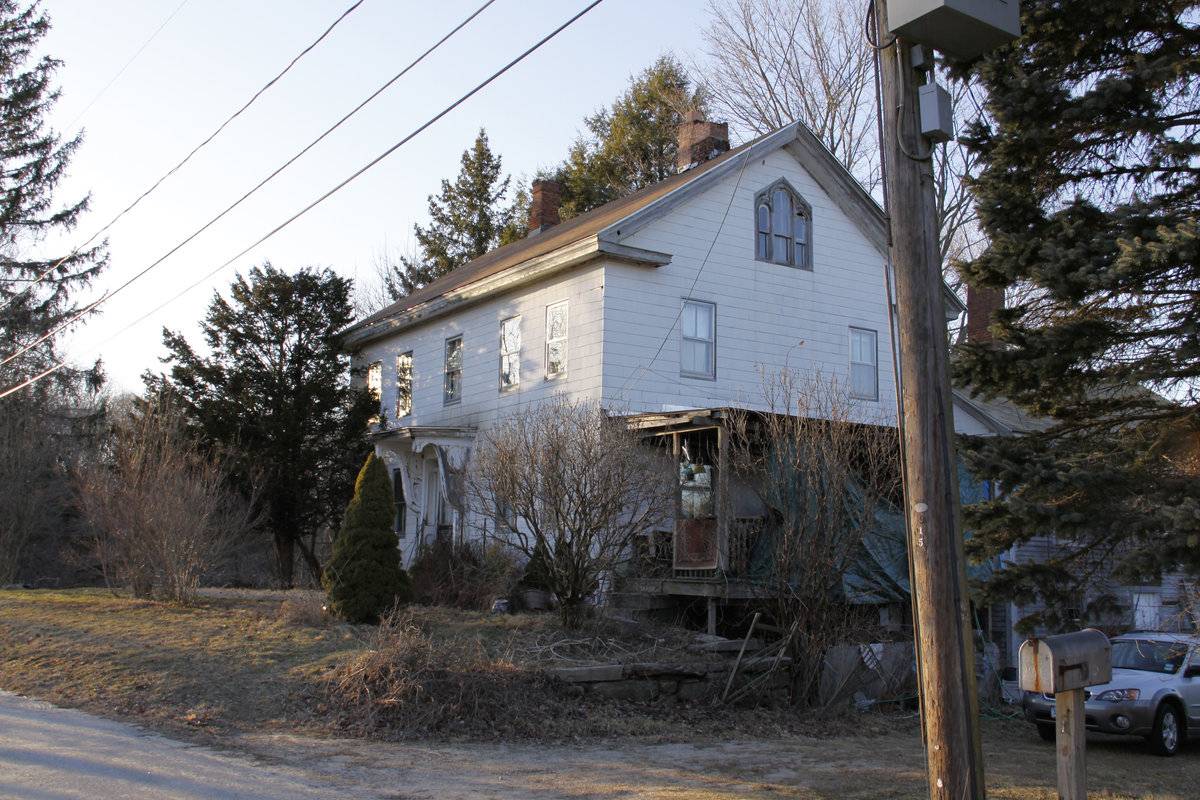
The barn is northeast and to the side of the house that it is associated with. The house appears to actually be on Hinckley Road, but the driveway to the house is on Goshen Hill Road. To the north of the barn, extending to the northeast, is a gable-roofed shed and a large tract of open space. Further north is scattered woodland. Across Goshen Hill Road to the south and east are also large tracts of open space and scattered residential. The site is just north of the intersection of Hinckley Road and Goshen Hill Road. To the west is scattered woodland. The total size of the site is 9.42 acres.
mblu = 261//6
- Typology & Materials
-
Building Typology
Materials
Structural System
n/a
Roof materials
Roof type
Approximate Dimensions
n/a
- Source
-
Date Compiled
07/23/2010
Compiled By
Todd Levine, reviewed by the Connecticut Trust
Sources
Photographs and field ntoes by Jacky Smakula.
Sexton, James, PhD; Survey Narrative of the Connecticut Barn, Connecticut Trust for Historic Preservation, Hamden, CT, 2005, http://www.connecticutbarns.org/history.
Visser, Thomas D.,Field Guide to New England Barns and Farm Buildings, University Press of New England, 1997.
Map of the Lebanon, CT, retrieved on July 23, 2010 from website www.zillow.com.
Town of Lebanon assessors office, 579 Exeter Road, Lebanon, CT 06249.
- PhotosClick on image to view full file
-