Barn Record Chaplin
RETURN TO ‘FIND BARNS’- Building Name (Common)
- n/a
- Building Name (Historic)
- n/a
- Address
- 565 Phoenixville Road (Rte 198), Chaplin
- Typology

- Overview
-
Designations
n/a
Historic Significance
Architectural description:
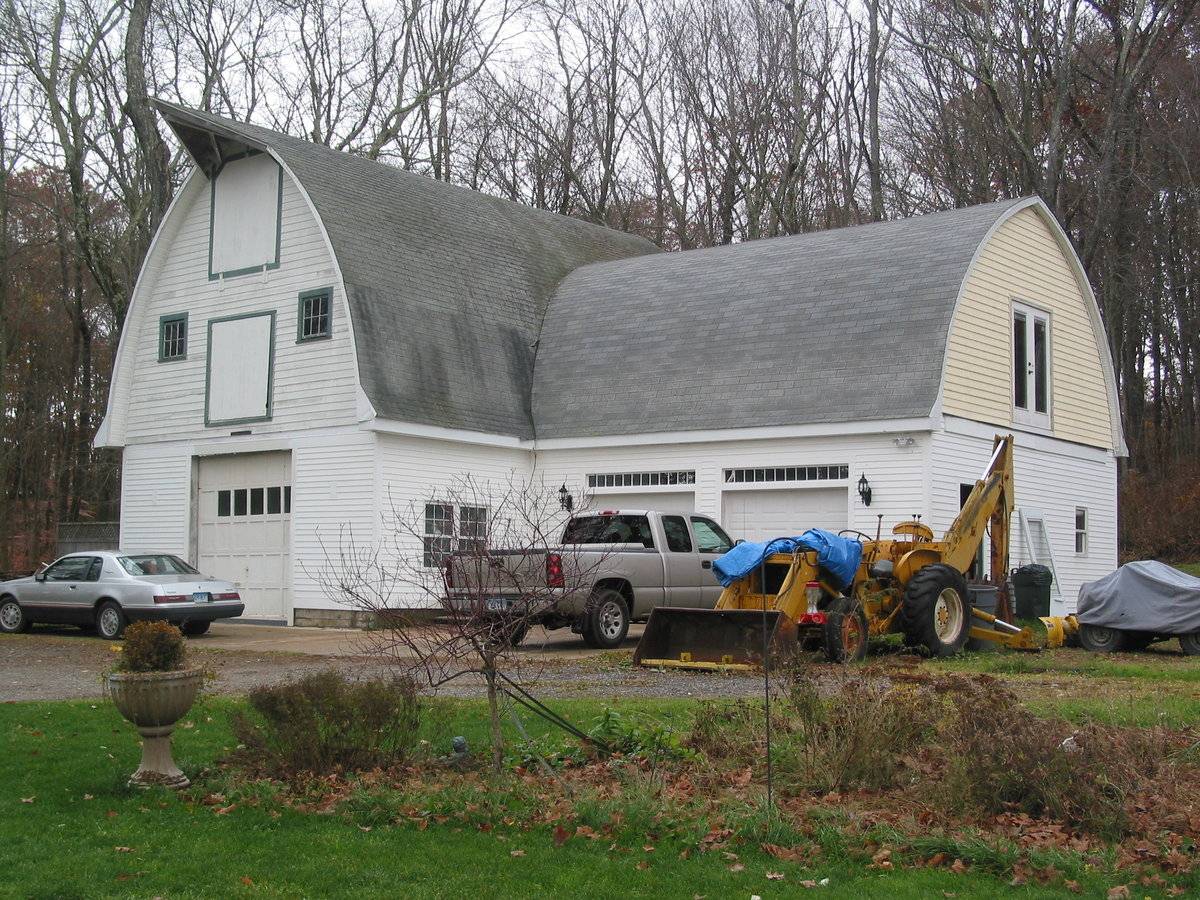
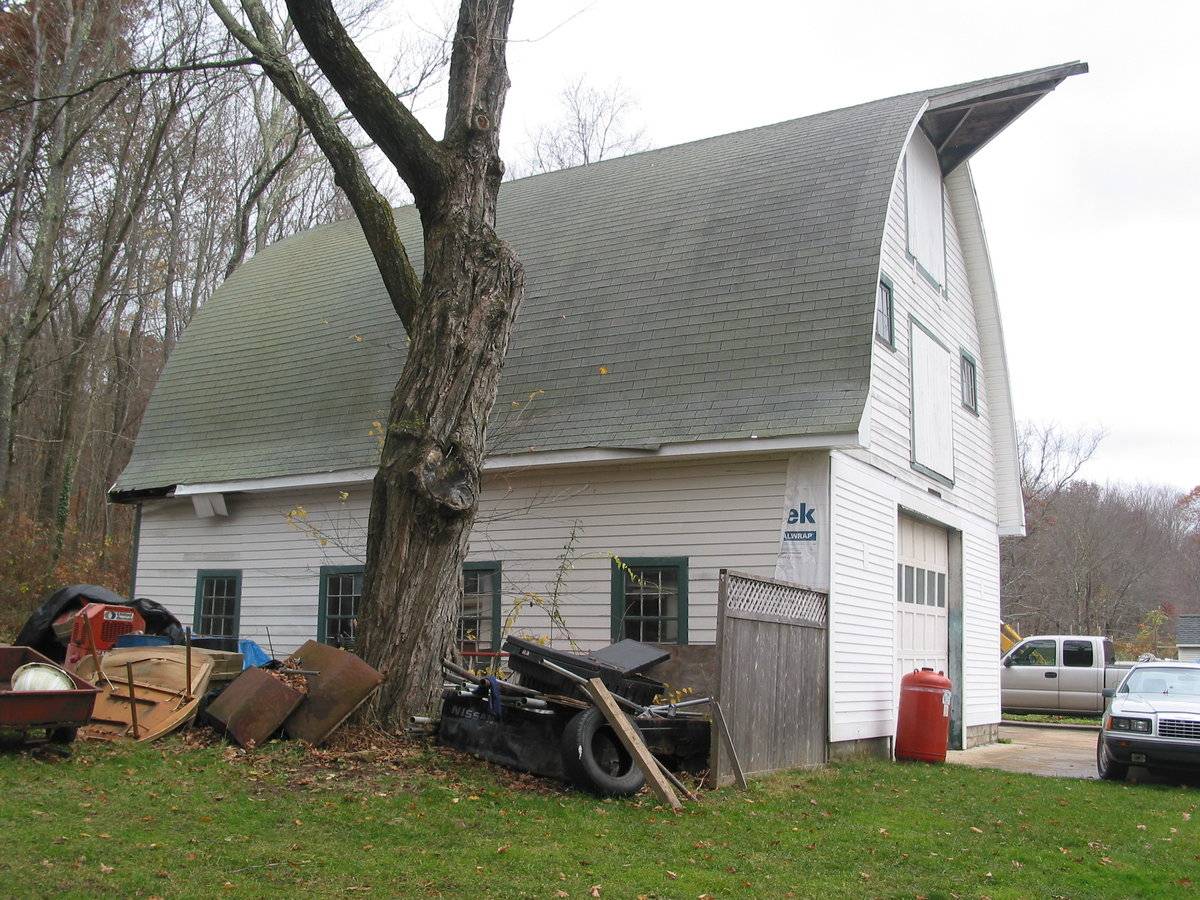
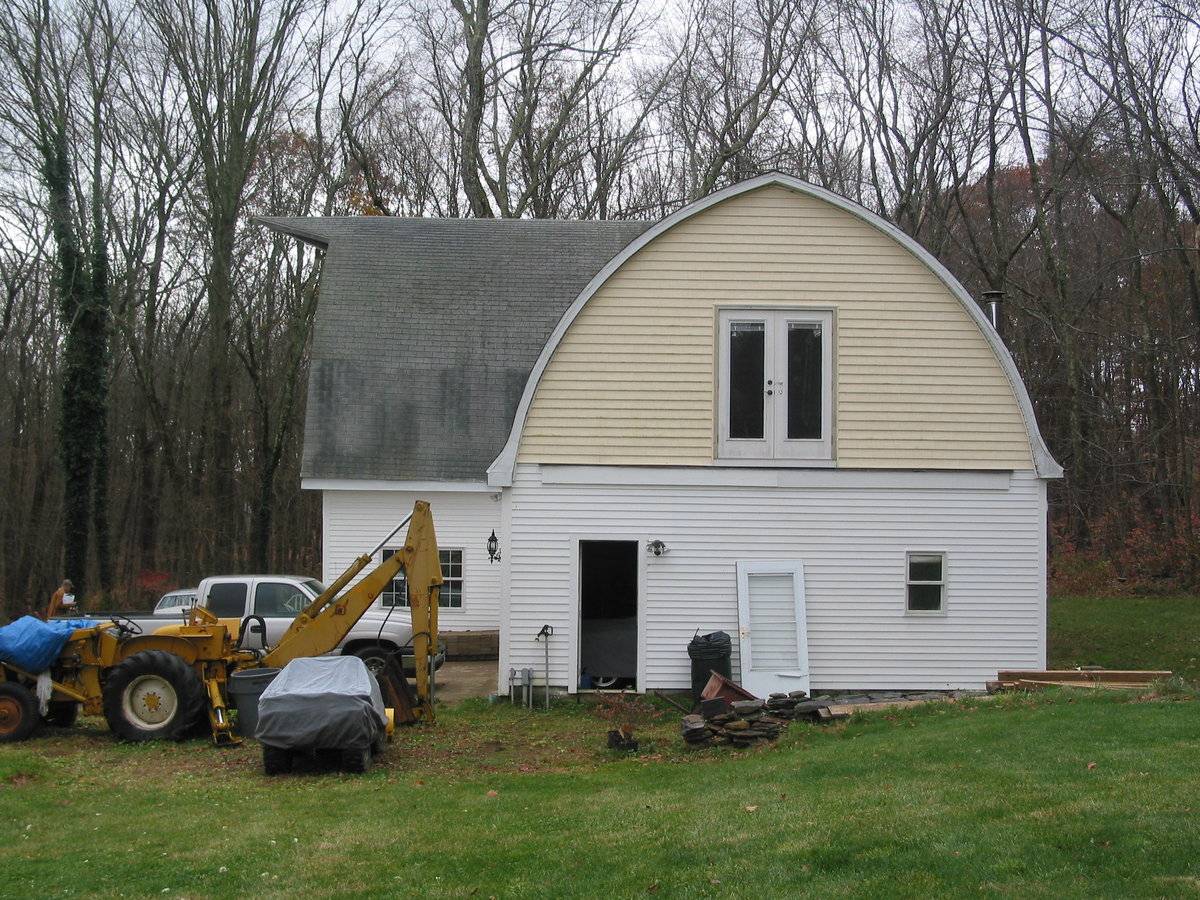
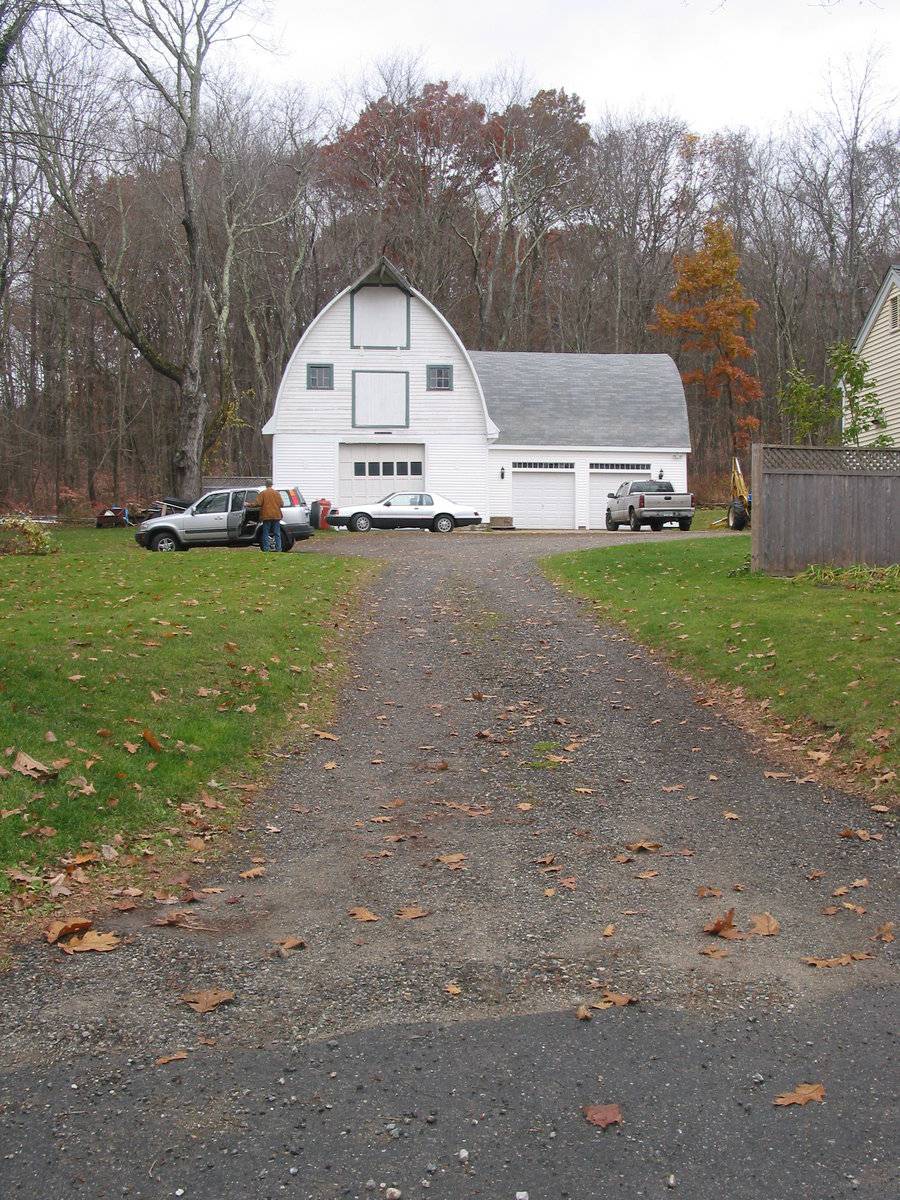
This is a 2 ½ story gothic-roof gable-entry barn. The main facade faces south to Phoenixville Road with its ridge line running north-south. The main entry is an overhead garage door centered on the first floor. Above is a hay door that is flanked on either side by fixed six-pane windows. Centered below the triangular projecting hood of the roof is another hay door. The west eave-facade has four evenly spaced six-over-six double-hung windows with trim. Attached to the east eave of the barn is a gothic-roofed addition. The south eave-facade of the addition has two overhead garage doors with twelve-pane transom lights. The east gable-end of the addition has a pass-through door on the southern-most side and a single one-over-one double-hung window on the northern-most side. Above the siding divide there appears to be modern double-door. The barn has clapboard siding that is painted white with blue trim and an asphalt shingle roof. The hayloft level on the east gable-end of the addition has clapboard siding and is painted yellow.
Historical significance:
The New England barn or gable front barn was the successor to the English barn and relies on a gable entry rather than an entry under the eaves. The gable front offers many practical advantages. Roofs drain off the side, rather than flooding the dooryard. With the main drive floor running parallel to the ridge, the size of the barn could be increased to accommodate larger herds by adding additional bays to the rear gable end. Although it was seen by many as an improvement over the earlier side entry English Barn, the New England barn did not replace its predecessor but rather coexisted with it.
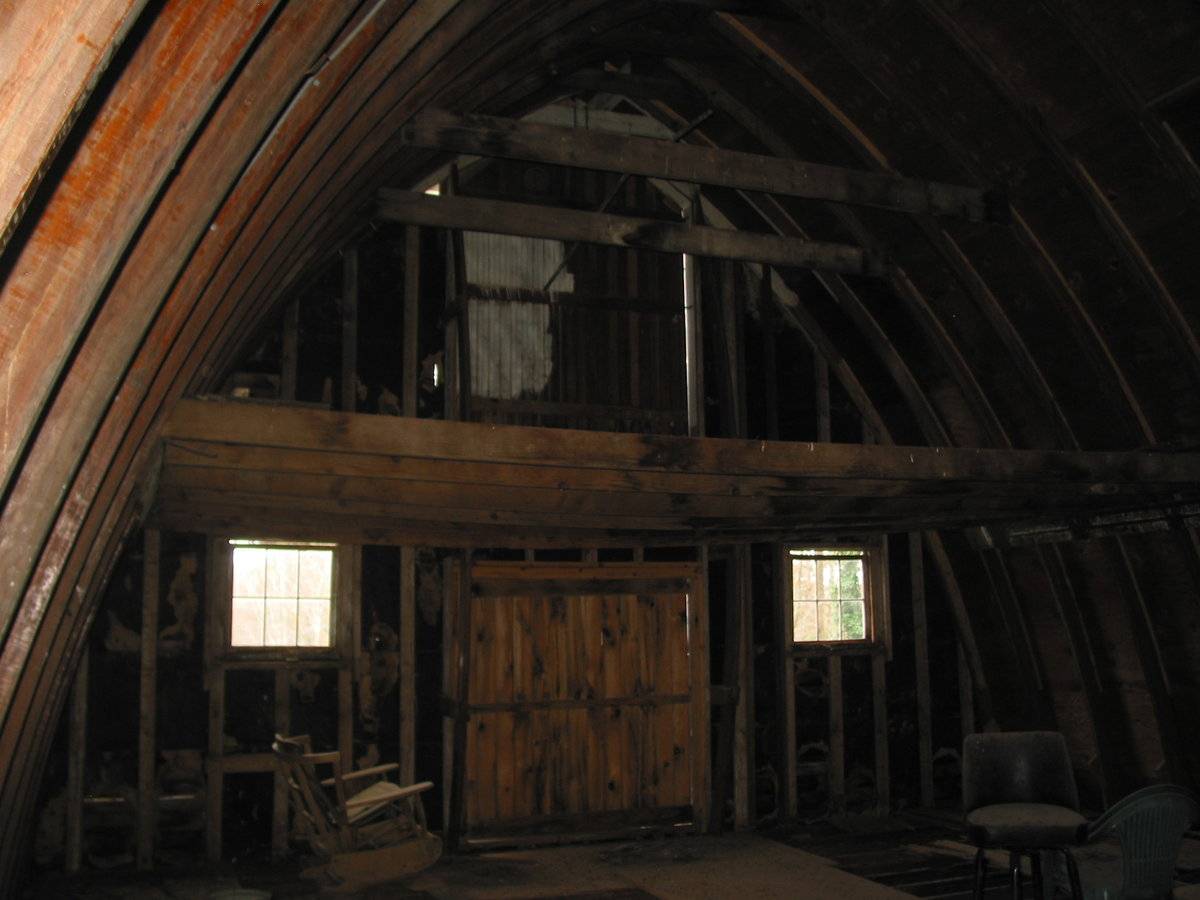
The ground level stable barn with a Gothic roof uses prefabricated curved rafters to maximize the volume in the hayloft with a minimum of internal supports. Aside from the pointed arch of the roof, this design is very similar to that of the dairy barns with gambrel trussed roofs.
The gambrel roof enclosed a much greater volume than a gable roof did, and its shape could be formed with trusses that did not require cross beams, which would interfere with the movement and storage of hay. Also known as the curb roof, the double slopes of the gambrel offer more volume in the hayloft without increasing the height of the side walls.
In a gambrel roofed barn of the mid-20th century, a hay fork typically ran along a track beneath the ridge. Large loads of loose hay could be lifted from hay wagons [through an upper level gable-end door]. On some barns this hay track continues outside the gable wall beneath a triangular extension of the roof. Powered conveyor lifts also could carry baled hay into the loft through the hay door.
Field Notes
-1940's barn- 1960' shed (26' x 24' w) -both shed and barn were kit built "ship botom" roofs with laminated rafters. (pre-fab; laminated, curved rafters - historic use: agriculture and dairy. -residential and rural environment. related features- garage. nice example of pre fab with round roof. Unusual in area.
- Use & Accessibility
- Environment
Related features
Environment features
Relationship to surroundings
The main façade faces south to Pheonixville Road with its ridge line running north-south.
- Typology & Materials
-
Building Typology
Materials
Structural System
Roof materials
Roof type
Approximate Dimensions
36'3" L x 24'4" W
- Source
-
Date Compiled
02/15/2010
Compiled By
T. Levine and S. Lessard, reviewed by CT Trust
Sources
PHotographs and Field notes by Hill Bullard and Catherine Lynch - 12/01/2009
Sexton, James, PhD, Survey Narrative of the Connecticut Barn, Connecticut Trust for Historic Preservation, Hamden, CT, 2005, http://www.connecticutbarns.org/history.
Visser, Thomas D., Field Guide to New England Barns and Farm Buildings, University Press of New England, 1997.
- PhotosClick on image to view full file
-