Barn Record Chaplin
RETURN TO ‘FIND BARNS’- Building Name (Common)
- n/a
- Building Name (Historic)
- n/a
- Address
- 145 Chaplin Street, Chaplin
- Typology
- Overview
-
Designations
Historic Significance
Architectural description:
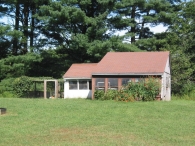
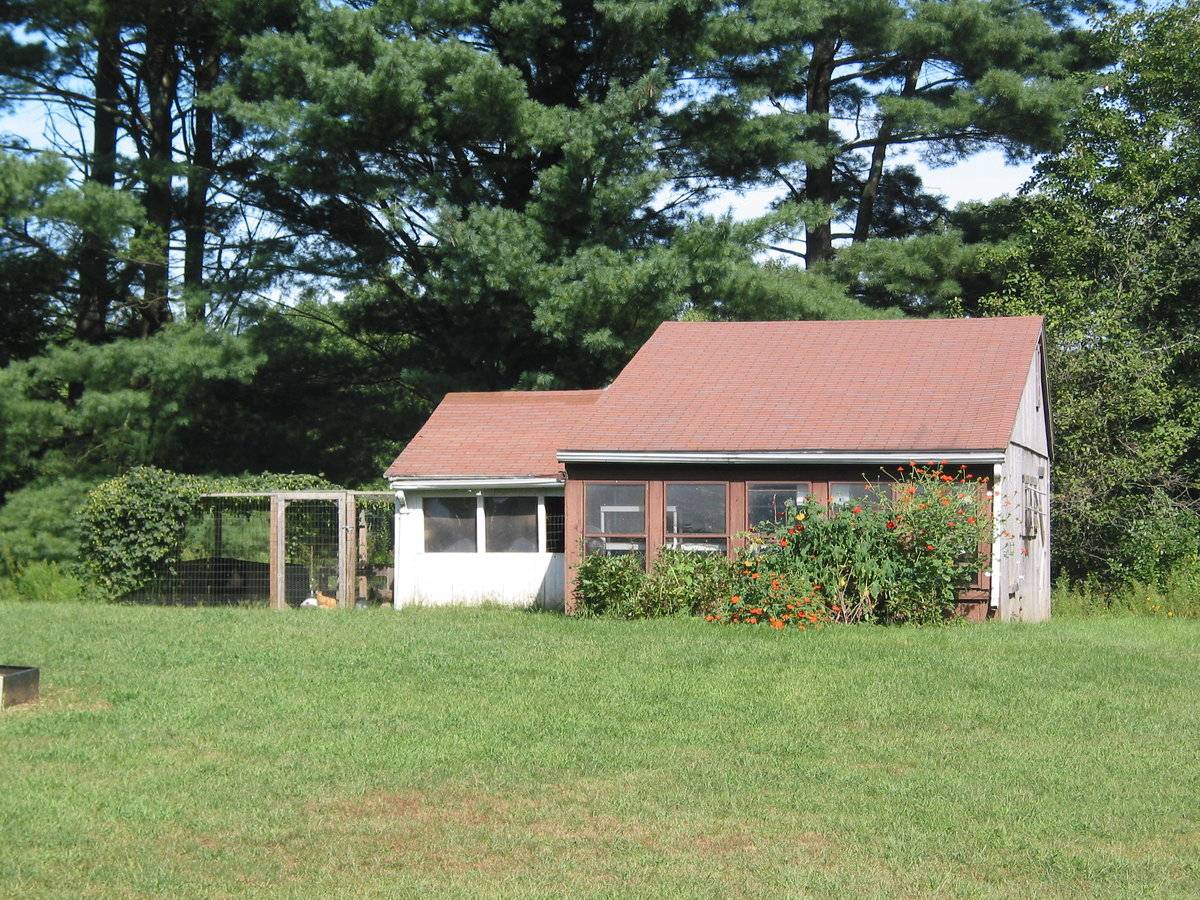
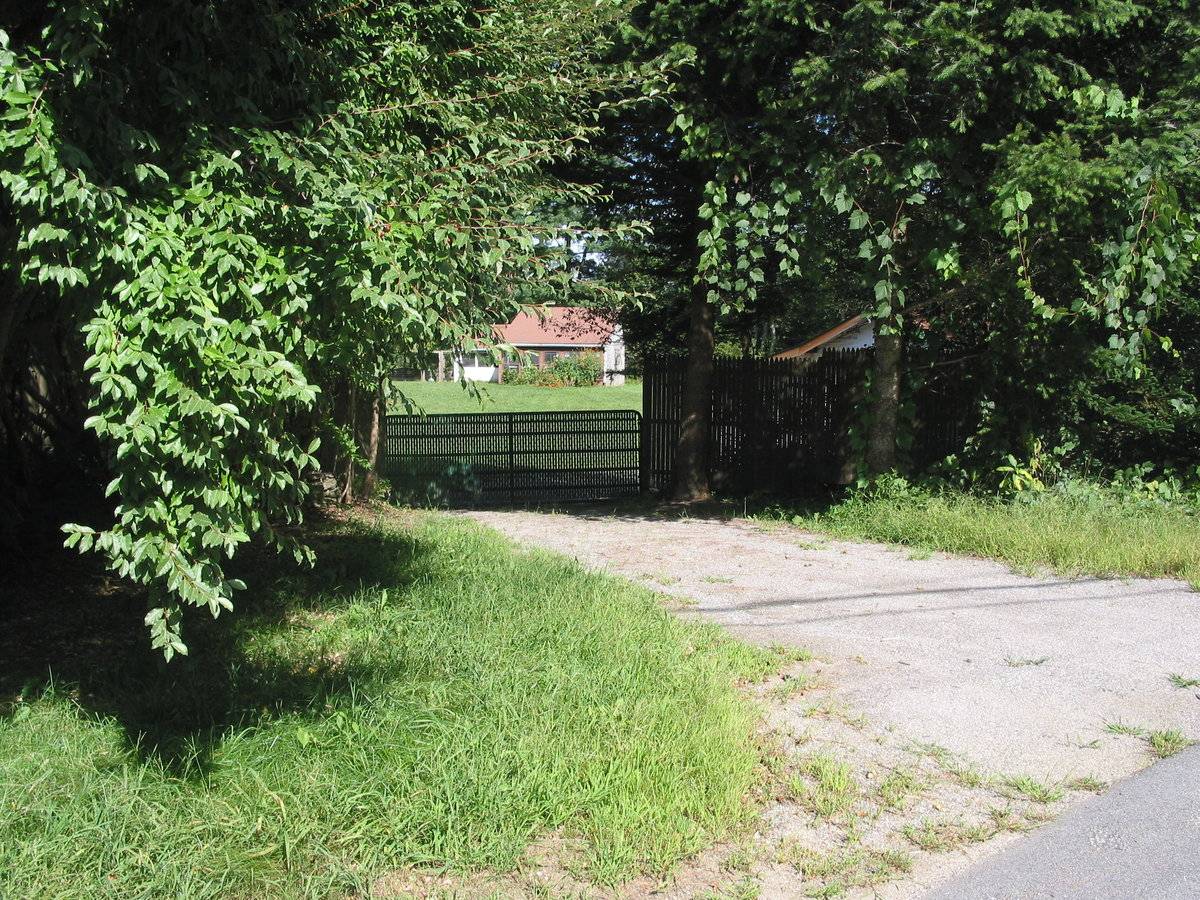
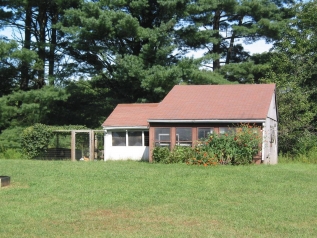
The building is a small simple one-story gable-roofed shed or barn with its ridge line oriented east-west parallel to the street. A gable-roofed addition is attached at the west end. Both portions of the building have screened openings along the south side facing the street, as is typical for chicken coops. A screened yard at the west end contains chickens. Walls are vertical flush board siding or plywood. Roof is asphalt shingles.
Historical significance:
Poultry farming grew in popularity during the second half of the 19th century, and by the early 20th century most farms had small chicken coops. These lightly-built structures often feature a gabled or shed roof and large windows on the south side. Often chicken coops have a small stove and chimney for heat to protect young chicks during cold weather. Small openings near the ground provide the fowl with access to the yard. Inside are nesting boxes for the laying hens. During the 1930s and 1940s, poultry farming was adopted by many farmers in New England as a replacement for dairy farming.
Historical background:
The Chaplin Historic District is an entire village built between 1815 and 1840, standing today in complete integrity, free of intrusions. The church, tavern, Town Hall, store and nineteen houses in late Federal and early Greek Revival styles provide a unique example of the architecture and ambience of a New England village - entirely constructed in a compressed period of time a century and a half ago, and unaltered since that time.
Connecticut has many villages which are older than Chaplin and many towns founded earlier than Chaplin in which can be traced continuing architectural and community developments from a century or more before through a century or more after the fabric demonstrated by Chaplin. Chaplin is unique because it was created on site where before there had been no settlement, was created complete in a brief span of time, and subsequently has experienced no development or changes. Chaplin provides a unique record of the architecture and community planning of the 1820’s and 1830’s (Ransom, p. 7).Field Notes
associated house 1830, local historic district - small, connected, one story units, goat shed, chicken coop. (call if more info wanted)
- Use & Accessibility
Use (Historic)
Use (Present)
Exterior Visible from Public Road?
Yes
Demolished
n/a
Location Integrity
Unknown
- Environment
Related features
Environment features
Relationship to surroundings
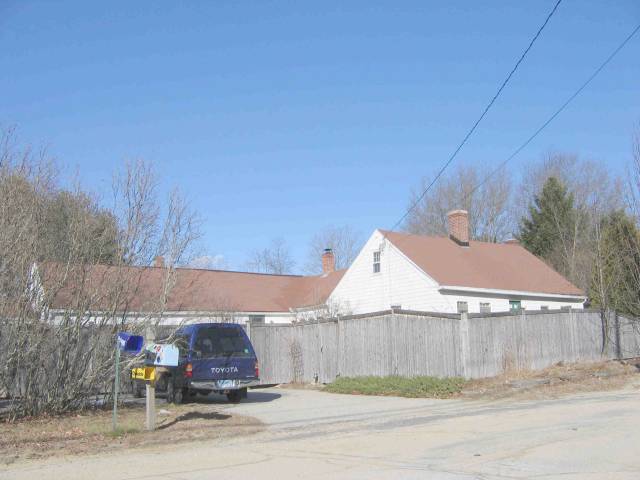
The house and barn are in a village of closely-spaced 19th-century homes, many with barns. Chaplin Street, formerly the main highway, is now a secondary road since Route 198 has been straightened to bypass the village center.
- Typology & Materials
-
Building Typology
Materials
Structural System
Roof materials
Roof type
Approximate Dimensions
544 square foot barn, 200 square foot coop, sheds 560 and 100 square feet.
- Source
-
Date Compiled
02/11/2010
Compiled By
Charlotte Hitchcock, reviewed by CT Trust
Sources
Field Notes by Catherine Lynch and Hill Bullard 12/01/2009. Photographs by Catherine Lynch, Hill Bullard.
Town of Chaplin Assessor’s Record Map/Lot 75/ 19, 2.1 acres, 544 Square foot barn, 200 square foot coop, sheds 560 and 100 sq ft.
Ransom, David, Chaplin National Register Historic District Nomination, No. 78002856, National Park Service, 1978.
Sexton, James, PhD, Survey Narrative of the Connecticut Barn, Connecticut Trust for Historic Preservation, Hamden, CT, 2005, http://www.connecticutbarns.org/history.
Visser, Thomas D., Field Guide to New England Barns and Farm Buildings, University Press of New England, 1997.
- PhotosClick on image to view full file
-