Barn Record Shelton
RETURN TO ‘FIND BARNS’
- Overview
-
Designations
n/a
Historic Significance
Architectural description:
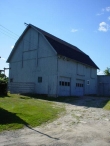
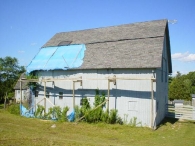
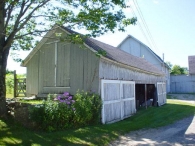
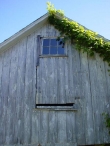
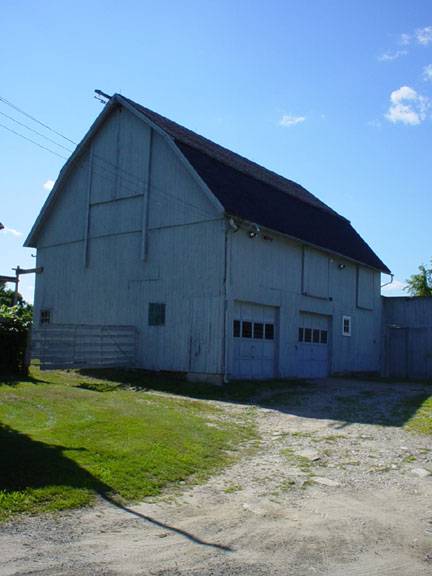
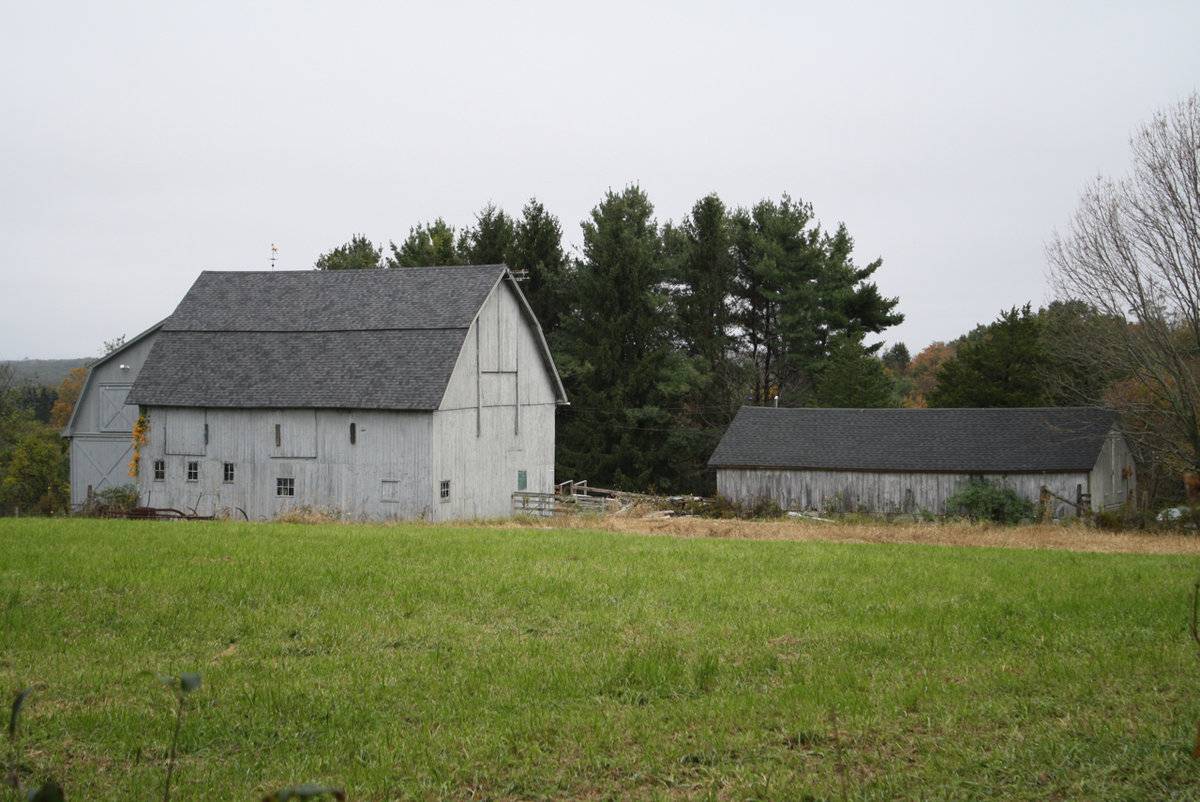
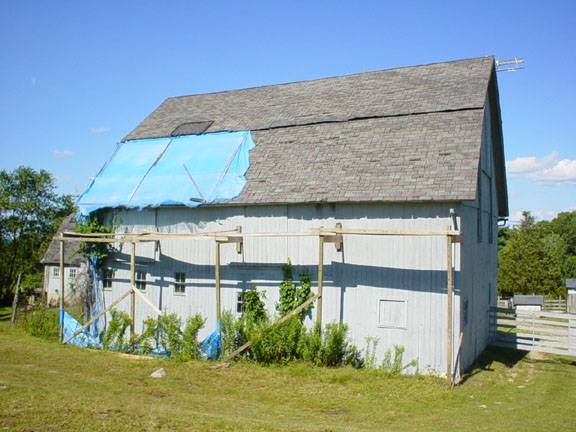
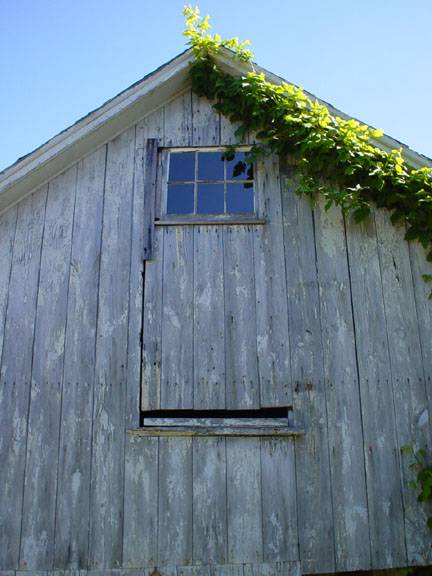
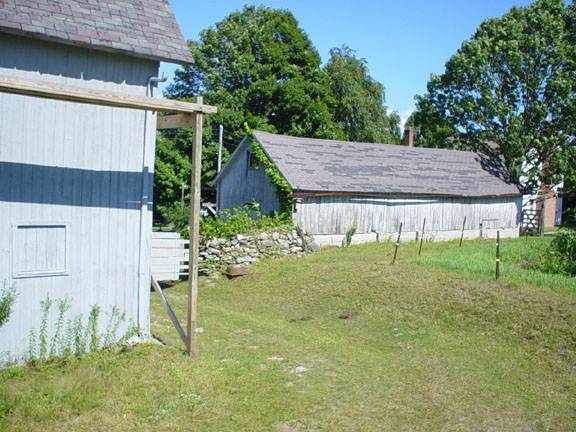
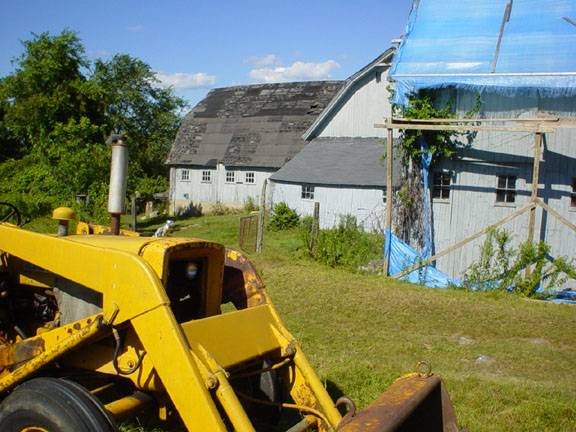
This is a three story side or eave-entry gambrel barn, connected through a shed-roofed addition to another gambrel barn, off to the north-east. The main facade of this three bay barn faces east and the roof line is perpendicular to School Street, which runs approximately east-west. The main entries are two overhead garage doors in the middle and south bay; the north bay has a single window. The second level of this east eave-facade has sliding hay doors in the middle and north bay; the south bay on the second level is blank. The south gable-facade has two six-pane windows on the main level and a pair of sliding hay doors beneath the apex of the roof, along with an extended hay track. The west eave-facade of the barn has a boarded window in the south bay of the main level and is blank on the second level; a six-pane window on the main level and a hay door on the second level of the middle bay; and three four-pane windows on the main level and a hay door on the second level of the north bay. The north gable-facade has the shed-roofed connecting addition. The barn has vertical siding painted gray and asphalt shingle son the roof.
Historical significance:The oldest barns still found in the state are called the “English Barn,” “side-entry barn,” “eave entry,” or a 30 x 40. They are simple buildings with rectangular plan, pitched gable roof, and a door or doors located on one or both of the eave sides of the building based on the grain warehouses of the English colonists’ homeland. The name “30 by 40” originates from its size (in feet), which was large enough for 1 family and could service about 100 acres. The multi-purpose use of the English barn is reflected by the building’s construction in three distinct bays - one for each use. The middle bay was used for threshing, which is separating the seed from the stalk in wheat and oat by beating the stalks with a flail. The flanking bays would be for animals and hay storage.
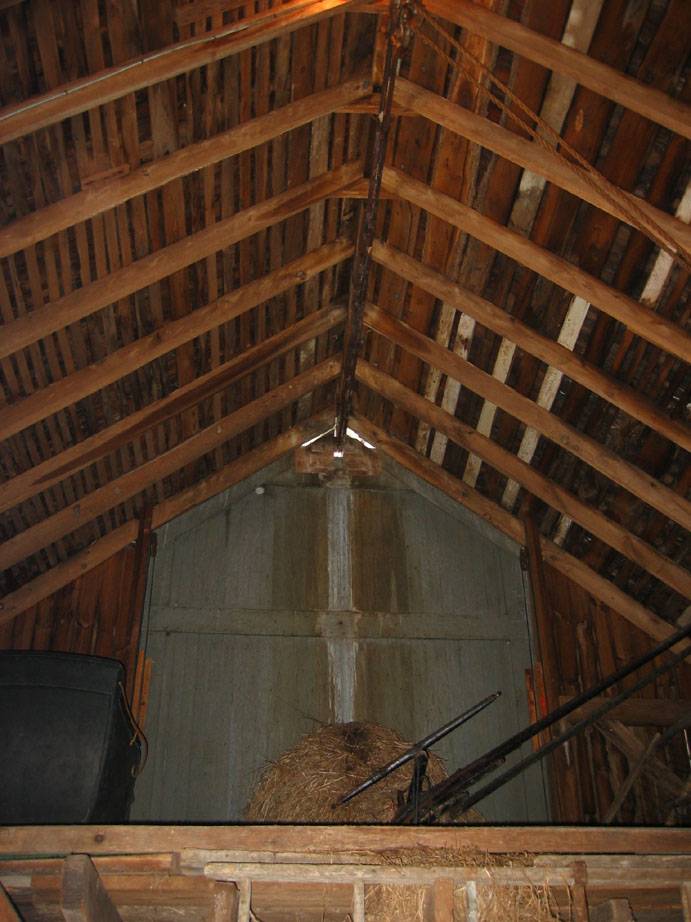
The gambrel roof design was universally accepted for ground-level stable barns as it enclosed a much greater volume than a gable roof did, and its shape could be formed with trusses that did not require cross beams, which would interfere with the movement and storage of hay. Also known as the curb roof, the double slopes of the gambrel offer more volume in the hayloft without increasing the height of the side walls.
Field Notes
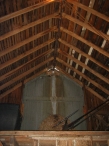
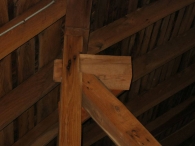
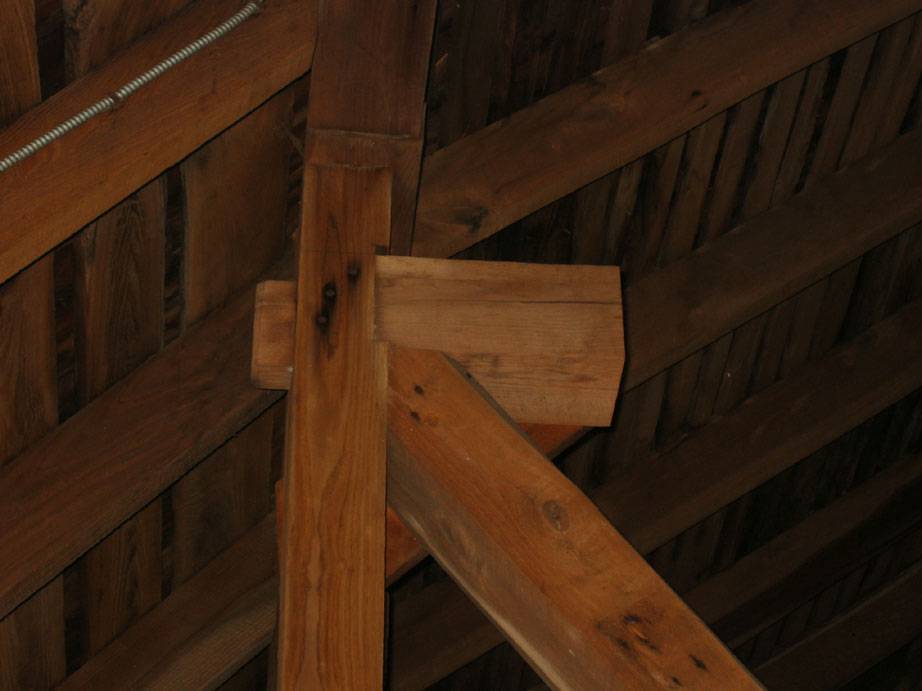
This building is interesting because it shows one of the ways in which inexpensive nails affected construction techniques in Connecticut. In this case, the smaller timbers (braces, arcade posts and arcade plates) were nailed in place while the larger timbers appear to have been joined with mortise and tenon joints. Interestingly, the dropped beams tying the arcade posts together in the roof structure are joined with through tenons. This is a regional anomaly (since these joints are associated with Dutch cultural hearths), anachronistic, and may provide interesting insight into the minds of the framers of this barn. It appears that nails were seen as sufficient to anchor the arcade posts, which are in compression and held in place in part by gravity, while the more traditional (and perhaps trusted) mortise and tenon joints were employed to fasten the beams between these elements because they are in tension.
- Use & Accessibility
Use (Historic)
Use (Present)
Exterior Visible from Public Road?
Yes
Demolished
n/a
Location Integrity
Unknown
- Environment
Related features
Environment features
Relationship to surroundings
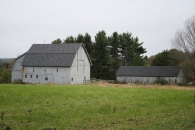
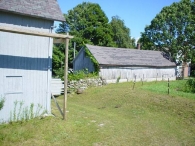
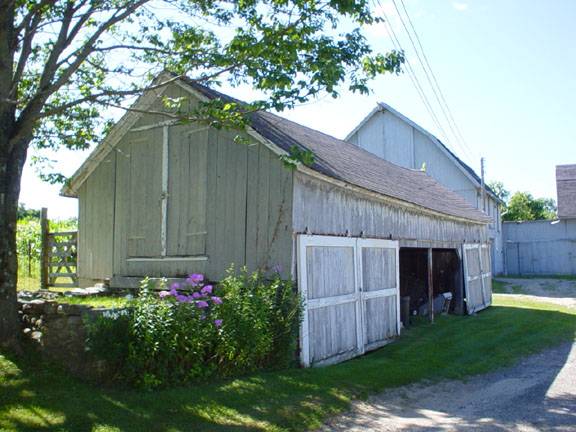
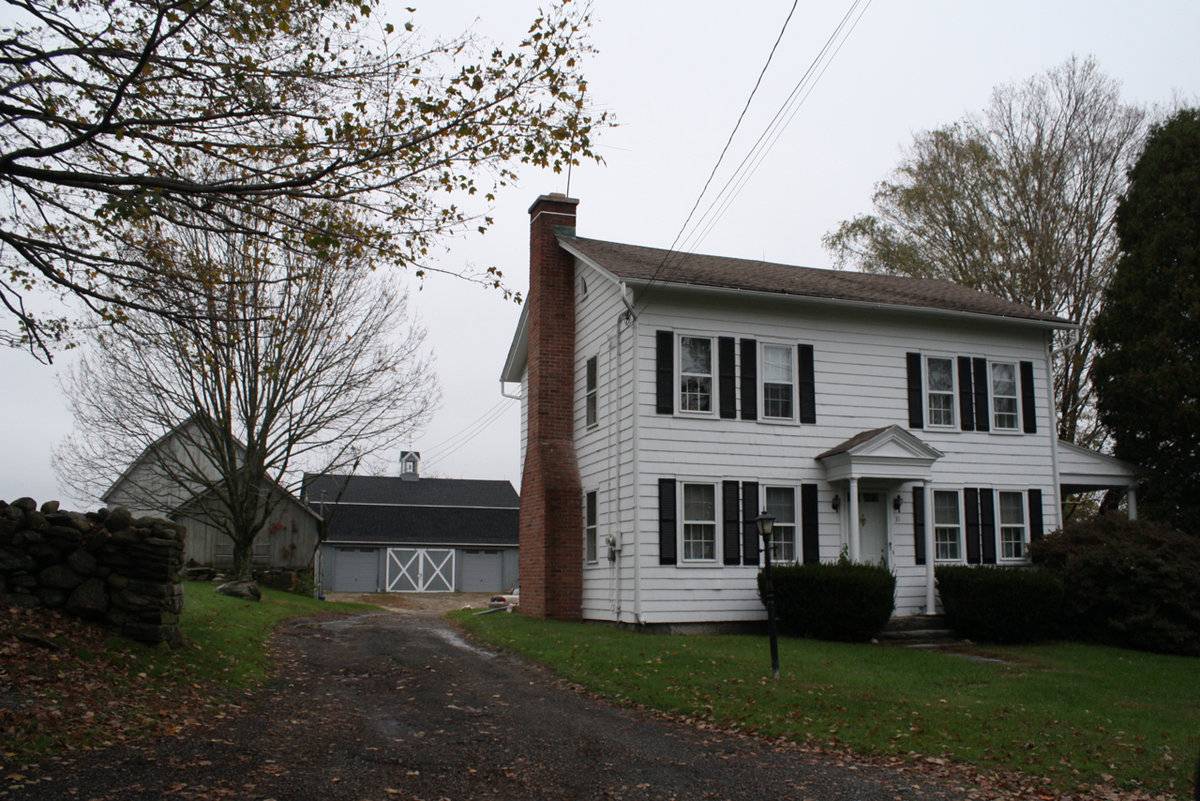
This barn, its addition, and the barn to which it was joined create an L-shaped shield around a work yard which contains a small shop. All of these buildings are behind the house with which they are associated.
- Typology & Materials
-
Building Typology
Materials
Structural System
Roof materials
Roof type
Approximate Dimensions
30.6 x 40.6
- Source
-
Date Compiled
05/12/2010
Compiled By
Todd Levine, reviewed by the Connecticut Trust
Sources
Photographs by Todd Levine
Field notes and photographs by James Sexton, PhD.
Sexton, James, PhD; Survey Narrative of the Connecticut Barn, Connecticut Trust for Historic Preservation, Hamden, CT, 2005, http://www.connecticutbarns.org/history.
Visser, Thomas D.,Field Guide to New England Barns and Farm Buildings, University Press of New England, 1997.
- PhotosClick on image to view full file
-