Barn Record Roxbury
RETURN TO ‘FIND BARNS’- Building Name (Common)
- Finn Barn
- Building Name (Historic)
- n/a
- Address
- 36 Moosehorn Road, Roxbury
- Typology

- Overview
-
Designations
n/a
Historic Significance
Architectural description:
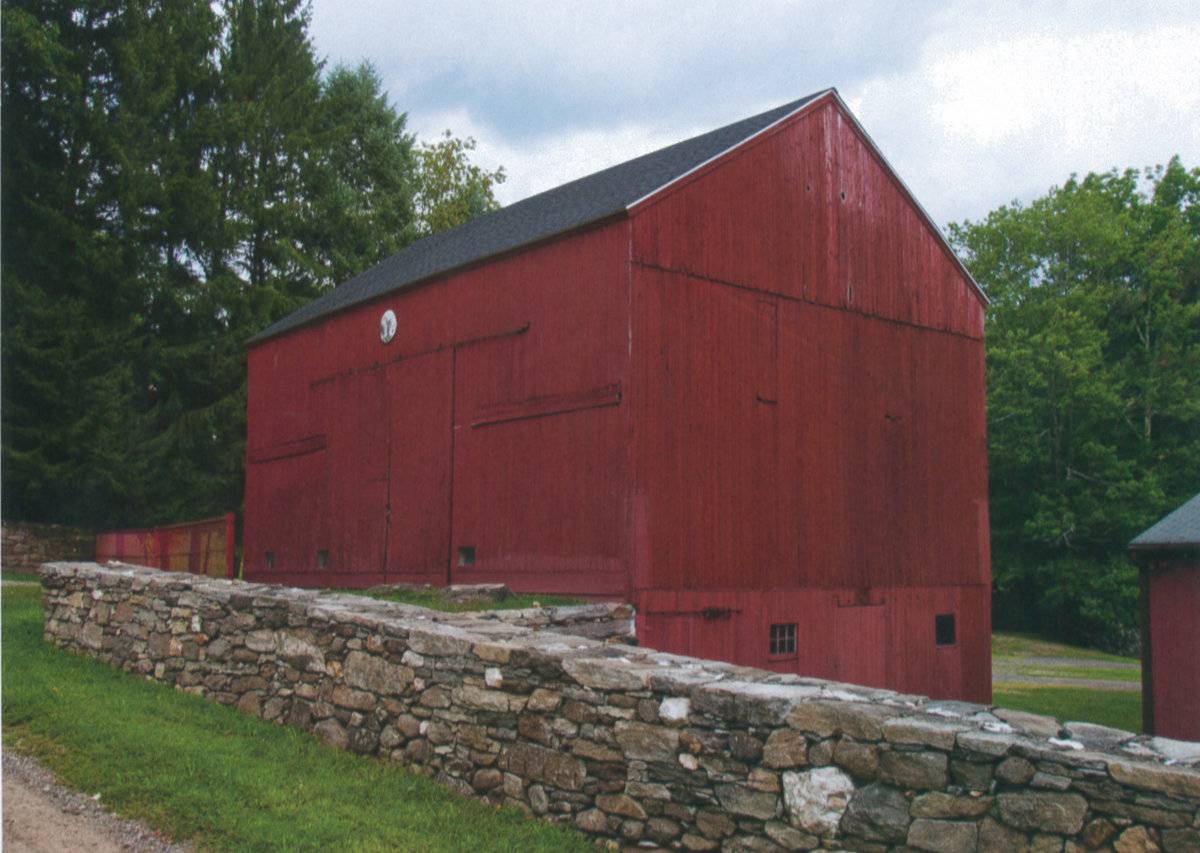
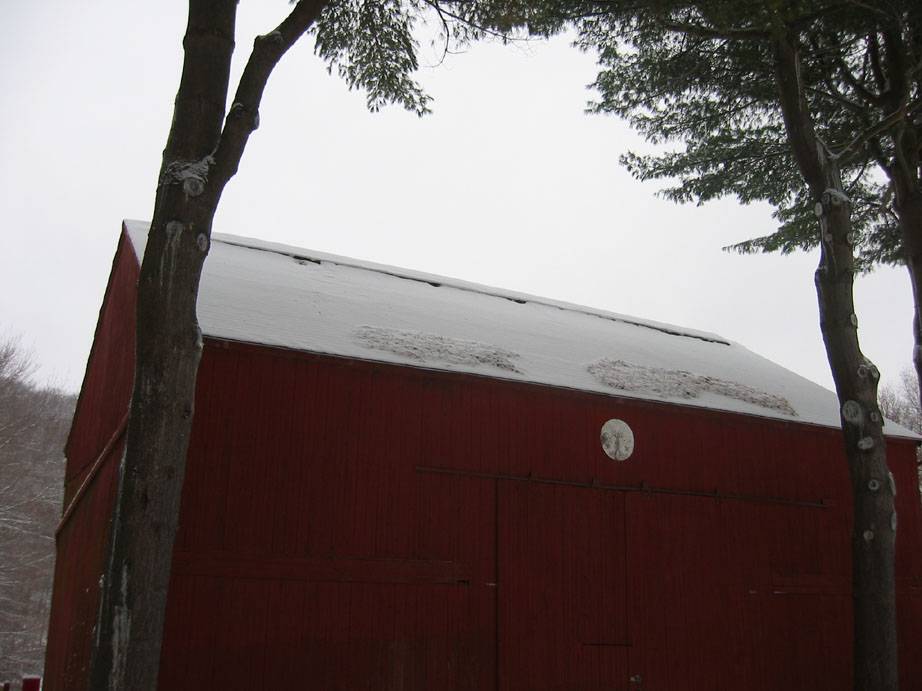
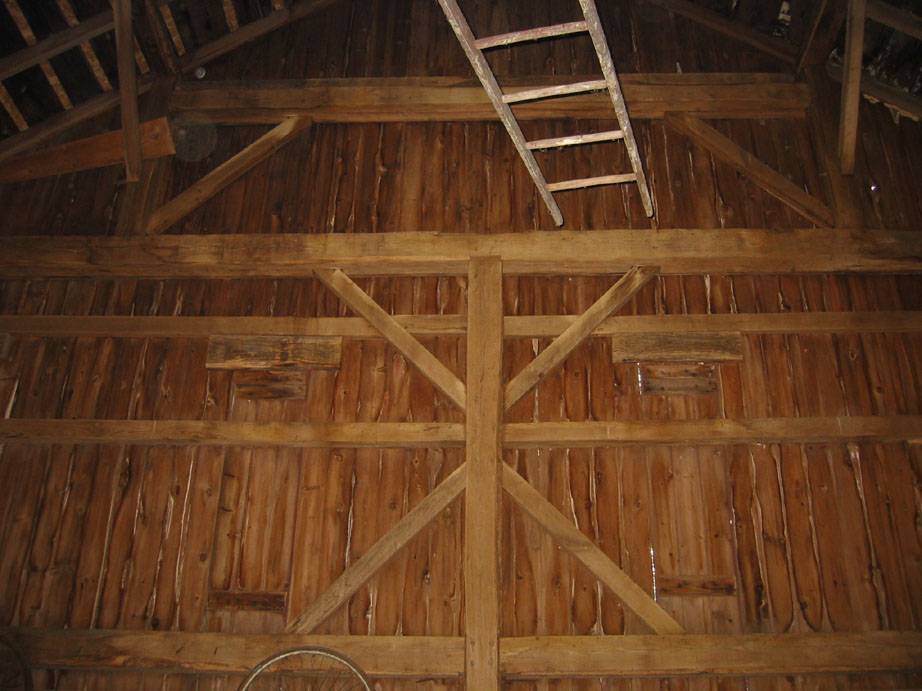
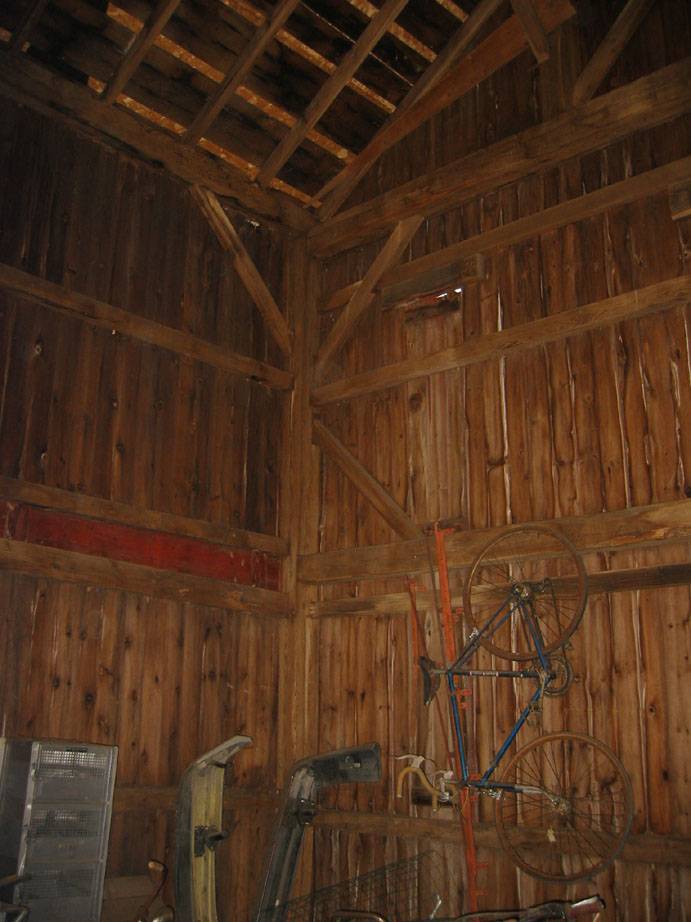
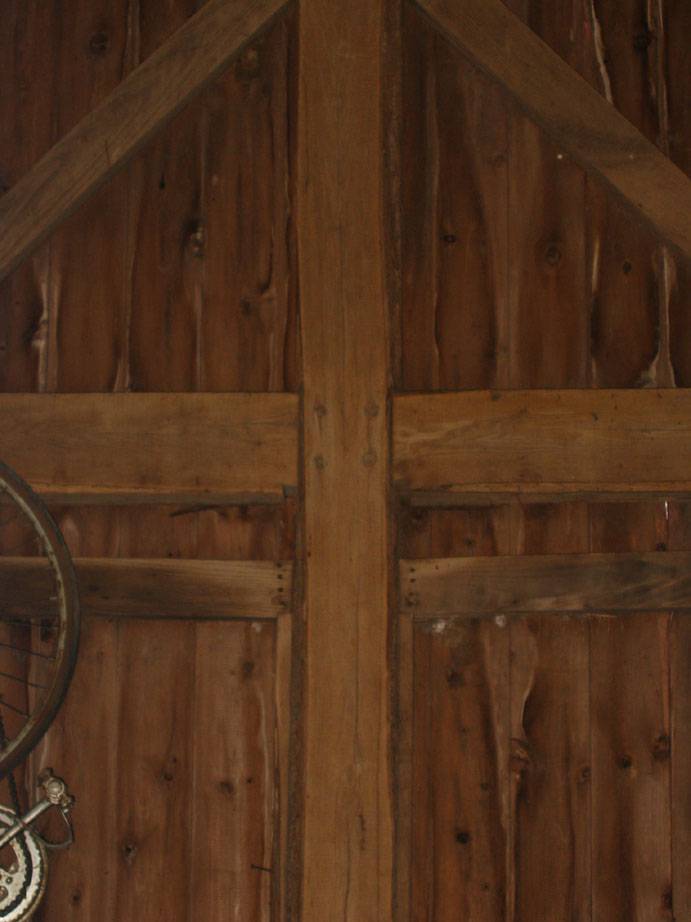
This is an excellent example of a traditional English bank barn, distinguished by a beautiful chestnut frame with unusual cross braces. At some point, probably in the second half of the 19th century, the barn was modified with hinged side panels and a raised roof ventilator to provide air circulation for drying tobacco. Clark likely made the changes before he retired from farming (by 1900).
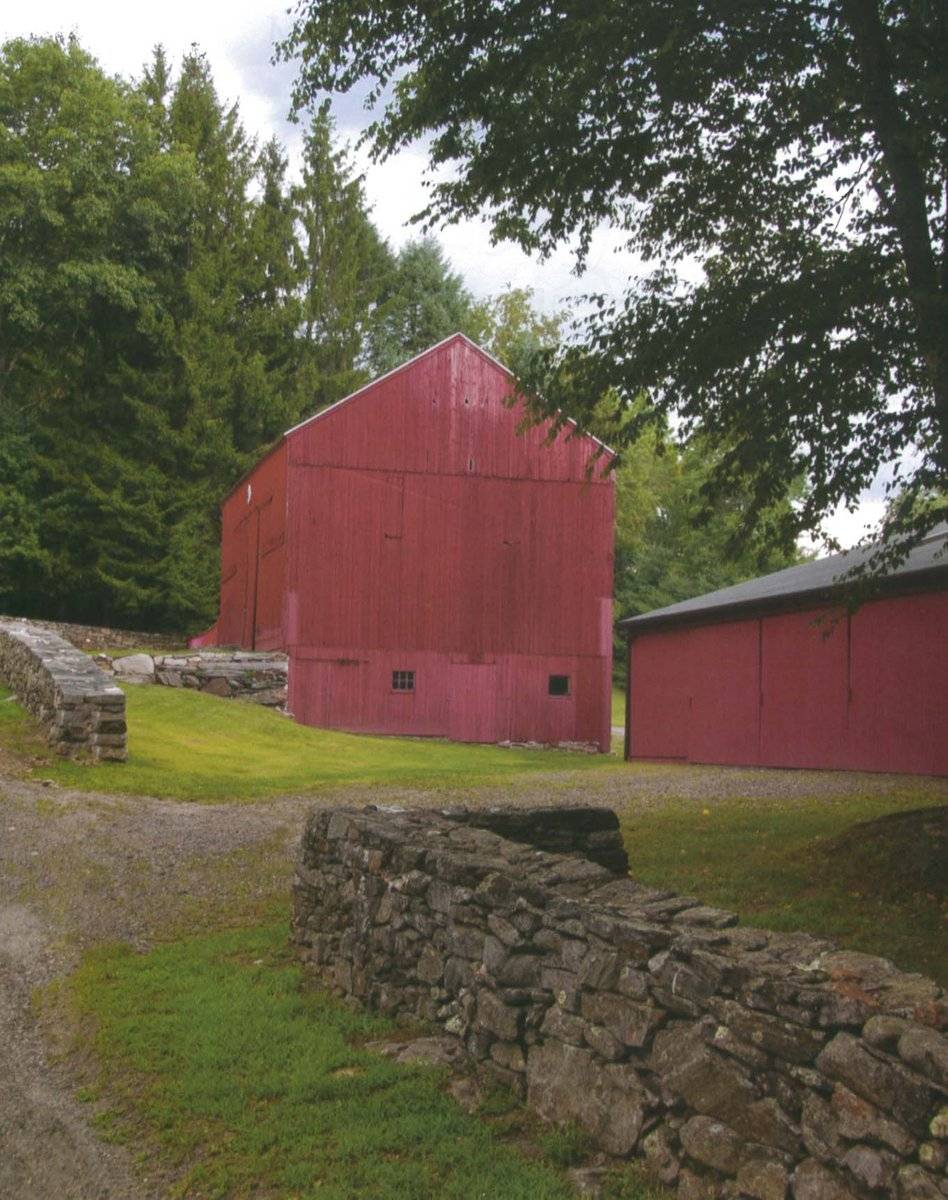
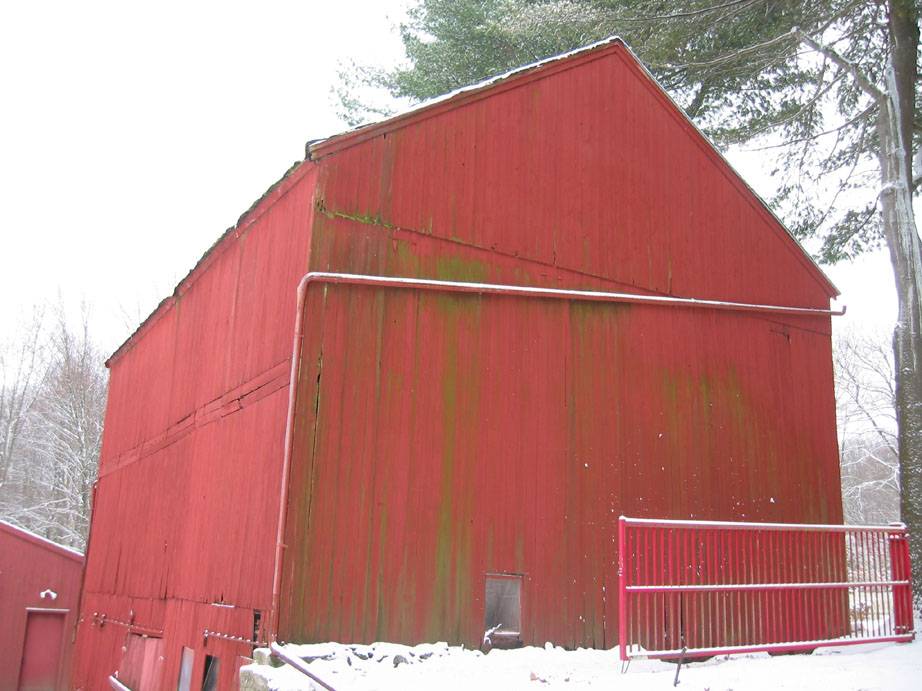
The barn stands on the east side of Moosehorn Road with a small setback. The site slopes to the east with a large storage barn to the south. Features include: (no dimensions); peak roofed barn stands with gable ends oriented to the north and south; building adjusts to grade, gaining lower level on east side and south gable end; fieldstone retaining walls at southwest and northeast corners; primary elevation fronts road to the west; symmetrical composition with central wagon doors mounted on exterior roller (horseshoe mounts); double-braced truss supports; scattered single-pane windows; milled chestnut post-and-beam frame (square rule); vertical tongue-and-groove barn board; livestock pens, lower level.
Historical significance:The oldest barns still found in the state are called the “English Barn,” “side-entry barn,” “eave entry,” or a 30 x 40. They are simple buildings with rectangular plan, pitched gable roof, and a door or doors located on one or both of the eave sides of the building based on the grain warehouses of the English colonists’ homeland. The name “30 by 40” originates from its size (in feet), which was large enough for 1 family and could service about 100 acres. The multi-purpose use of the English barn is reflected by the building’s construction in three distinct bays - one for each use. The middle bay was used for threshing, which is separating the seed from the stalk in wheat and oat by beating the stalks with a flail. The flanking bays would be for animals and hay storage.
The 19th century saw the introduction of a basement under the barn to allow for the easy collection and storage of a winter’s worth of manure from the animals sheltered within the building. The bank barn is characterized by the location of its main floor above grade, either through building into a hillside or by raising the building on a foundation. This innovation, aided by the introduction of windows for light and ventilation, would eventually be joined by the introduction of space to shelter more animals under the main floor of the barn.
Field Notes
Additional information from a survey of Roxbury by Rachel Carley. The current owner wrote: On my own property in Roxbury, there is a barn built 1799-1825 (a standard 28 x 42 foot banked barn with animal pens in the lower level, grain loft above, and a fantasy of grain shoots into the lower pens that look like a Woody Allen concept of farming). It was probably built using timber from the sawmill nearby on Moosehorn Brook. The barn was converted to a tobacco barn in the second half of the 19th century when the area farmers began supplying the New Milford tobacco warehouses with the new cash crop. The conversion of this barn consisted of installing a raised ventilator along the length of the ridgeline and selectively hinging the vertical clapboards to (barely) allow ventilation during the curing of the tobacco leaves. An 1854 deed conveying this Moosehorn Road site to Charles Beardsley, a neighbor on Painter Hill (167 Painter Hill Road), cited “the barn and house lately occupied by John Frisbee, deceased”. The barn thus appears to have been built sometime after Edward Frisbee bought the land from Thomas Hurlbut in 1825 and before 1854. This is an early period for a barn frame in this area to be built entirely of milled timbers, but the location of a sawmill on the nearby brook could explain that. In 1855 Beardsley sold the Moosehorn Road farm to James Clark (b. 1830); the property included a house and the barn, standing on 28 acres on the east side of Moosehorn Road, and 6 acres on the west side of the road. The house referred to a farmhouse to the north, which is said to have burned. Clark had come to the U.S. from Ireland in 1848 and was a member of Roxbury’s early immigrant population. His Irish neighbors included the Picketts, who had taken over the Beardsley farm by 1868, the O’Briens (238 Painter Hill Road), the Gormans (241 Painter Hill Road) at the corner of Painter Hill and Painter Ridge and the Murpheys (101 Goldmine Road). Local legend has it that after fire destroyed his house to the north of the barn, Clark moved the farmhouse now standing on the west side of Moosehorn Road (no. 61) to that location from Washington Depot when the Shepaug Railroad was being built. By 1900 Clark retired from farming, and his daughter Mary (b. 1862) and her husband John Garrity, another Irish immigrant, subsequently ran the farm, where they had dairy cows. - RDC
- Use & Accessibility
Use (Historic)
Use (Present)
Exterior Visible from Public Road?
1
Demolished
n/a
Location Integrity
Unknown
- Environment
Related features
Environment features
Relationship to surroundings
The barn sits quite close to a country road (which may be dirt, it was not plowed on a snowy day), with an early 19th century building across the road and a broad valley opening behind it. The house associated with the barn burned in the end of the 19C.
- Typology & Materials
-
Building Typology
Materials
Structural System
Roof materials
Roof type
Approximate Dimensions
28 x 42
- Source
-
Date Compiled
08/24/2006
Compiled By
James Sexton, Rachel D. Carley - CH
Sources
Additional field notes and photographs added by Rachel D. Carley - 6/30/2011.
Carley, Rachel D., Barn Stories from Roxbury Connecticut, Roxbury Historic District Commission/Town of Roxbury/CT Commission on Culture & Tourism, 2010.
Cunningham, Jan, Roxbury, A Historic and Architectural Survey, Roxbury Historic District Commission, 1996-97.
Sexton, James, PhD; Survey Narrative of the Connecticut Barn, Connecticut Trust for Historic Preservation, Hamden, CT, 2005, http://www.connecticutbarns.org/history.
Visser, Thomas D.,Field Guide to New England Barns and Farm Buildings, University Press of New England, 1997, 213 pages.
- PhotosClick on image to view full file
-