Barn Record Lyme
RETURN TO ‘FIND BARNS’- Building Name (Common)
- Ashlawn Farm
- Building Name (Historic)
- Ashlawn Farm
- Address
- 78 Bill Hill Road, Lyme
- Typology

- Overview
-
Designations
Historic Significance
Architectural description:
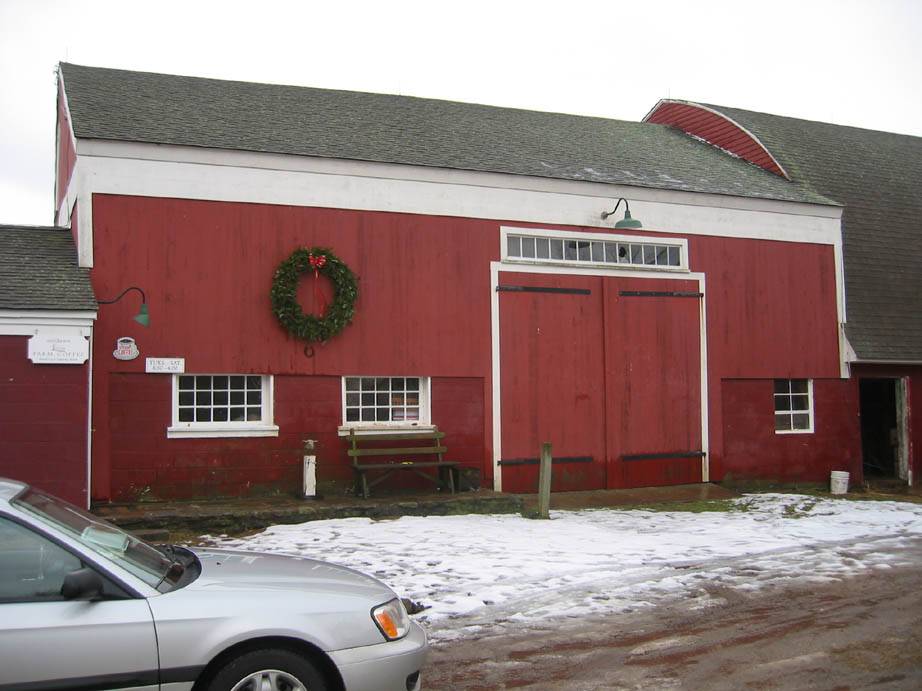
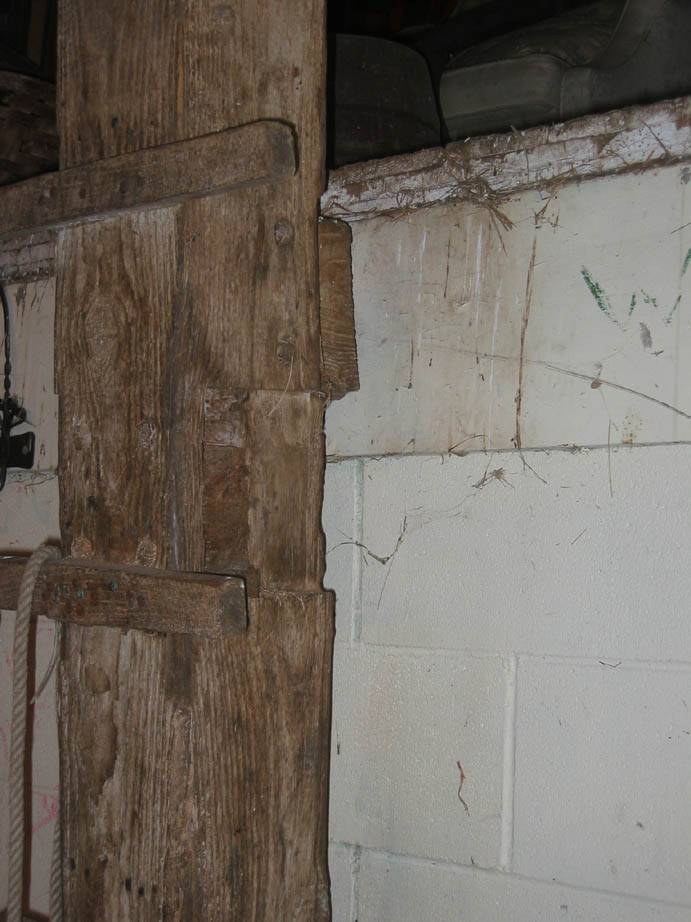
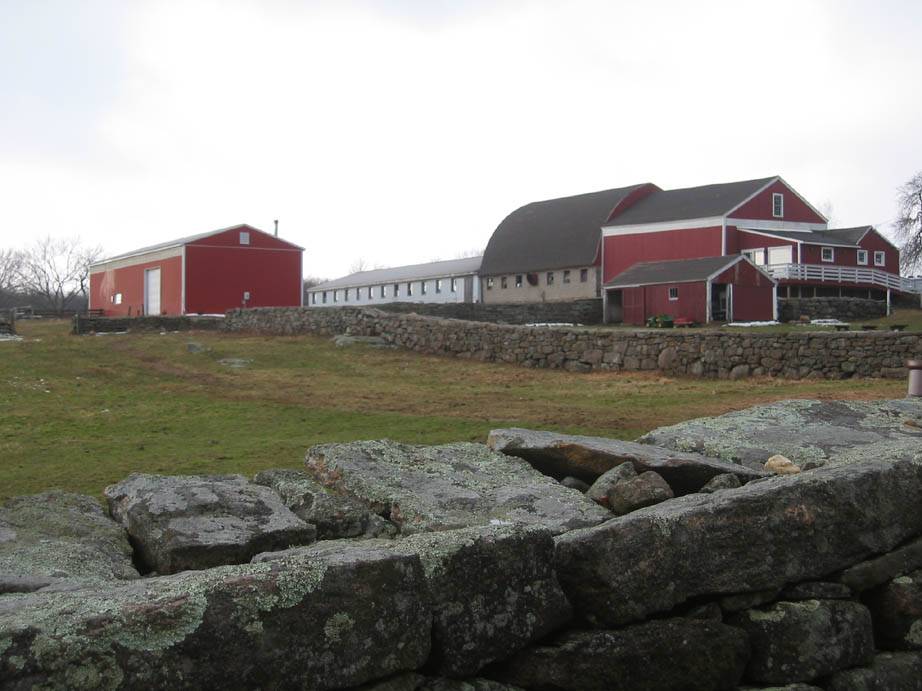
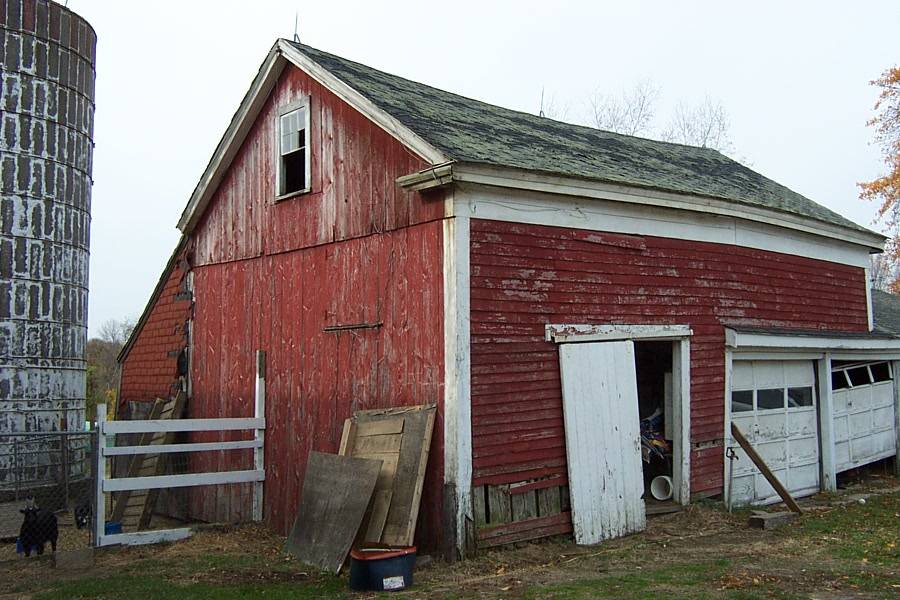
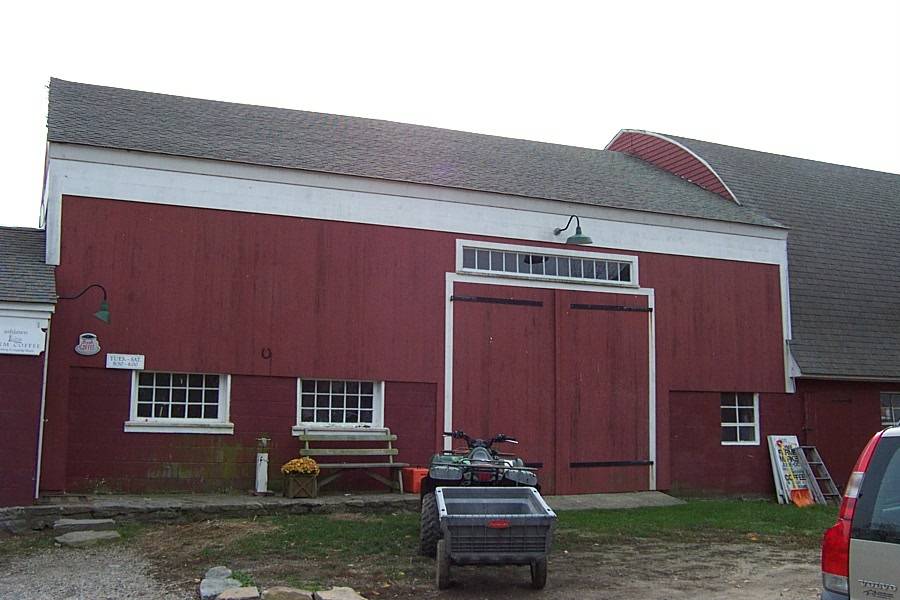
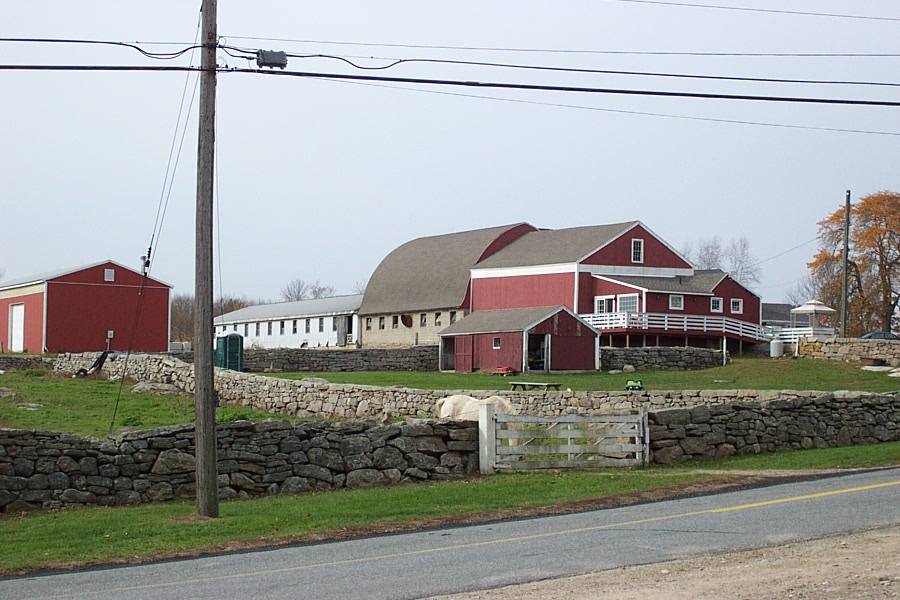
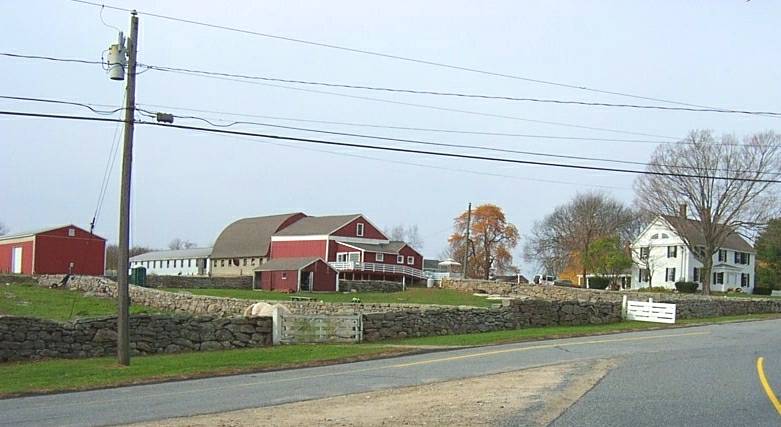
This is a series of barns in the heart of a farming complex. The main structure is a 1 1/2-story, eave-entry, bank barn with a Gothic-roofed addition, a gable roofed addition and a shed-roofed addition with a gable-roofed shed, used for retail. The main facade of the structure faces roughly north, with its ridge-line running perpendicular to Bill Hill Road, which runs approximately northwest-southeast. The main entry on the north eave-facade is a pair of double-height swinging hinged doors on the west portion of the facade. Above is a thirteen pane transom. The lower third of the siding of this facade is missing; in its stead is concrete block masonry. Towards the west corner of the facade is a six-pane window. East of the doors are a pair of fifteen-pane windows. The rest of the facade is blank except for the wide fascia under the eave. The east gable-facade of the main structure has a shed-roofed addition towards the south portion of the facade and a gable-roofed addition towards the north. Above the addition is the gable attic of the main structure is a six-over-six double-hung window. The south eave-facade of the main structure is blank. The west gable-facade of the main structure is encompassed by the east gable-facade of a Gothic-roofed barn.
The 2-story Gothic-roofed barn addition has a series of five stable, hopper-windows on the south-eave facade. The north eave-facade of the addition has a pass-through door just west of the main structure and a series of windows along the eave. The west gable-facade is encompassed by the gable-roofed barn. Above the gable-roofed addition in the west gable-facade of the Gothic-roofed addition is a pair of open window spaces flanking a louvered vent.
The gable-roofed barn addition extends to the west and is the last building in the series of structures. It is a single story and has a series of stable windows along both eave-facades. The west gable-facade has an open wagon door with two stable windows to the north and one to the south.
The structure has vertical flush-board siding painted red, concrete block masonry painted red and in the case of the south eave-facade of the Gothic-roof addition, unpainted concrete block masonry. The easternmost gable-roofed addition has metal siding painted white.
Historical significance:
The oldest barns still found in the state are called the “English Barn,” “side-entry barn,” “eave entry,” or a 30 x 40. They are simple buildings with rectangular plan, pitched gable roof, and a door or doors located on one or both of the eave sides of the building based on the grain warehouses of the English colonists’ homeland. The name “30 by 40” originates from its size (in feet), which was large enough for 1 family and could service about 100 acres. The multi-purpose use of the English barn is reflected by the building’s construction in three distinct bays - one for each use. The middle bay was used for threshing, which is separating the seed from the stalk in wheat and oat by beating the stalks with a flail. The flanking bays would be for animals and hay storage.
By the early 20th century agricultural engineers developed a new approach to dairy barn design: the ground-level stable barn, to reduce the spread of tuberculosis bacteria by improving ventilation, lighting, and reducing the airborne dust of manure. A concrete slab typically serves as the floor for the cow stables. Many farmers converted manure basements in older barns into ground-level stables with concrete floors. Some older barns were jacked up and set on new first stories to allow sufficient headroom. With the stables occupying the entire first story, the space above serves a a hayloft. By the 1920s most ground-level stable barns were being constructed with lightweight balloon frames using two-by-fours or two-by-sixes for most of the timbers. Tongue-and-groove beveled siding is common on the walls, although asbestos cement shingles also were a popular sheathing. Some barns have concrete for the first-story walls, either poured in place or built up out of blocks. The gambrel roof design was universally accepted as it enclosed a much greater volume than a gable roof did, and its shape could be formed with trusses.
Most ground-level stable barns and free-stall dairy barns built since the 1970s have no hayloft. Instead, the roofs are supported by prefabricated wooden trusses covered with metal roofing. While most single-story truss-roofed barns in New England are constructed with concrete foundations and stud-framed walls, pole barns with open sides are becoming popular, especially for sheltering large herds of dairy cows, heifers, and beef cattle. Many of these large truss-roofed structures are free-stall barns, introduced in the late 1940s.
Field Notes
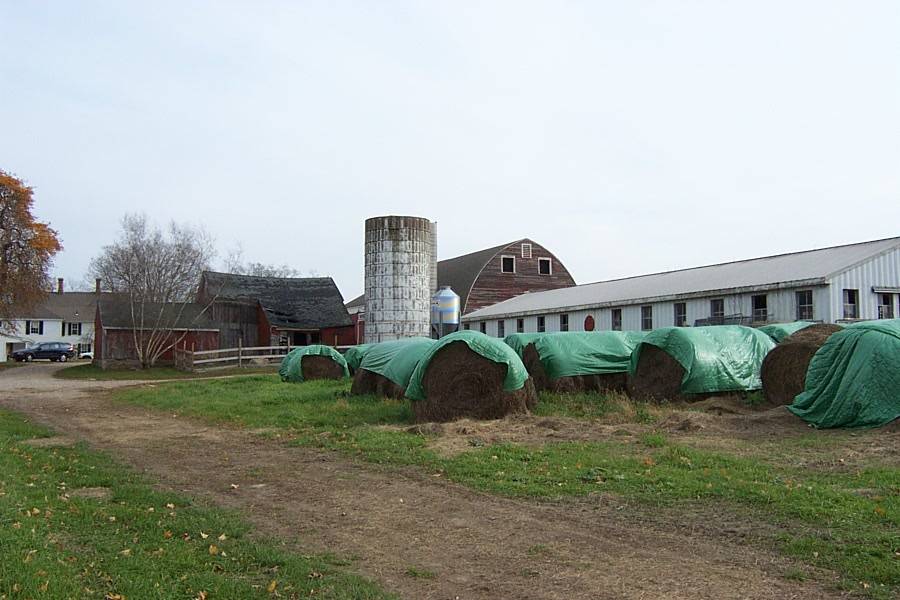
Listed on the State Register of Historic Places 6/04/2014. This farm demonstrates the creativity and adaptation that is needed to keep a barn of this age standing. The building is used both for a modern cattle farm (in conjunction with more modern farm buildings including a gothic roofed barn and a modern pole cow shed running off the back of this barn) and a wholesale and retail coffee roasting business. These various activities have kept the older barn intact. The barn is one of a line of agricultural buildings that stretch out behind the house; there are other farm buildings scattered throughout the property.
- Use & Accessibility
- Environment
Related features
Environment features
Relationship to surroundings
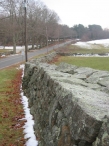
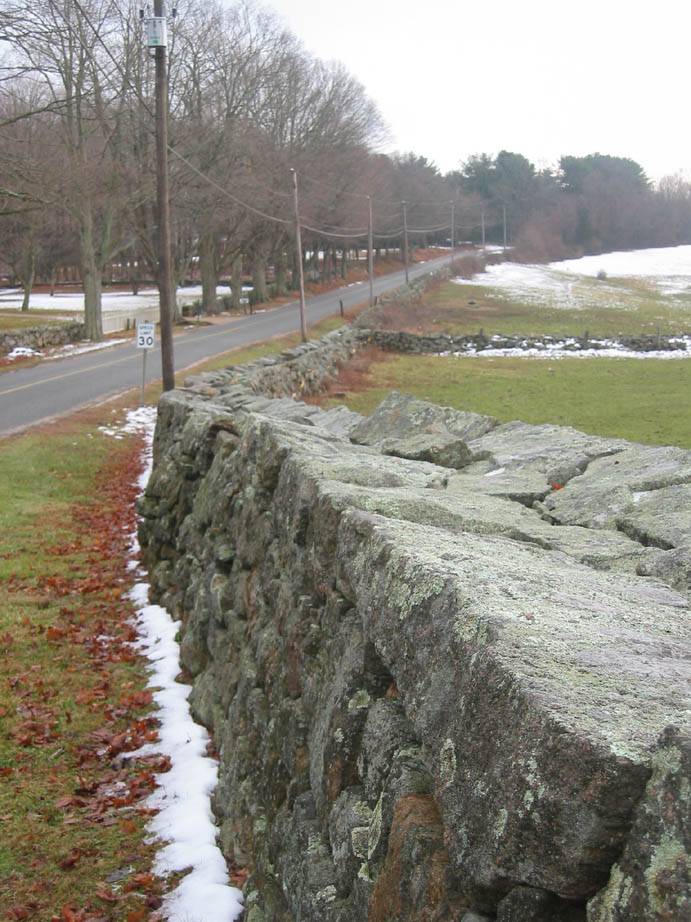
The barn is to the southwest of the house it is associated with. To the east of the barn is a stone walled paddock followed by Bill Hill Road. To the south of the barn is a gable-roofed barn and a number of stone walled open spaces. To the west are more fenced tracts of open space. To the north of the barn is a silo, gable-roofed shed and a wagon shed towards the north edge of the lot. The total size of the site is 74.64 acres. The area surrounding the site is residential, active agriculture and open space.
- Typology & Materials
-
Building Typology
Materials
Structural System
Roof materials
Roof type
Approximate Dimensions
30x40
- Source
-
Date Compiled
07/22/2010
Compiled By
Todd Levine, reviewed by the Connecticut Trust
Sources
Photographs and field notes by Dr. James Sexton.
Sexton, James, PhD; Survey Narrative of the Connecticut Barn, Connecticut Trust for Historic Preservation, Hamden, CT, 2005, http://www.connecticutbarns.org/history.
Visser, Thomas D.,Field Guide to New England Barns and Farm Buildings, University Press of New England, 1997.
Map of the Lyme, CT, retrieved on July 22, 2010 from website www.zillow.com.
Town of Lyme assessors office, Town Hall, 480 Hamburg Road, Lyme, CT.
- PhotosClick on image to view full file
-