Barn Record New Canaan
RETURN TO ‘FIND BARNS’- Building Name (Common)
- Extown Farm
- Building Name (Historic)
- New Canaan Town Poor Farm
- Address
- 485 Laurel Road, New Canaan
- Typology

- Overview
-
Designations
Historic Significance
Architectural description:
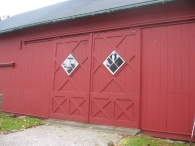
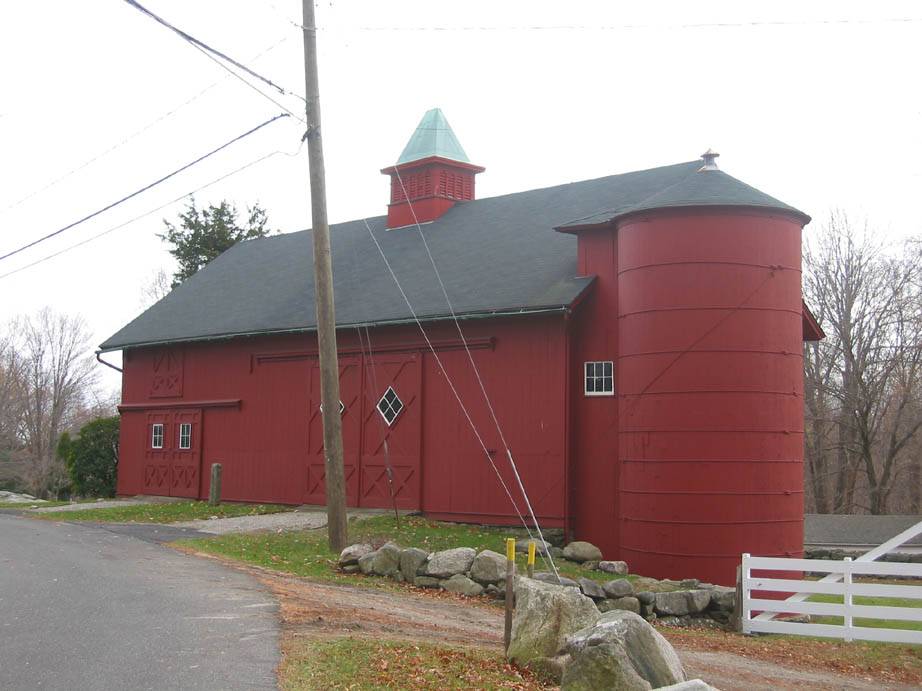
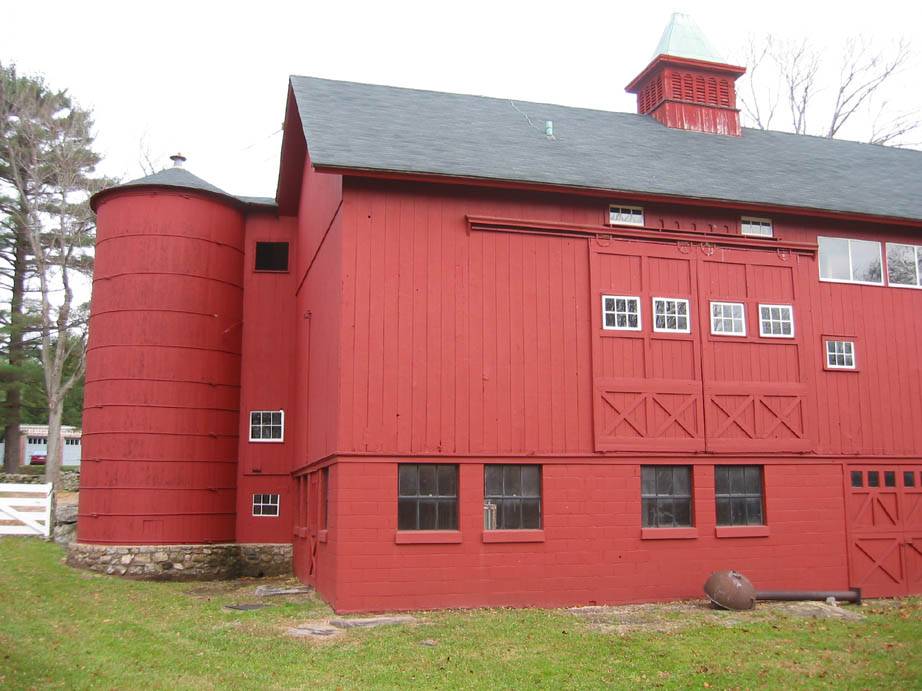
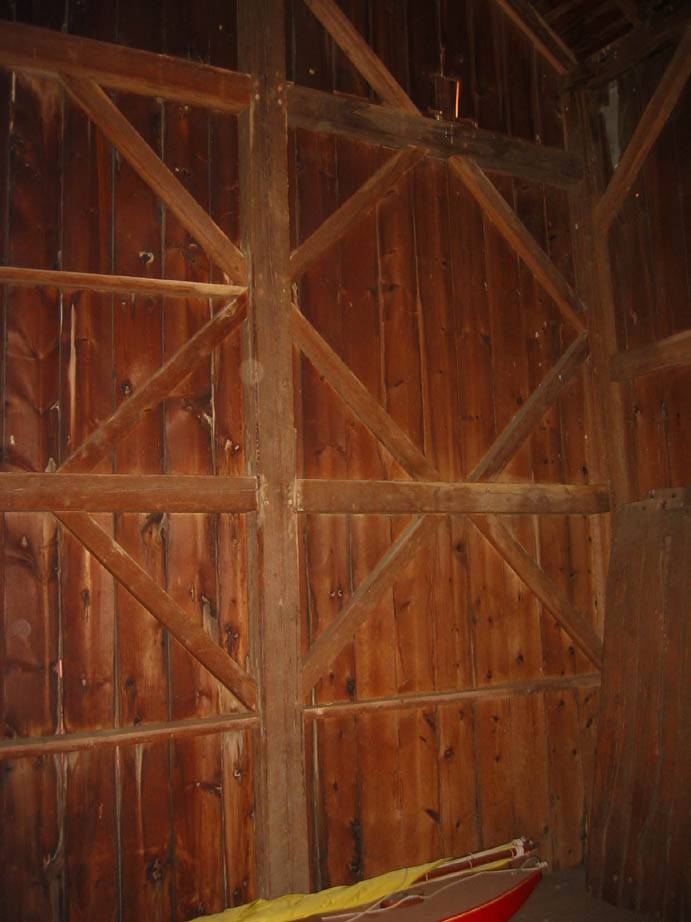
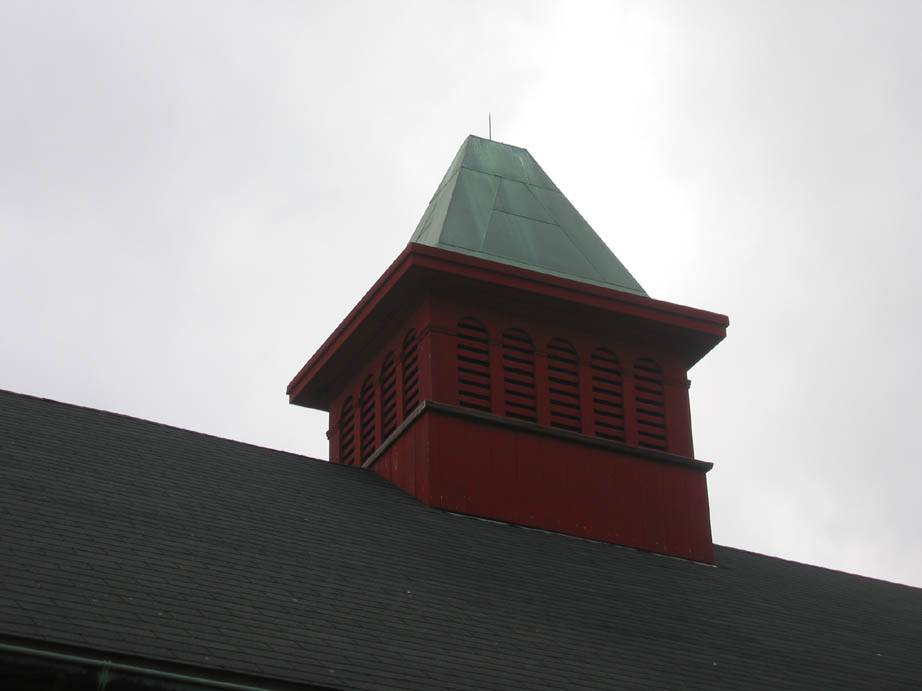
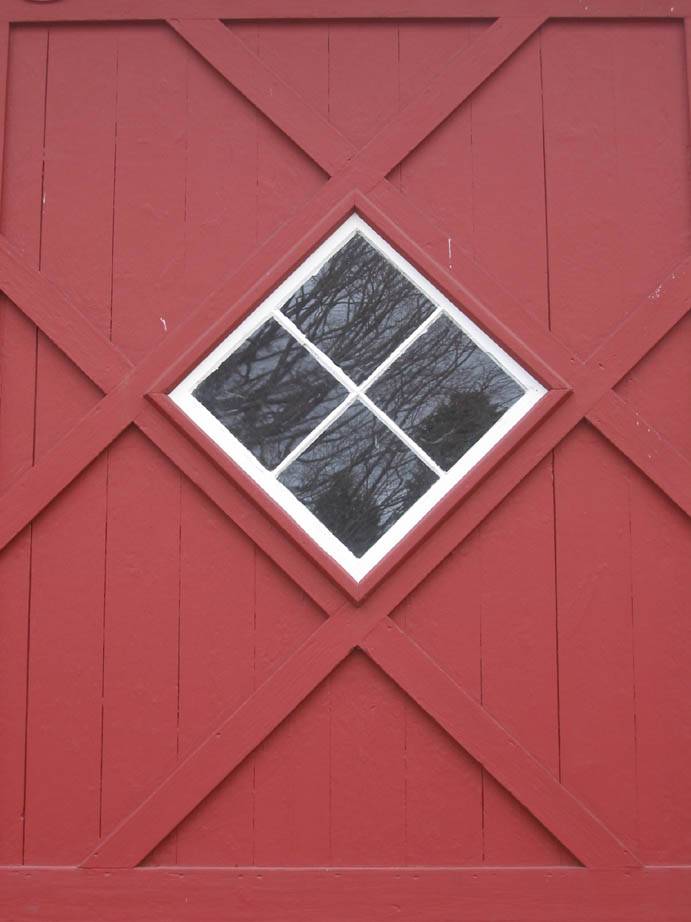
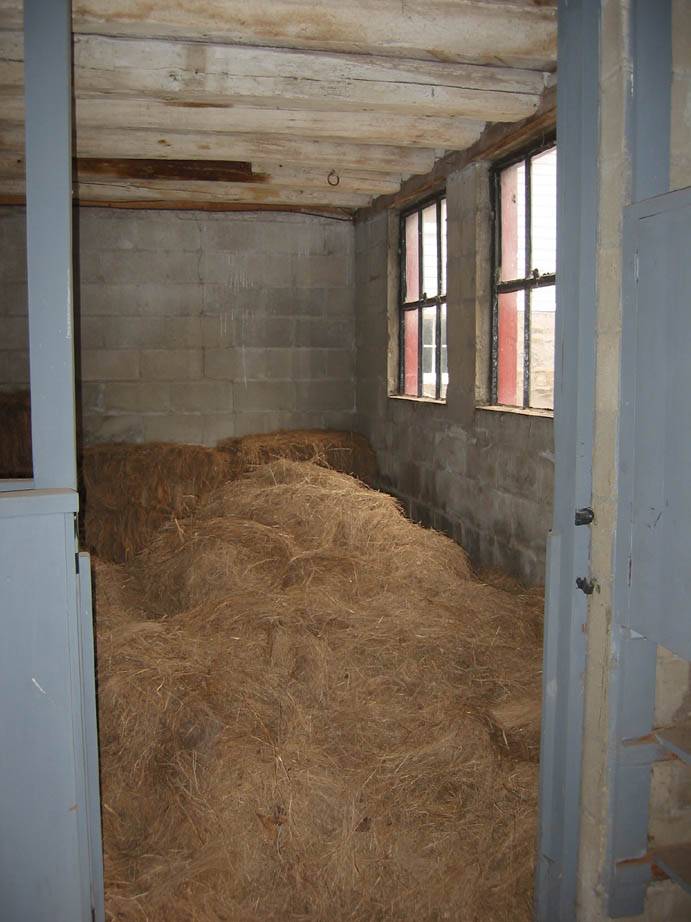
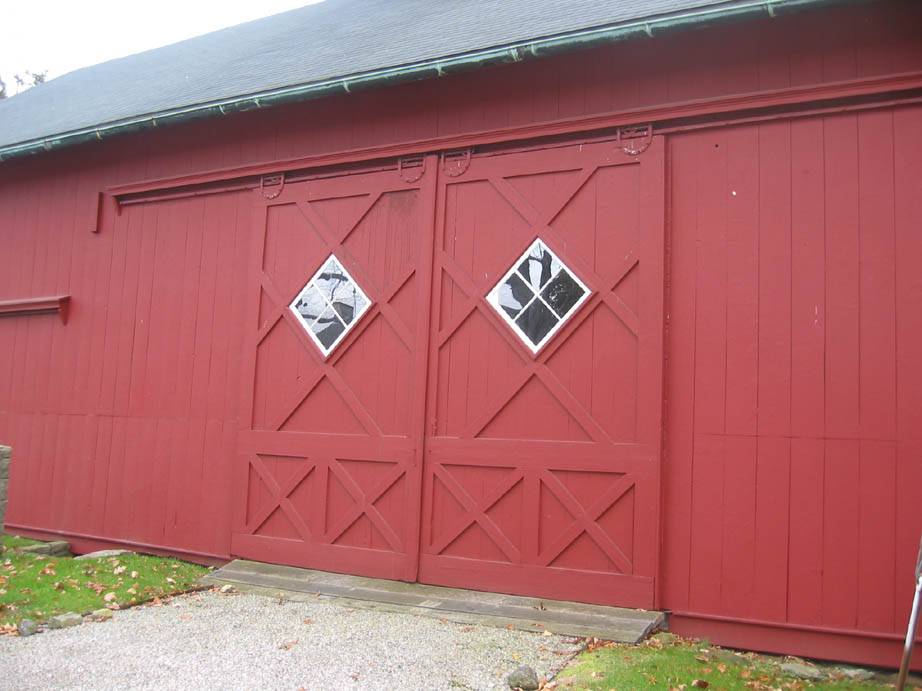
This is a 1 ½ - story three-bay eave-entry bank barn with a cylindrical silo connected to its west gable-end. The ridge line of the barn runs east-west, almost parallel to this portion of Laurel Road. The three-bay north eave-side of the barn facing the road is the main façade with the main entrance in the center through a pair of double-height exterior-hung X-braced sliding wagon doors. Each door leaf of the main entrance has a four-pane rhombus window insert at the center. The façade has a second entrance in the first bay from the east through a pair of exterior-hung X-braced sliding wagon doors with a four-pane window insert in each door leaf. The west gable-end of the barn has low grade level forming the bank level with the silo connected towards its northern edge. The bank level of the west gable-end has cinder block masonry which appears to be punctuated by three six-pane stable windows. The first floor level of the barn is blank with the gable attic separated by a distinct dropped girt siding divide line. The south eave-side of the connector to the silo has a six-pane window each at the bank level and the first floor level. A third window opening can be seen just below the eave-level. The cinder block masonry of the bank level of the south eave-side of the barn has a wagon door entrance off-centered towards the east which appears to be through a pair of interior-hung sliding X-braced sliding wagon door with three panes insert in each door leaf. The entrance at the bank level is flanked by two pairs of six-pane stable windows with trim towards the west and a similar pair of six-pane stable windows towards the east. The first floor level of the barn has a pair of large exterior-hung X-braced horse-shoe track sliding hay doors at the center. Each door leaf of the hay door has two six-pane window inserts. Two three-pane windows separated by five equally spaced sparrow holes can be seen immediately above the pair of hay doors. The first floor level of the south eave-side of the barn appears to have six four-pane windows towards the east of the hay doors, arranged in modules of threes. Four two-pane windows arranged in modules of twos can also be seen towards the east of the hay doors, just below the apex of the roof. The gable-roof of the barn has a louvered cupola centered along the ridge line.
The wooden frame of the barn appears to be supported on field stone masonry foundation with red painted cinder block masonry at the bank level. The barn has asphalt shingles roofing and red painted vertical siding walls with white trim.A cylindrical wooden stave silo mounted by a conical roof is connected to the west gable-end of the barn. The silo is supported on mortared field stone masonry foundation and appears to have a steel chimney rising from the center.
Historical significance:
The oldest barns still found in the state are called the “English Barn,” “side-entry barn,” “eave entry,” or a 30 x 40. They are simple buildings with rectangular plan, pitched gable roof, and a door or doors located on one or both of the eave sides of the building based on the grain warehouses of the English colonists’ homeland. The name “30 by 40” originates from its size (in feet), which was large enough for 1 family and could service about 100 acres. The multi-purpose use of the English barn is reflected by the building’s construction in three distinct bays - one for each use. The middle bay was used for threshing, which is separating the seed from the stalk in wheat and oat by beating the stalks with a flail. The flanking bays would be for animals and hay storage.
The 19th century saw the introduction of a basement under the barn to allow for the easy collection and storage of a winter’s worth of manure from the animals sheltered within the building. The bank barn is characterized by the location of its main floor above grade, either through building into a hillside or by raising the building on a foundation.
This innovation, aided by the introduction of windows for light and ventilation, would eventually be joined by the introduction of space to shelter more animals under the main floor of the barn.When chopped cornstalks are compressed to prevent their exposure to the air, the silage ferments instead of spoiling, providing nutritious food for the dairy herd and allowing them to produce milk through the winter. Early silos were built inside the barns, but by the 1890s free-standing silos were being built outside dairy barns. Constructed much like a very large wooden barrel, with adjustable steel hoops holding the vertical grooved staves together, the round wooden stave silo was widely accepted by dairy farmers in New England from the 1890s through the 1930s. Conical roofs are most common on wooden stave silos, usually covered with composition sheet roofing and topped with a metal ventilator. Removable wooden access doors extend up one side. The hoops were loosened in fall to accommodate the swelling of the wood as it absorbed moisture from the silage, and tightened over the winter as the silage dried.
Field Notes
Listed on the State Register of Historic Places 6/04/2014. This farm was, during the 19th century, the poor farm for the town. (The town owned the property from 1852-1928) While the barn may not be quite that old, the current collection of buildings set in a large open field strongly suggests how the propety must have looked when it was a working farm. This barn sits close to the road, opposite the associated house, and among a series of ancillary outbuildings.[JS]
- Use & Accessibility
- Environment
Related features
Environment features
Relationship to surroundings
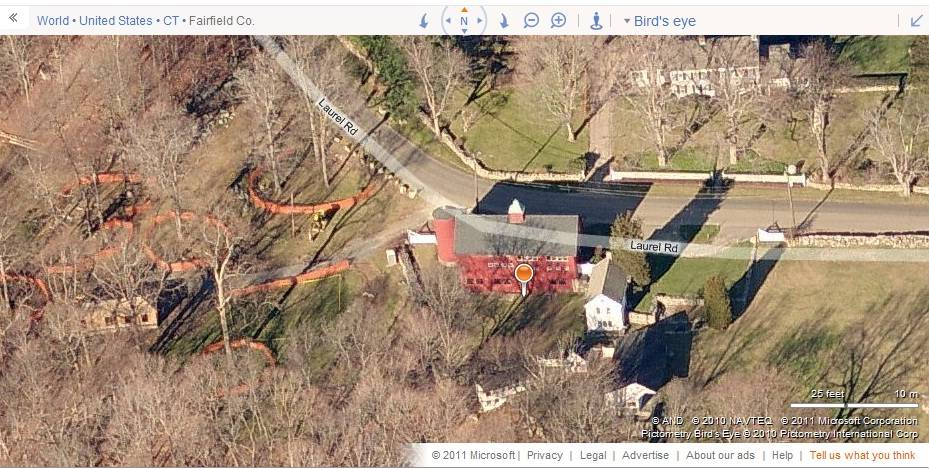
The barn is located towards the south of Laurel Road at plot number 500 Laurel Road but is associated with the main residence at 484 Laurel Road, across the road. The property of 10.17 acres, Account Number- 01982 and MBLU number- 0040/ 0105/ 0112/, is located in a pre-dominantly residential area with individual plots separated by woodland. Residential plots flank the property towards the east and the west while the area towards the south is covered by dense woodland.
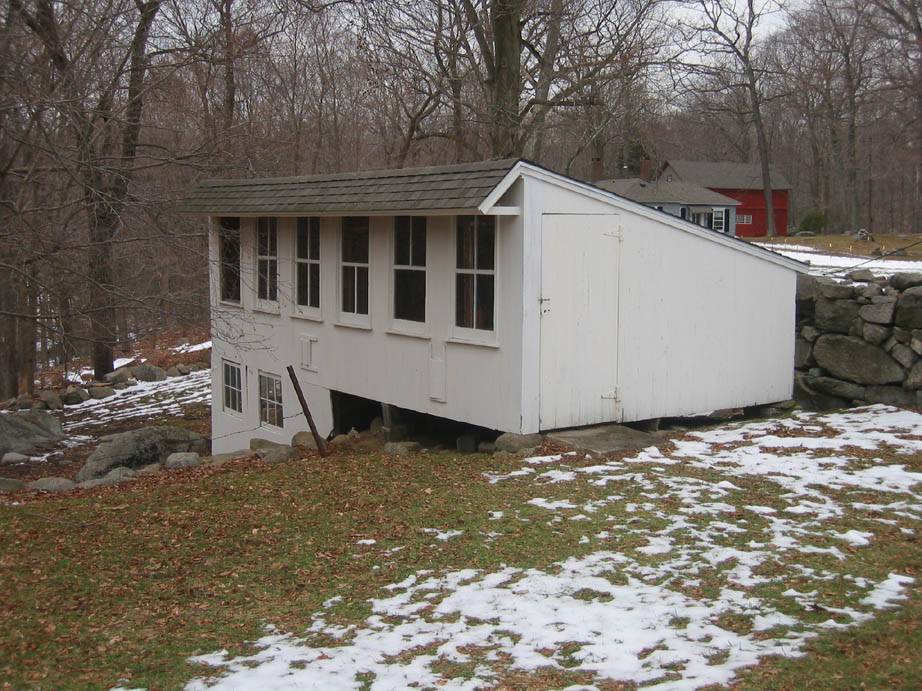
The barn with the silo connected to its west gable-end is located along the northern edge of the property abutting to Laurel Road. The ridge line of the barn runs east-west almost parallel to this portion of the road. A 2 – story gable-roof shed with its ridge line running north-south can be seen towards the southeast of the barn while few other sheds and outbuildings can be seen scattered towards the south. The property has open land in its northeast corner while the rest of the area towards the west and the south is covered by dense woodland.
- Typology & Materials
-
Building Typology
Materials
Structural System
Roof materials
Roof type
Approximate Dimensions
Shed: 120 SqFt; Shed: 544 SqFt; Barn: 1770 SqFt; Silo: 288 SqFt; Shed: 80 SqFt; Stable: 736 SqFt; Poultry House: 216 SqFt; Barn: 800 SqFt;
- Source
-
Date Compiled
06/01/2011
Compiled By
T. Levine and M. Patnaik, reviewed by CT Trust
Sources
Field notes provided by: James Sexton
Assessors’ information retrieved on June 1st, 2011 from website
http://propertyappraisal.ci.new-canaan.ct.us:8080/login.phpPhotograph/Information retrieved on June 1st, 2011 from website http://www.google.com
Photograph/Information retrieved on June 1st, 2011 from website http://www.bing.com.
Photograph/Information retrieved on June 1st, 2011 from website http://www.zillow.com.
Sexton, James, PhD; Survey Narrative of the Connecticut Barn, Connecticut Trust for Historic Preservation, Hamden, CT, 2005, http://www.connecticutbarns.org/history.
Visser, Thomas D.,Field Guide to New England Barns and Farm Buildings, University Press of New England, 1997.
- PhotosClick on image to view full file
-