Barn Record Union
RETURN TO ‘FIND BARNS’- Building Name (Common)
- Mabel Moore Farm
- Building Name (Historic)
- Lyman Moore Farm
- Address
- 3 Moore Road, Union
- Typology
- Overview
-
Designations
n/a
Historic Significance
Architectural description:
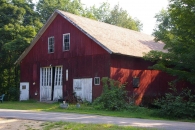
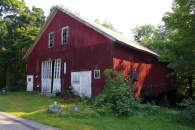
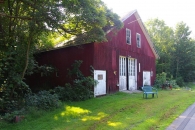
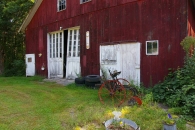
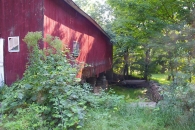
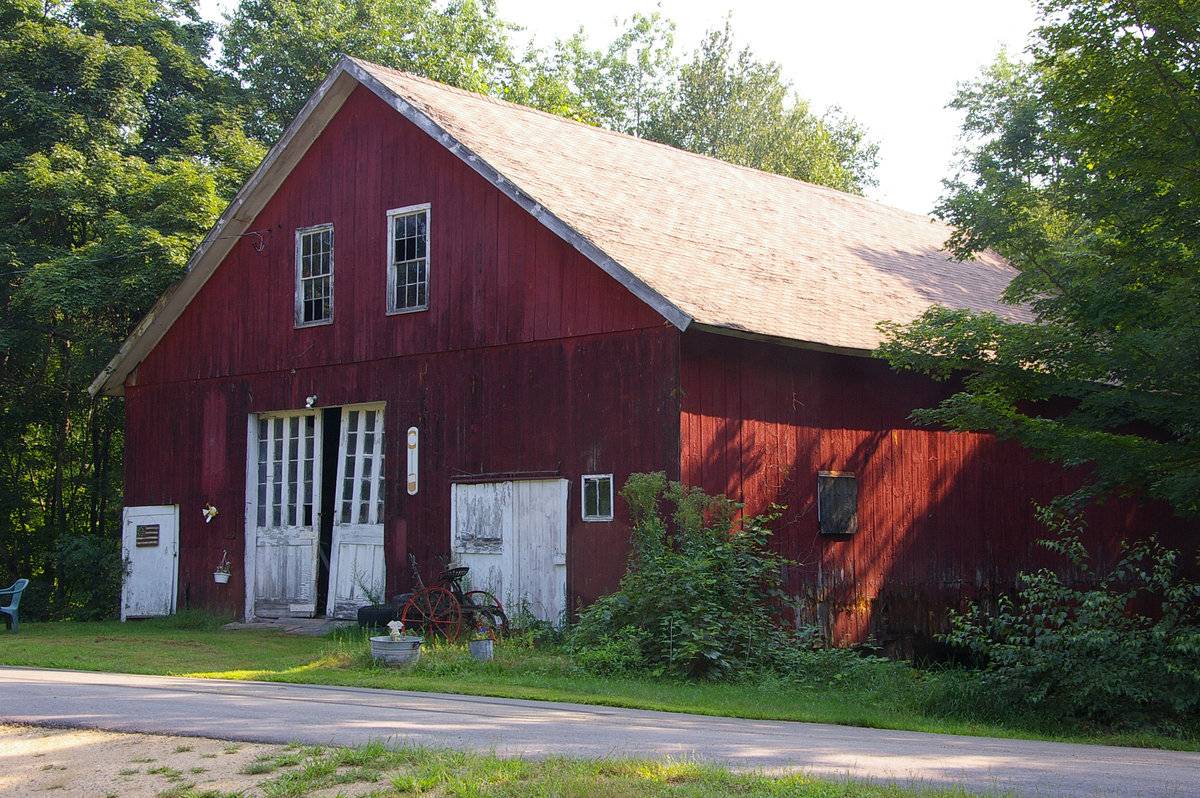
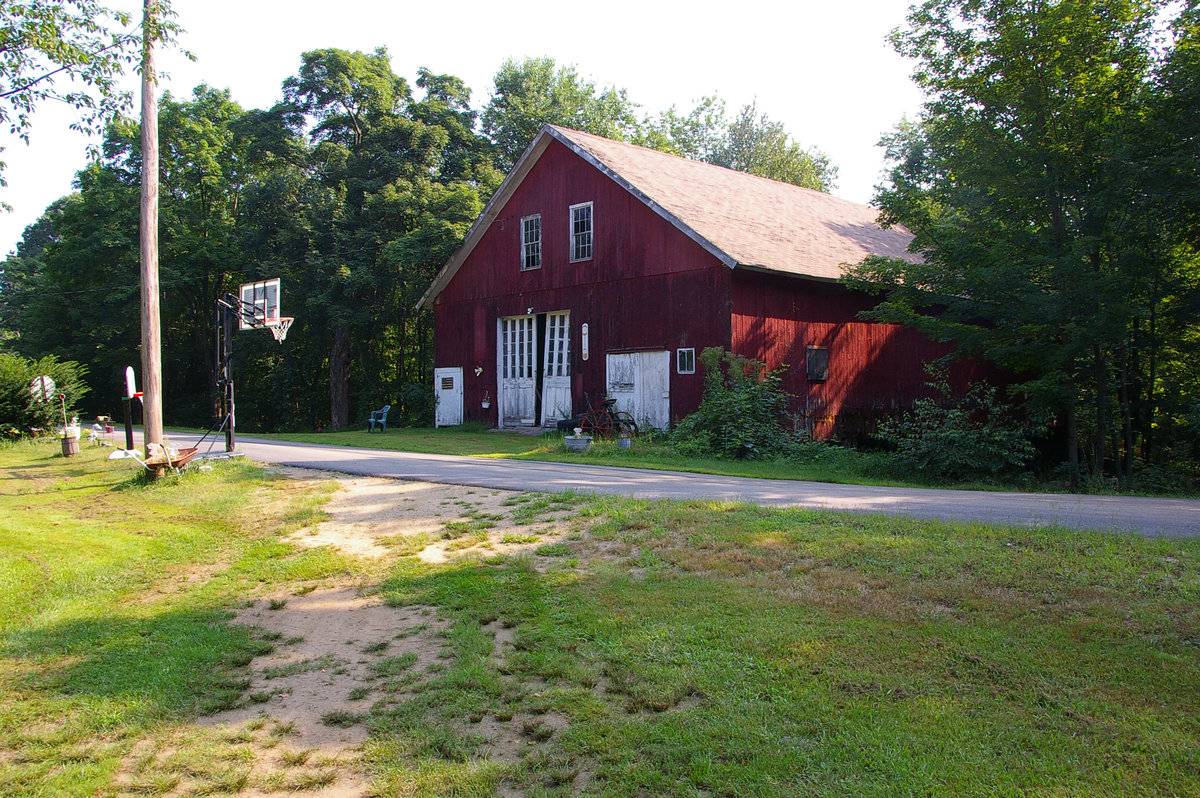
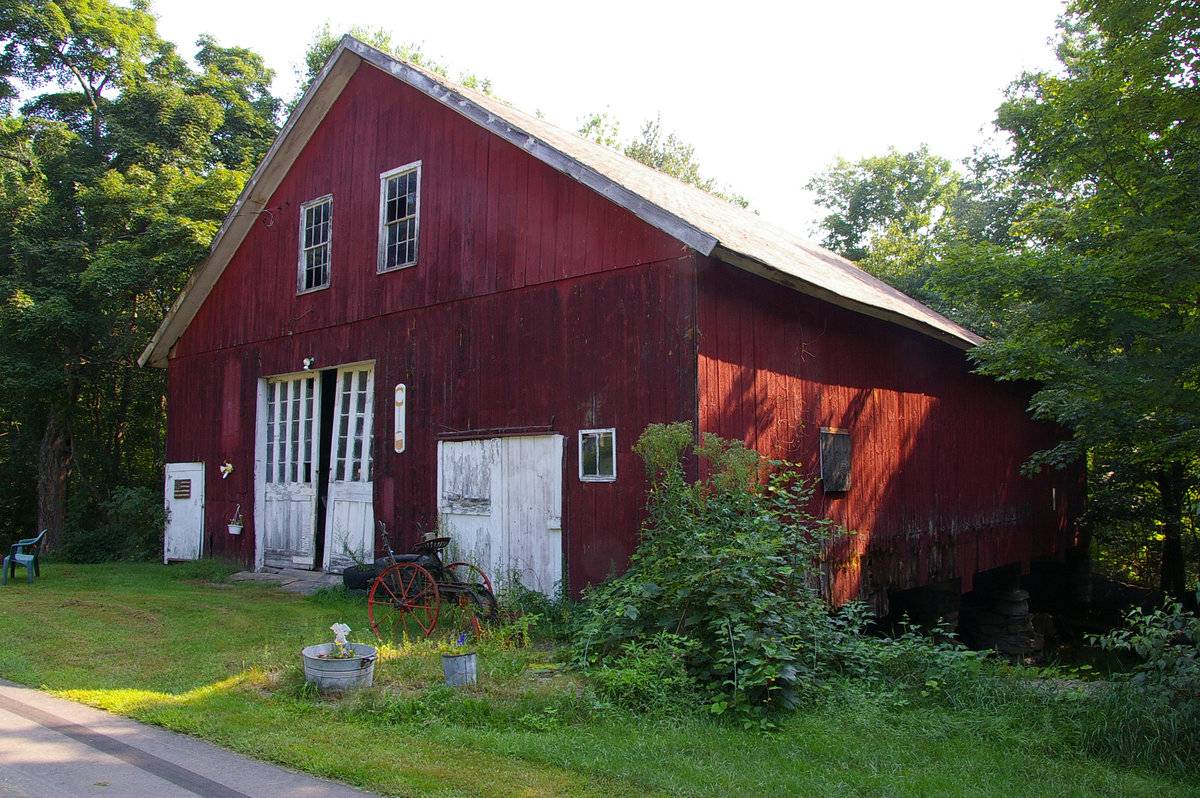
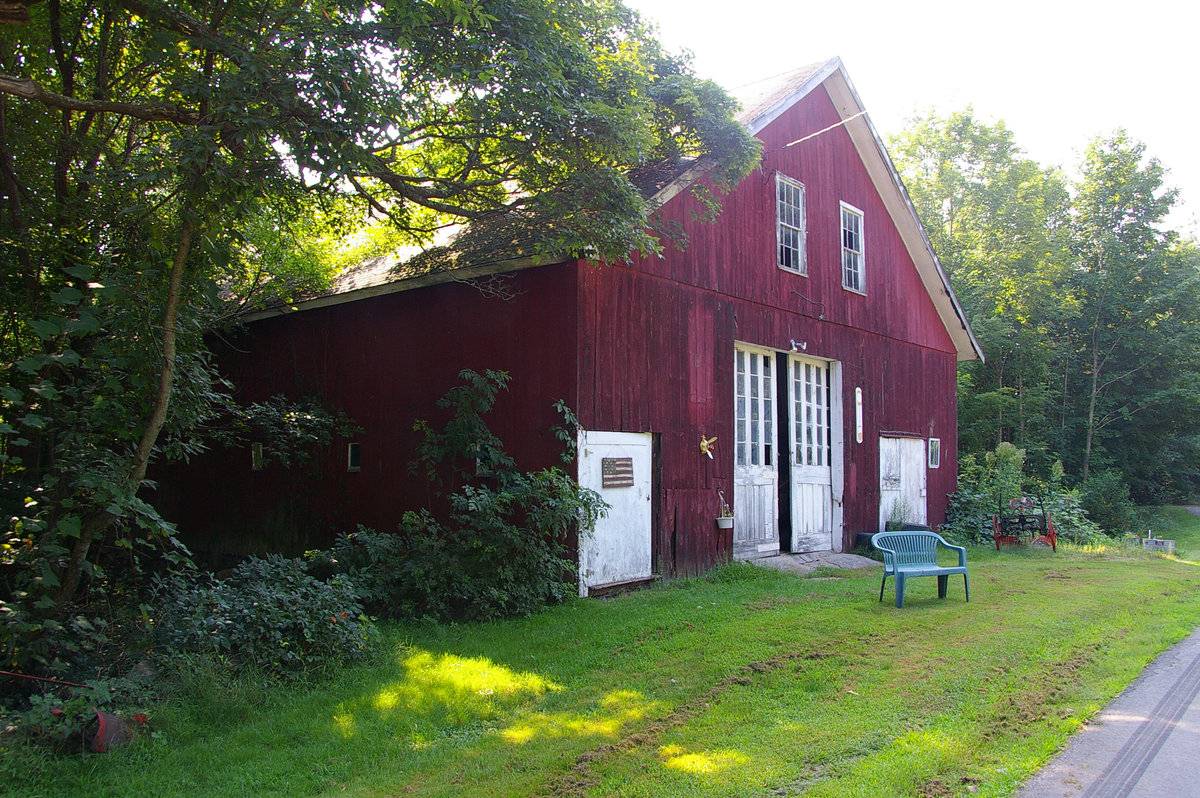
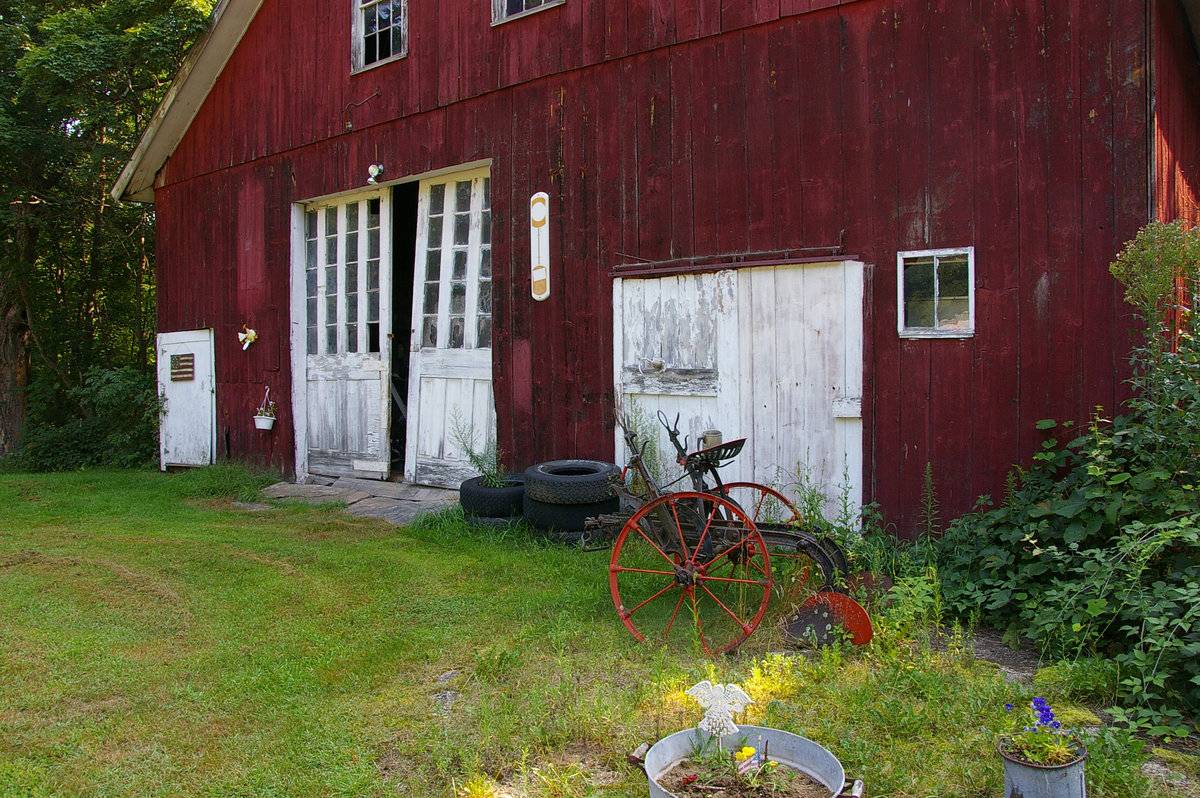
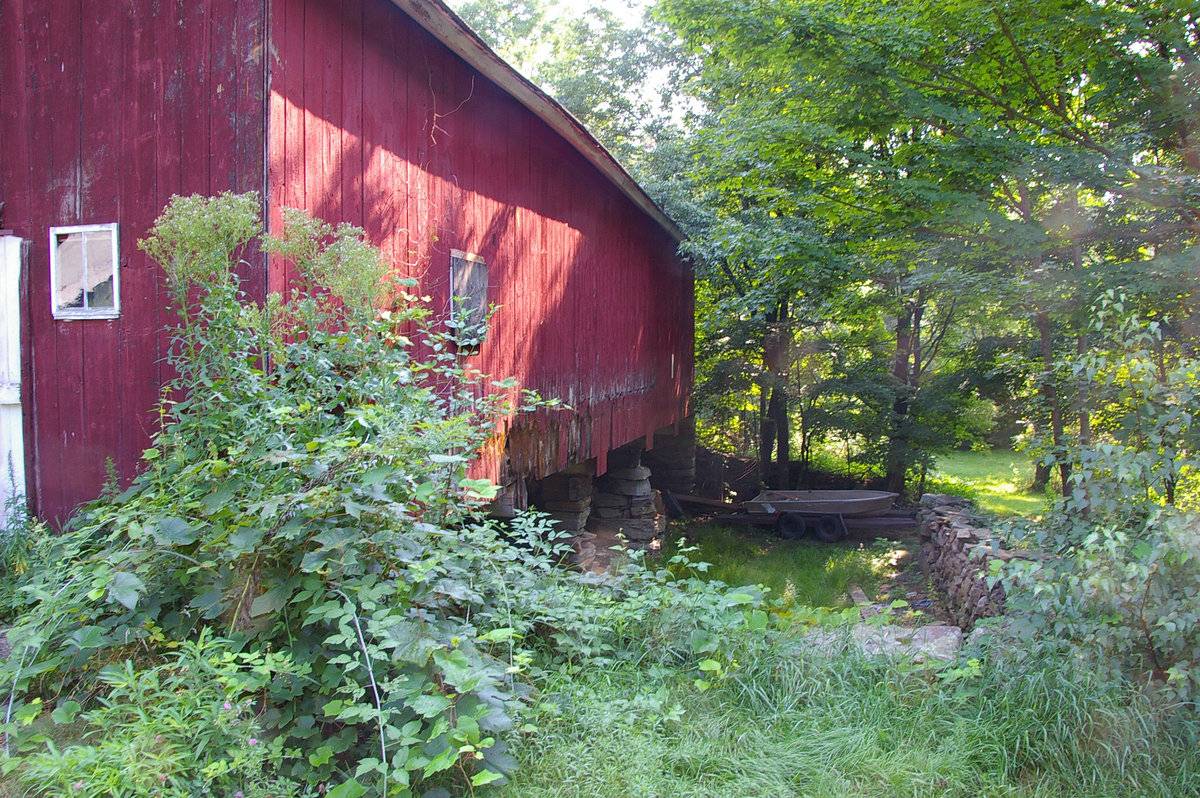
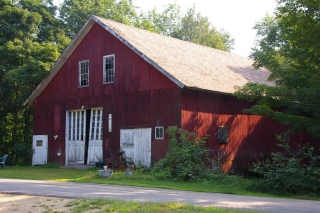
This is a 1 1/2-story gable-entry bank barn. The main facade faces west which faces Moore Road. The ridge-line is perpendicular to Moore Road, which at this point runs north-south. The main entry is found on the west gable-facade of the barn and appears to be a pair of interior sliding doors, each with four vertical rows of fixed five-pane windows. To the south of the main entry is a smaller set of exterior sliding door. Adjacent to these doors is a fixed two-pane window. To the north of the main entry is a pass-through door. A pair of six-over-six double-hung windows are equally spaced under the apex of the roof. Along the north eave-side of the barn are two small windows centered on this side. The grade drops along the south eave-side of the barn, revealing a full basement level. The basement level appears to be four open bays, divided by fieldstone walls. Near the west corner is a window opening. The barn is clad in vertical flush-board siding painted red with white trim. The gable-roof is clad in asphalt shingles.
Historical significance:The New England barn or gable front barn was the successor to the English barn and relied on a gable entry rather than an entry under the eaves. The gable front offered many practical advantages. Roofs drained off to the sides, rather than flooding the dooryard. With the main drive floor running parallel to the ridge, the size of the barn could be increased to accommodate larger herds by adding additional bays to the rear gable end. Although it was seen by many as an improvement over the earlier side-entry English Barn, the New England barn did not replace its predecessor but rather coexisted with it; both types continued to be constructed.
The 19th century also saw the introduction of a basement under the barn to allow for the easy collection and storage of a winter’s worth of manure from the animals sheltered within the building. The bank barn is characterized by the location of its main floor above grade, either through building on a hillside or by raising the building on a foundation. This innovation, aided by the introduction of windows for light and ventilation, would eventually be joined by the introduction of space to shelter more animals under the main floor of the barn.
Field Notes
NE bank barn, formerly dairy and sheep. Now deteriorated.
- Use & Accessibility
- Environment
Related features
Environment features
Relationship to surroundings
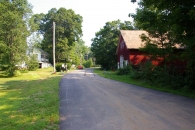
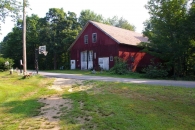
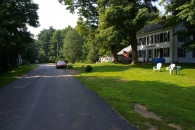
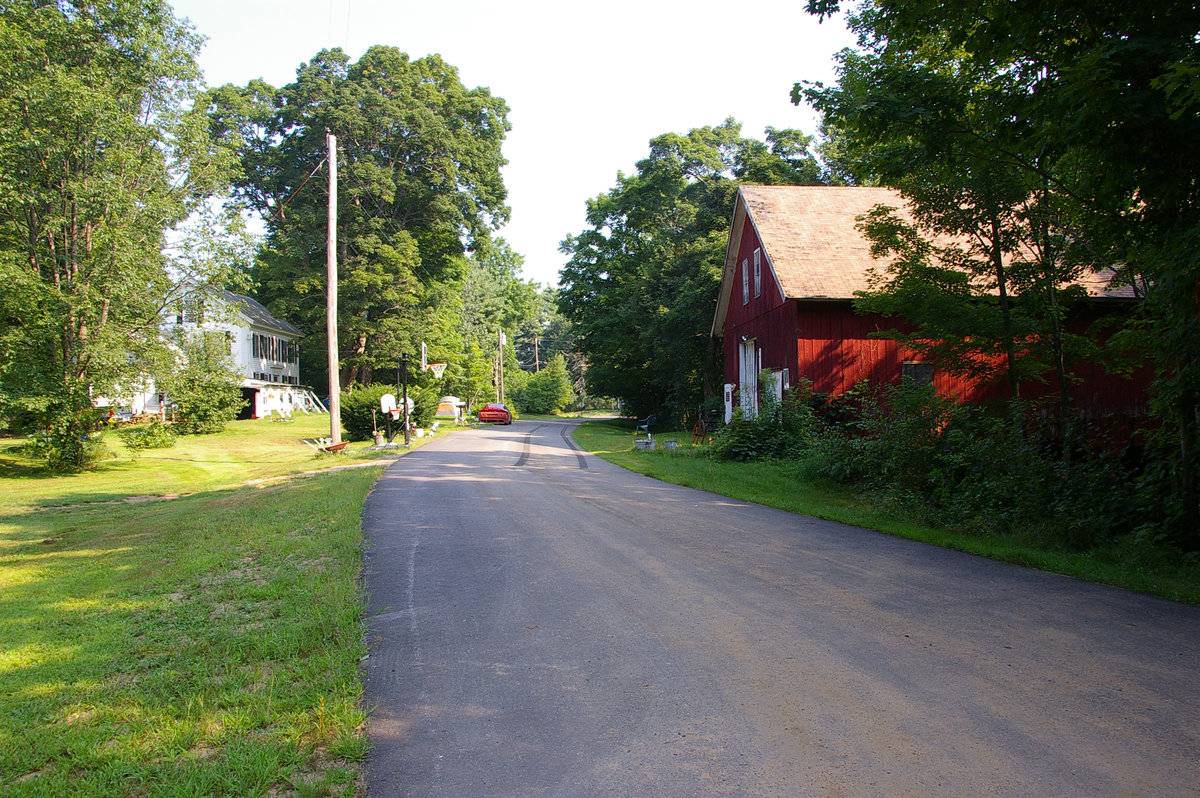
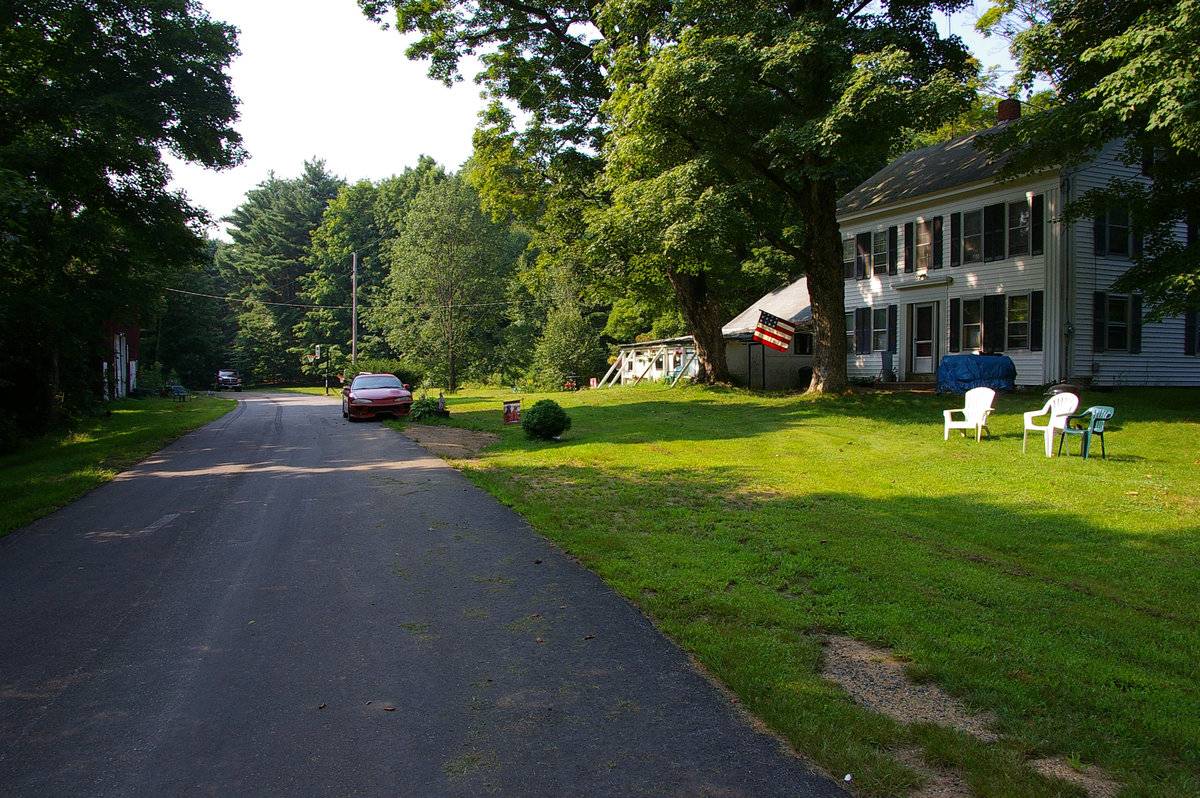
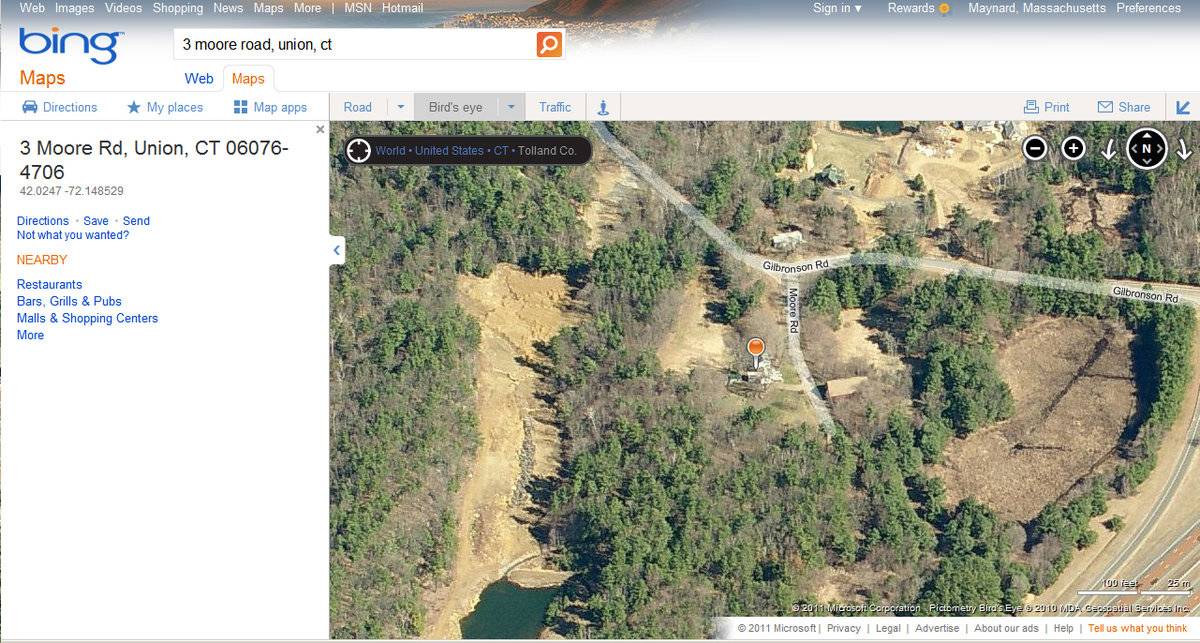
This barn is across the street and to the east of the house with which it is associated. The main facade of the house faces east, and the ridge-line is parallel to Moore Road. The driveway extends to the west off Moore Road and leads to the house. The barn sits on the road, while the house is set back a little. The property is to the south of the intersection of Gilbronson Road and Moore Road. Hamilton Reserve is to the north of the property, along with woodland, some open tracts of land, and the Massachusetts boarder. To the south is I-84, woodland, Wells Pond and some open tracts of land. To the east is I-84, Goodhall Pond, Mashapaug Pond, Breakneck Pond, and woodland. To the west is Nipmuck State Forest and Sessions Meadow Marsh. Surrounding the property are light residential areas, a few open tracts of land, some bodies of water and woodland.
Map/Block/Lot: 11/ 03/ 006
- Typology & Materials
-
Building Typology
Materials
Structural System
Roof materials
Roof type
Approximate Dimensions
2400 square feet.
- Source
-
Date Compiled
06/30/2011
Compiled By
K. Young & T. Levine, reviewed by CT Trust
Sources
Field notes and photographs by Carol Mancini, William Scranton, and Betty Bragdon - 9/14/2009.
Aerial Mapping: Union Maps
http://www.bing.com/maps - accessed 6/30/2011.Town of Union Assessor’s Records:
http://www.visionappraisal.com/databases/ - accessed 6/30/2011.Sexton, James, PhD, Survey Narrative of the Connecticut Barn, Connecticut Trust for Historic Preservation, Hamden, CT, 2005, http://www.connecticutbarns.org/history.
Visser, Thomas D.,Field Guide to New England Barns and Farm Buildings, University Press of New England, 1997.
- PhotosClick on image to view full file
-