Barn Record New Milford
RETURN TO ‘FIND BARNS’- Building Name (Common)
- The Red Tobacco Barn
- Building Name (Historic)
- Seymour Morehouse Tobacco Shed
- Address
- 4 Old Mill Road, New Milford
- Typology

- Overview
-
Designations
Historic Significance
Architectural description:
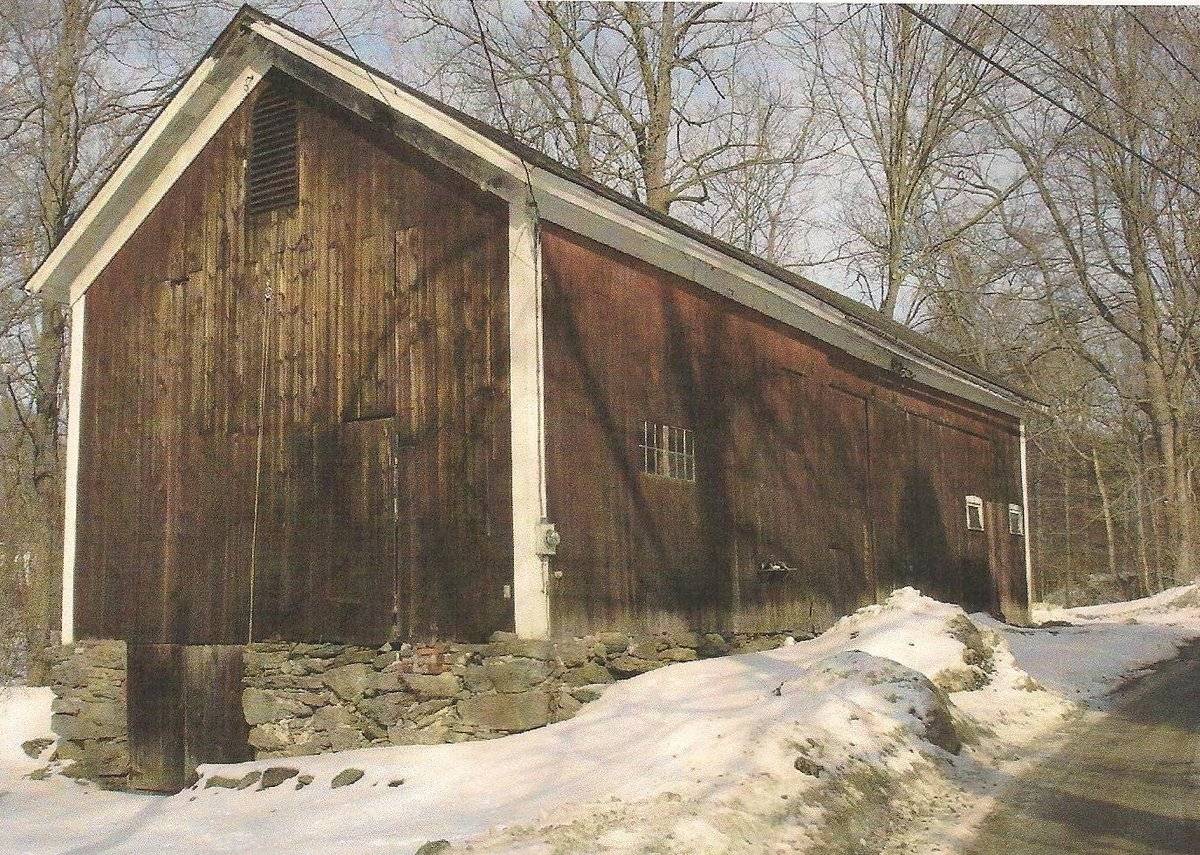
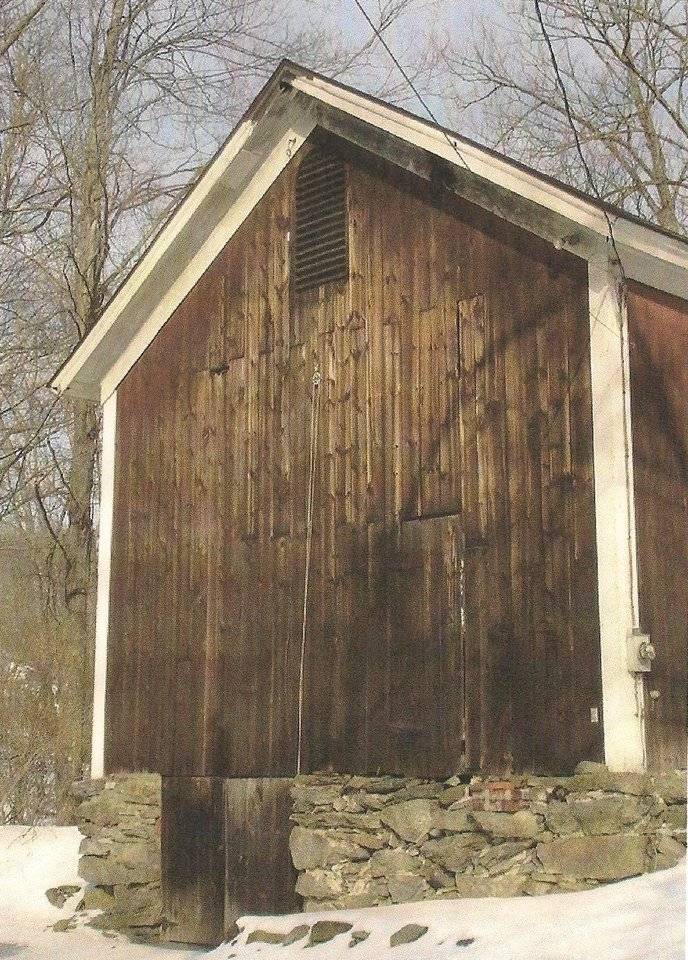
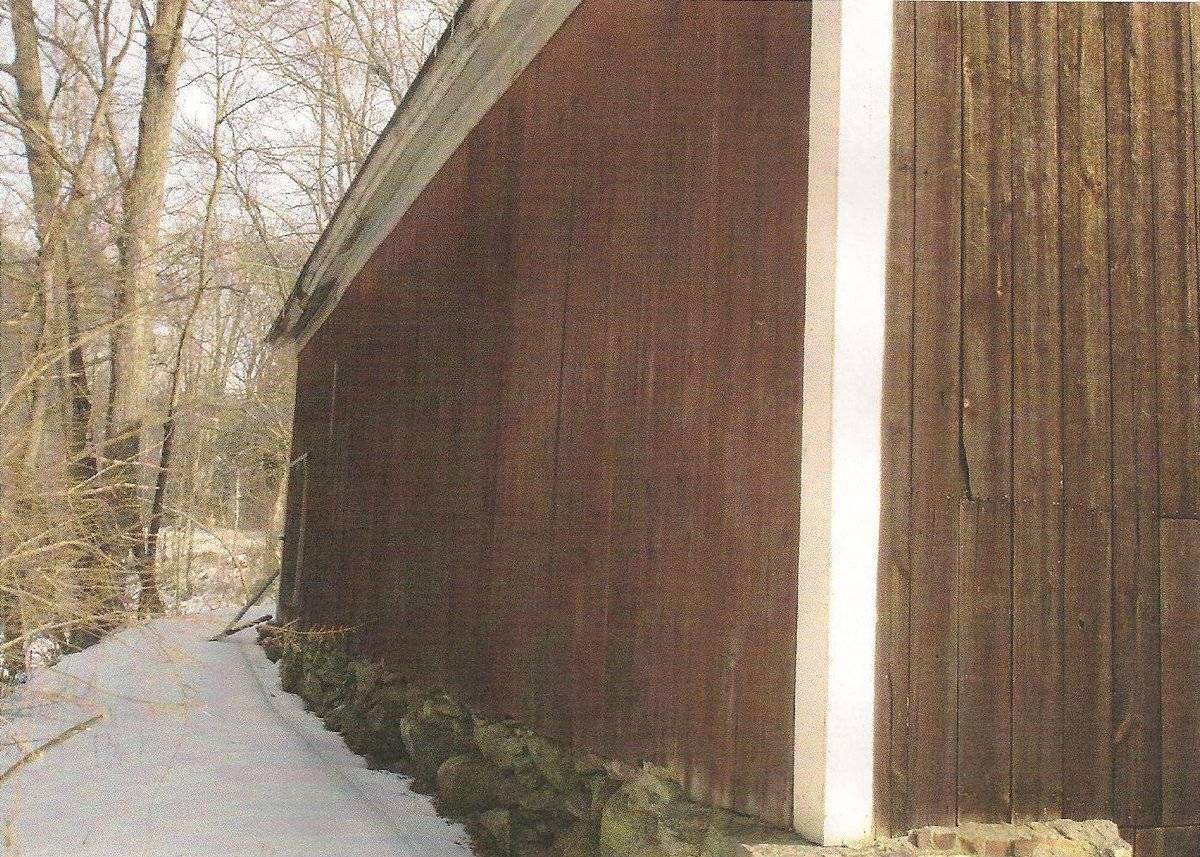
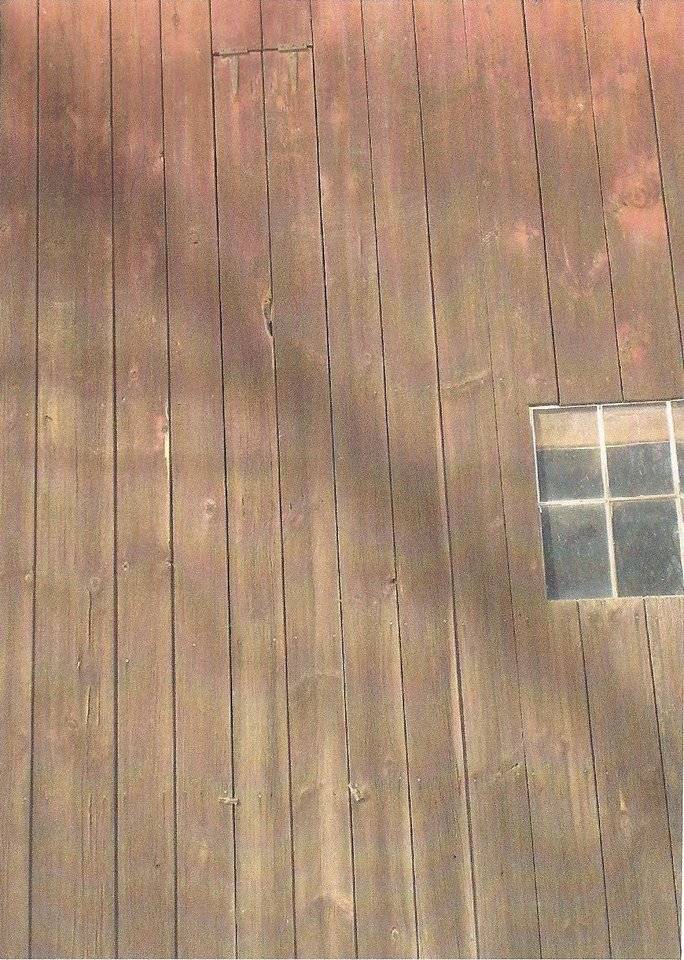
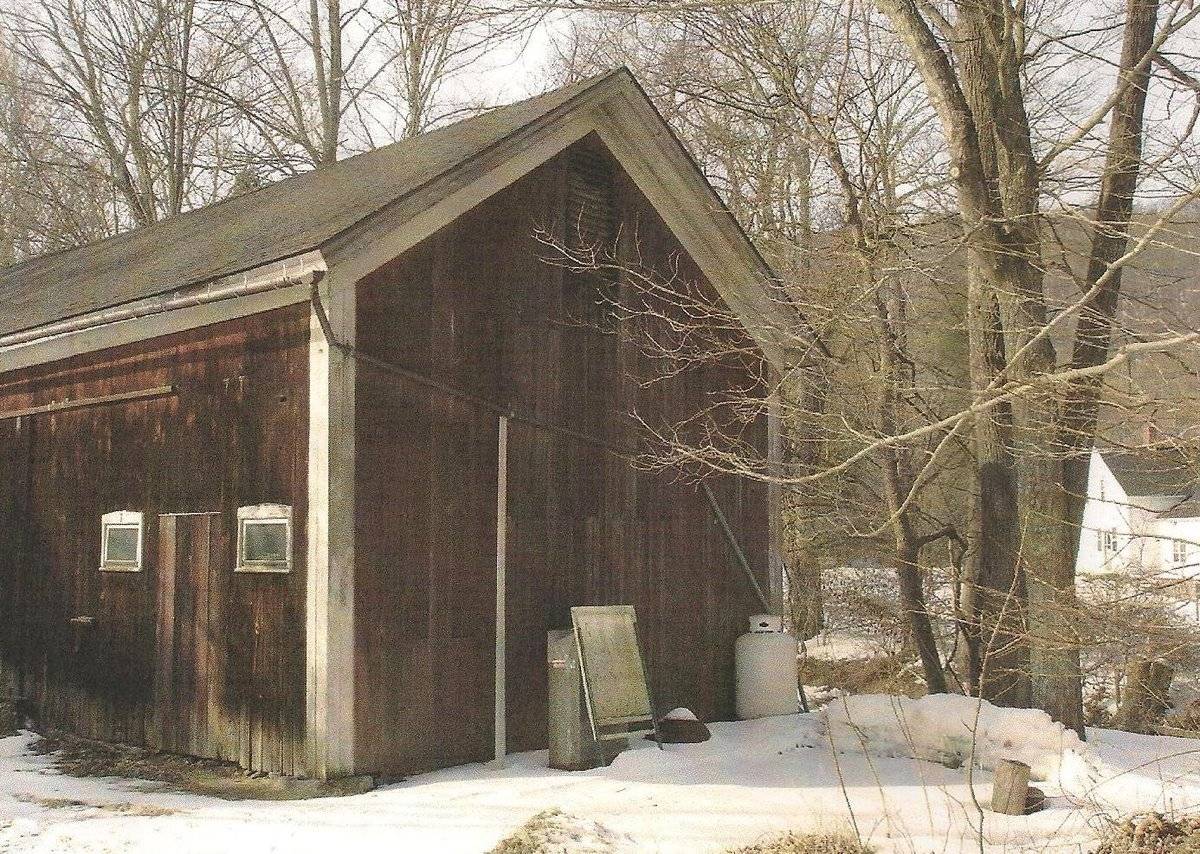
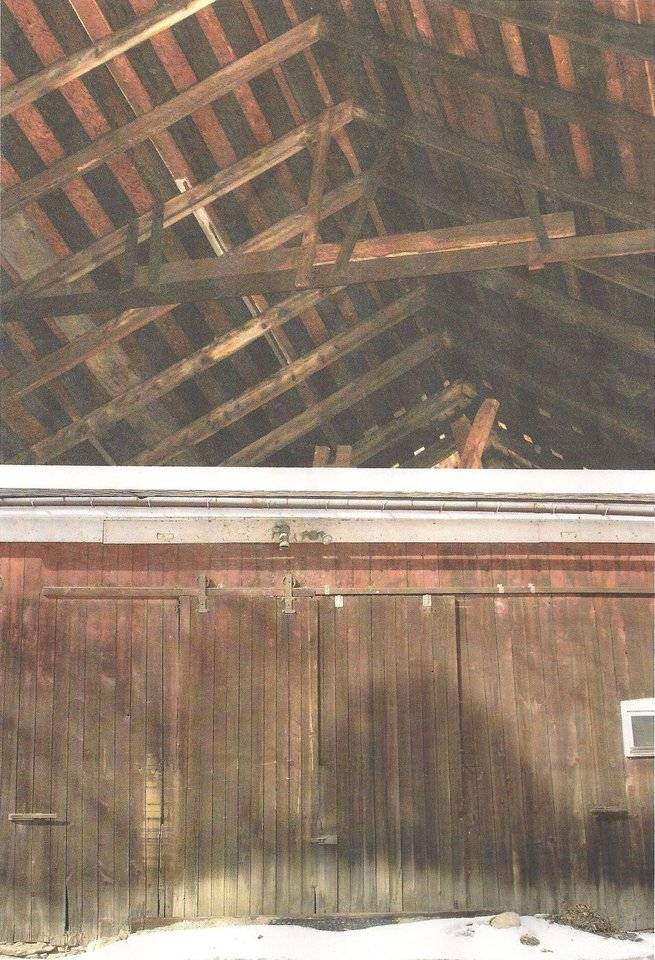
This is a 1 1/2-story eave-entry bank barn/tobacco shed. The main facade faces south and the ridge-line is parallel to this portion of Old Mill Road, which runs approximately east-west. The main entry is a pair of exterior sliding doors, off-center to the east. The entry is accessed by a slight ramp; the grade declines to the sides of the ramp, revealing an un-mortared field-stone foundation. To the east of the entry are two single-pane windows with trim. To the west of the entry is a set of two six-pane windows. The rest of the south eave-facade of the shed is blank except for top-hinged vents for the curing of tobacco. The grade at the west gable-end of the shed declines further, revealing a basement level. In the basement level in the north half of the west gable-end of the shed is a pair of swinging hinged doors; the rest of the basement level is un-mortared field-stone. The main level of the west gable-end is blank except for top-hinged vents for the curing of tobacco. Beneath the apex of the roof is an arched louvered vent. The grade at the north eave-side of the shed inclines slightly. The north eave-side of the shed is blank except for a pass-through door at the west corner and the foundation. While not evident from the photographs, it’s likely that the vertical boards have top hinged vents. The east gable-end of the shed is blank except for an arched louvered vent beneath the apex of the roof and presumably top-hinged vents. The ventilation system used in the shed is a vertical sliding system where every second board is hinged at the top and tilted out at the bottom by means of a horizontal cleat that lifts many boards at once and metal prop hooks to hold the boards in place. The shed has vertical board siding that were once painted red, now severely faded, as well as rakes, bands and trim painted white. The roof has a projecting overhang and is covered with asphalt shingles. The foudnation is un-mortared field-stone.
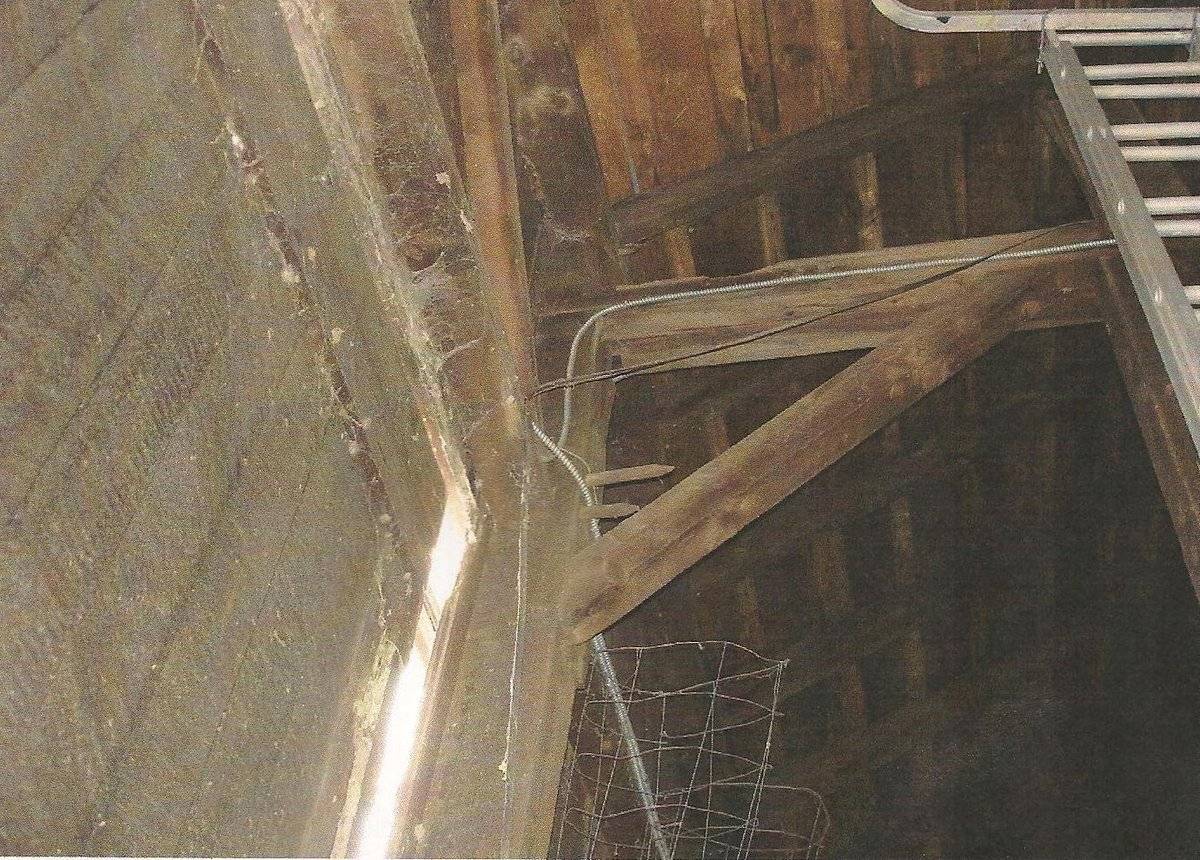
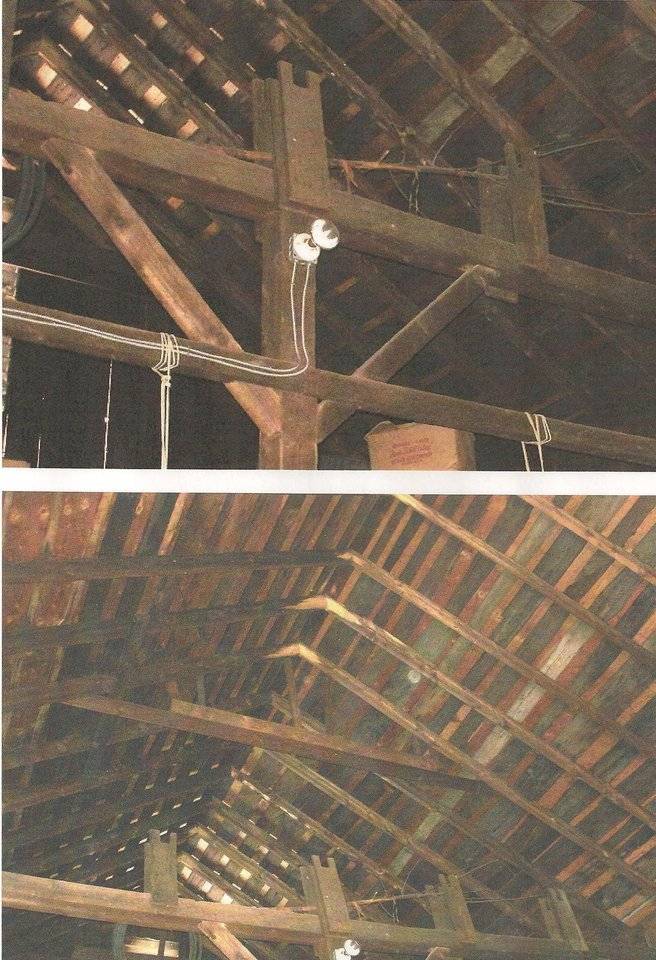
Historical significance:The tobacco barn, or shed as it is called in the Connecticut River Valley, is one of the most distinctive of the single-crop barns. They tend to be long, low windowless buildings with pitched roofs. They are characterized by vented sides to regulate air flow and allow harvested tobacco to cure at the appropriate rate. Derived initially from the design of the English barn, the shed is composed of a fixed skeleton consisting of two- or three-aisle bents repeated at intervals of 15 feet to the desired length. The wood-framed bents sit on piers of stone or concrete and the bents are connected by girts and diagonal braces. Typically there are two doors at each end, making the shed a “drive-through,” although some sheds are accessed through doors on the sides. The interior structural framework serves a second purpose in addition to supporting the walls and roof of the building; it provides a framework for the rails used to hang the tobacco as it cures.
This is accomplished with one of four different systems (more than one method may be utilized in a single shed):
a) Vertical siding in which alternating boards are hinged at the top and tilted out at the bottom by means of a horizontal cleat that lifts many boards at once and metal prop hooks to hold the boards in place,
b) Vertical siding in which alternate boards are hinged along the sides to open like tall narrow doors,
c) Less commonly, horizontal siding in which alternate boards are hinged along the top edge and open like long narrow awnings,
d) A series of large doors along one of the long sides of the building with the other sides of the building vented by one or more of the other methods.
Field Notes
Listed on the State Register of Historic Places 3/05/2014. We are members of the New Milford Trust for Historic Preservation. We have a unique (beautiful lines) tobacco barn on a dam site next to a 2 acre former tobacco lot. We have replaced the roof in the mid 70's and completed another re-roofing in 2008. We have strived to preserve the structure and use it for storage & work space. This barn was part of a productive enterprise that consisted of a cider mill and a brandy distillery on the East Aspetuck River. Those buildings remain, but are now dwellings. My home is the "mill owners" residence dating cc 1860. Old Mill road is unique as well. RBG Road is part of original "Litchfield Turnpike." Parallels East Aspetuck River and is a town Scenic Road. See attached synopsis. 2009 Barns Grant pre-applicant.
- Use & Accessibility
- Environment
Related features
Environment features
Relationship to surroundings
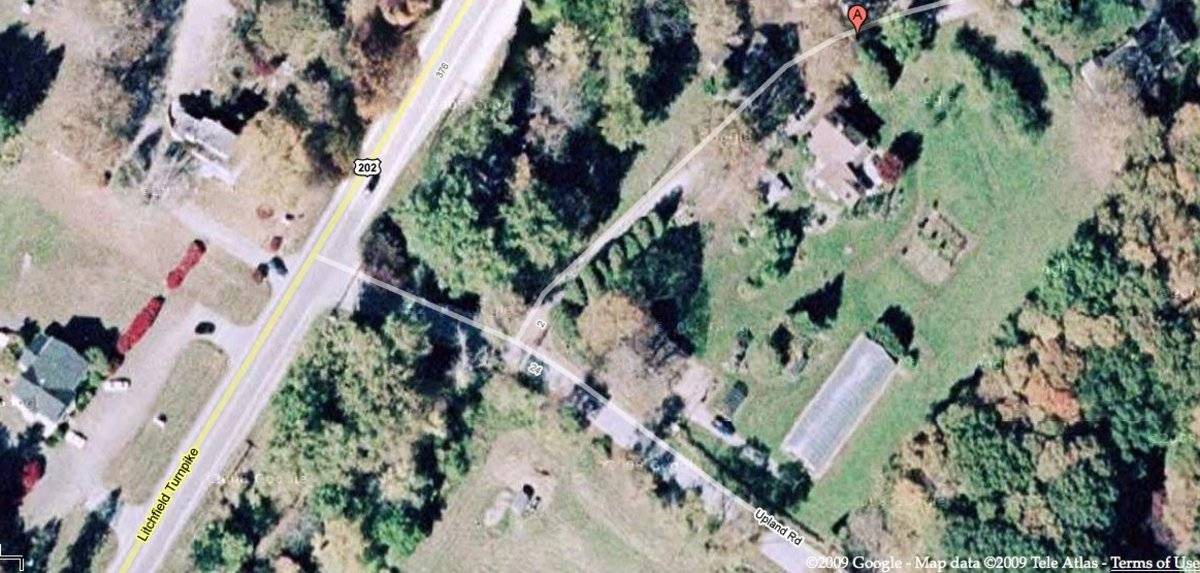
The shed fronts Old Mill Road to the south and appears to be the only structure on the lot except for a small shed to the north of the tobacco shed. The assessors card mentions a mid 18th century house, which may be across the street. At any rate, the total size of the lot with the tobacco shed is .36 acres. The area surrounding the site is residential, open space, active agriculture and woodland.
MBLU : 72/ / 38/ / /BRN2 Barn w Bsmt 1440 S.F.
- Typology & Materials
-
Building Typology
Materials
Structural System
Roof materials
Roof type
Approximate Dimensions
24 ft x 60 ft
- Source
-
Date Compiled
01/06/2011
Compiled By
Todd Levine, reviewed by the Connecticut Trust
Sources
Photographs by Robert B. and Kathy A. Gambino.
Field notes by Charlotte Hitchcock.
Map of New Milford, CT, retrieved January 6, 2011 from website maps.google.com.
O’Gorman, James F., Connecticut Valley Vernacular: the Vanishing Landscape and Architecture of the New England Tobacco Fields, University of Pennsylvania Press, 2002.
Sexton, James, PhD, Survey Narrative of the Connecticut Barn, Connecticut Trust for Historic Preservation, Hamden, CT, 2005, http://www.connecticutbarns.org/history.
Visser, Thomas D., Field Guide to New England Barns and Farm Buildings, University Press of New England, 1997.
- PhotosClick on image to view full file
-